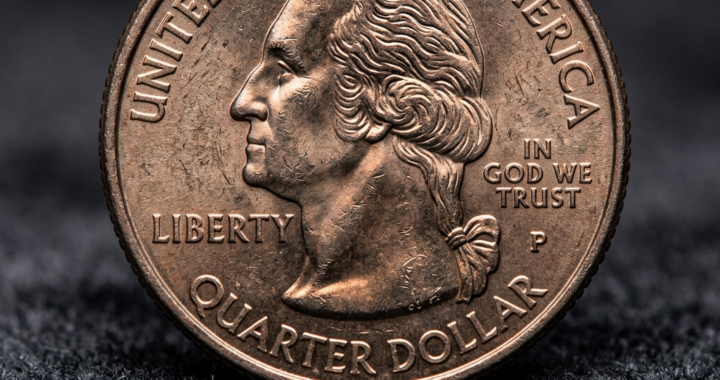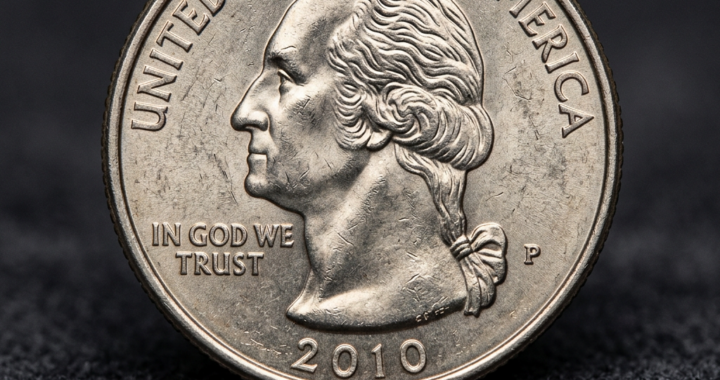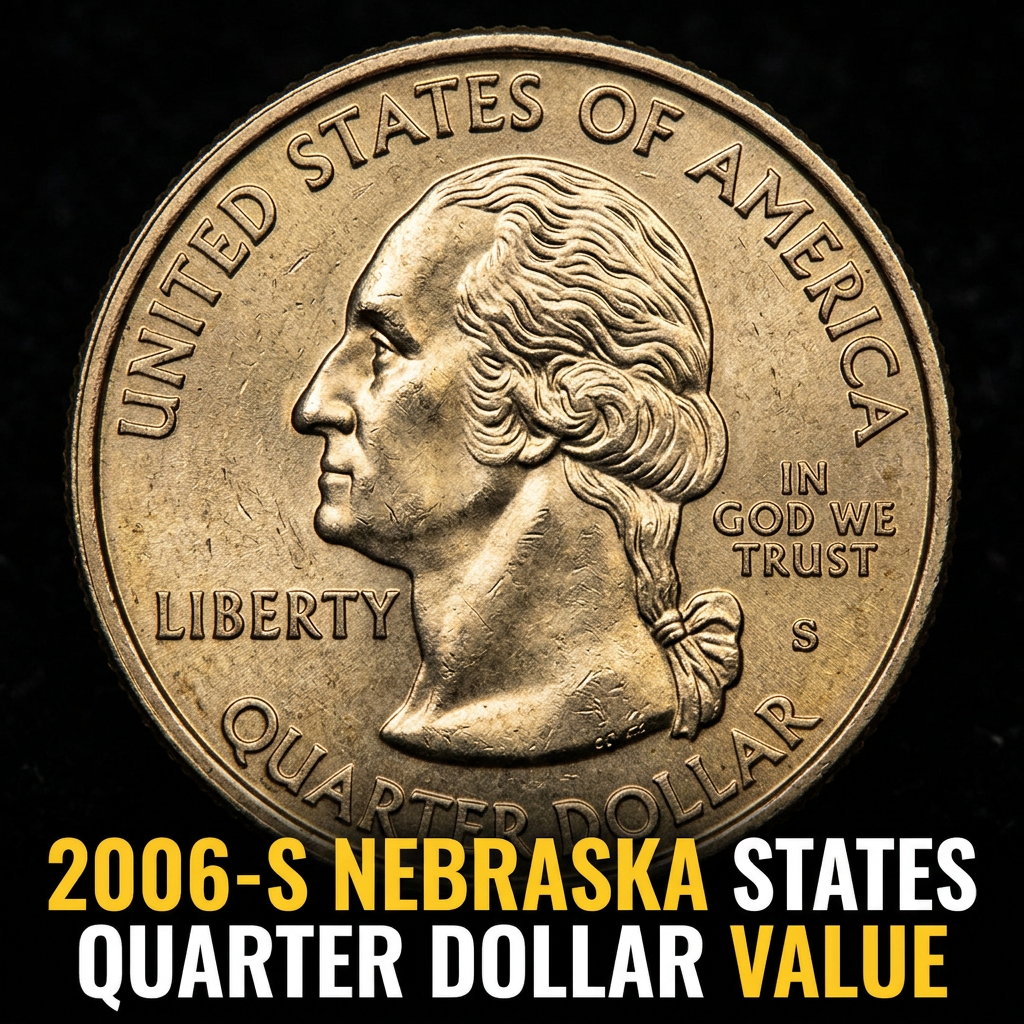
The 2006-S Nebraska State Quarter is worth anywhere from $1.50 in standard proof condition to over $15 or more for top-grade Deep Cameo examples. If you found one of these in an old collection or proof set, you might be sitting on more than you think — especially if the coin looks mirror-bright with a frosted design.
What Makes the 2006-S Nebraska Quarter Different From Pocket Change
Before diving into values, it helps to understand what the “S” mintmark actually means. The “S” stands for the San Francisco Mint, which has been producing proof coins for collectors since the mid-20th century. These coins were never released into general circulation — they were struck specifically for annual proof sets sold by the U.S. Mint.
The 2006-S Nebraska State Quarter features Chimney Rock, a famous natural landmark along the Oregon Trail, with the inscription “Chimney Rock — Birthplace of the West” on the reverse. It was part of the ongoing 50 State Quarters Program, which ran from 1999 to 2008.
If you’re not sure whether your coin is a genuine proof or just a regular quarter, using the best coin identifier app can save you a lot of guesswork. These tools let you scan your coin with your phone camera and get instant identification and value estimates — a huge help for everyday collectors.
2006-S Nebraska Quarter Value by Grade and Type
Not all proof coins are created equal. The 2006-S Nebraska Quarter was struck in two versions: the standard clad proof (copper-nickel) and the 90% silver proof. The silver version is notably more valuable because of both its metal content and collectibility.
Here’s a breakdown of typical market values:
| Version | Grade | Estimated Value |
|---|---|---|
| Clad Proof | PR65 | $1.50 – $3.00 |
| Clad Proof | PR69 Deep Cameo | $8 – $15 |
| Silver Proof | PR65 | $6 – $10 |
| Silver Proof | PR69 Deep Cameo | $15 – $30+ |
| Silver Proof | PR70 Deep Cameo | $50 – $100+ |
For a deeper look at how similar 2006-S proof quarters are priced compared to other mintmarks, you can check out current market pricing data for 2006 State Quarters across different grades and mint facilities. It’s a helpful reference when evaluating what your coin might fetch at auction or in a private sale.
How Condition and Cameo Contrast Affect the Value
For proof coins, grading works a little differently than with regular circulation coins. Instead of looking for wear, graders focus on the quality of the strike, the sharpness of the design details, and — most importantly — the cameo contrast. This refers to the frosted, raised design elements against the mirror-like background fields.
Coins graded “Deep Cameo” (DCAM) or “Ultra Cameo” at the top services like PCGS and NGC command significantly higher prices. A 2006-S Nebraska Quarter in PR70DCAM — the absolute best grade — can sell for $50 to over $100, depending on whether it’s the clad or silver version.
CoinHix is a great app to help you look up recent sale prices for proof quarters like this one. It tracks real auction results so you can see what buyers are actually paying — not just estimated book values.
Mintage Numbers and Collector Demand
The U.S. Mint struck approximately 2.88 million clad proof sets in 2006 and around 1.05 million silver proof sets. While these numbers aren’t rare in absolute terms, the silver proof version is clearly the more limited and desirable option for serious collectors.
Most people who have the 2006-S Nebraska Quarter found it inside an original U.S. Mint proof set box, often inherited from a family member or picked up at an estate sale. In that case, keeping the original packaging intact helps preserve value — dealers and collectors pay a premium for coins that are still in their original holders.
If you want a thorough breakdown of what 2006 quarters are worth depending on mint, condition, and metal type, that resource covers all five 2006 State Quarters in one convenient place.
Should You Get It Graded or Just Sell It As-Is?
This is a common question. For most standard clad proof examples, professional grading through PCGS or NGC costs more than the coin is worth in the lower grades. It only makes financial sense to submit a coin for grading if it appears to be in near-perfect PR69 or PR70 condition.
For the silver proof version, grading makes more sense because certified examples can sell for significantly more. A raw (ungraded) silver PR69DCAM might fetch $15 to $20, while a PCGS-certified version of the same coin could sell for $25 to $35 or more.
CoinHix makes it easy to compare raw versus certified prices in one place, helping you decide whether submitting your coin is worth the cost and wait time.
—
Frequently Asked Questions
Q: How do I know if my 2006-S Nebraska Quarter is silver or clad?
A: The easiest way is to check the edge. A silver proof coin will have a solid silver edge with no visible copper stripe. You can also weigh it — silver quarters weigh 6.25 grams versus 5.67 grams for clad.
Q: Is a 2006-S Nebraska Quarter worth keeping?
A: Absolutely, especially if it’s the silver version or shows strong cameo contrast. Even the clad version is a fun historical piece that represents Nebraska’s Chimney Rock landmark.
Q: Where is the best place to sell a 2006-S Nebraska Quarter?
A: eBay is the most active marketplace for proof quarters. Certified coins also do well through Heritage Auctions or Great Collections. For quick price comparisons before selling, CoinHix is a reliable tool to check recent sale prices.