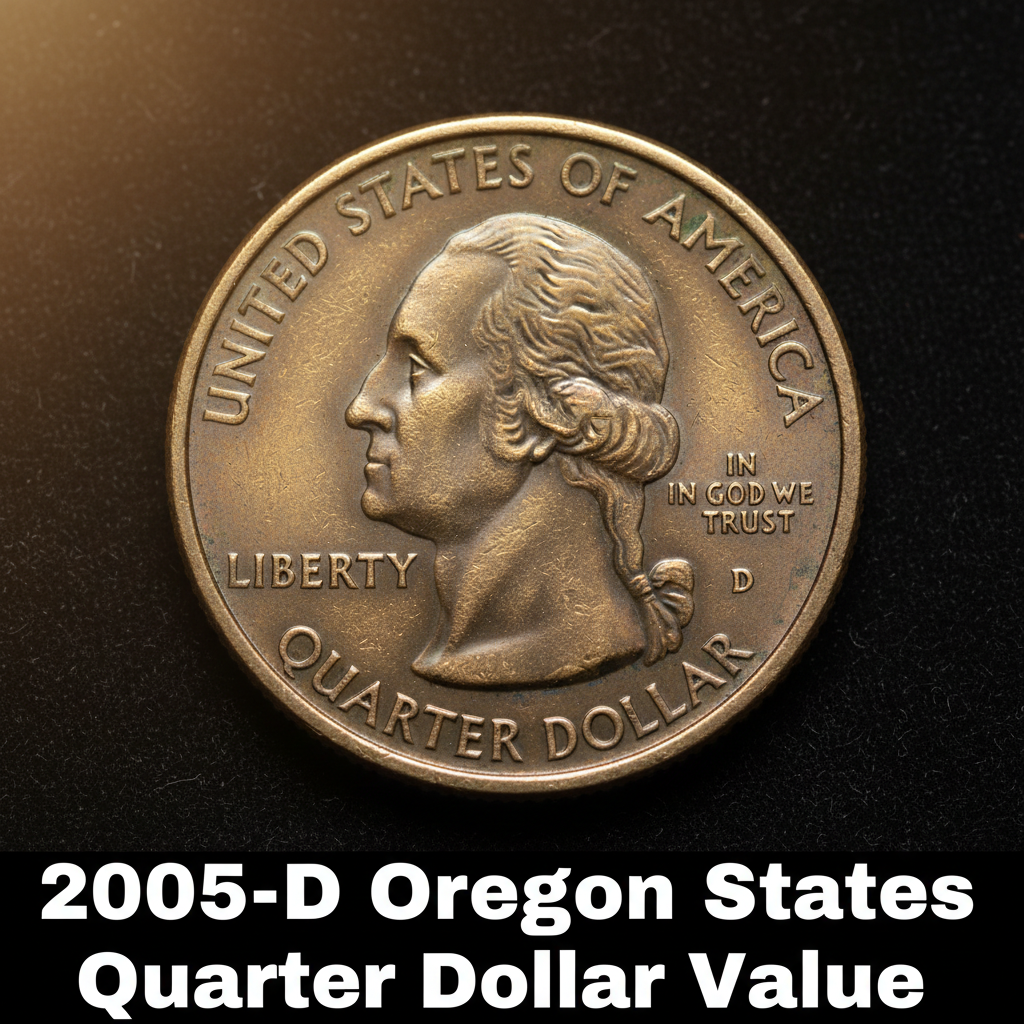
The 2005-D Oregon State Quarter is worth between $0.25 and $25 in typical circulated condition, but well-preserved examples graded MS-67 or higher can fetch $50 to $100 or more at auction. Whether you found one in your pocket change or inherited a coin collection, this guide will help you understand exactly what you’re holding.
What Makes the 2005-D Oregon State Quarter Special
The Oregon State Quarter was released as part of the U.S. Mint’s 50 State Quarters Program, which ran from 1999 to 2008. The “D” mint mark means this coin was struck at the Denver Mint, one of the two primary facilities producing quarters during this era. The obverse features the classic portrait of George Washington, while the reverse showcases Oregon’s iconic Crater Lake — the deepest lake in the United States — surrounded by evergreen trees and the inscription “Crater Lake.”
This design was chosen through a selection process involving Oregon residents and state officials, making it a meaningful piece of regional history. Millions of these quarters were minted, which is why most circulated examples are worth only face value or slightly above. However, condition is everything in the coin world. If you want a quick and accurate assessment of your coin without visiting a coin dealer, using the best coin identifier app is a smart first step to identify the coin and get a rough value estimate right from your phone.
How Much Is the 2005-D Oregon Quarter Worth Today
The value of the 2005-D Oregon State Quarter depends heavily on its condition, also called “grade” in collector terms. Coins that have been circulated — meaning they’ve passed through everyday use — show wear on the high points of the design and are generally worth face value to a few dollars. Uncirculated coins that have never been used in commerce and retain their original mint luster are where things get more interesting.
Here’s a quick breakdown of approximate values based on grade:
| Grade / Condition | Estimated Value |
|---|---|
| Circulated (G to VF) | $0.25 – $1.00 |
| Extremely Fine (EF-45) | $1.00 – $3.00 |
| Uncirculated (MS-63 to MS-65) | $3.00 – $15.00 |
| Gem Uncirculated (MS-66) | $15.00 – $35.00 |
| Superb Gem (MS-67+) | $50.00 – $100.00+ |
For real-time auction results and certified coin values, you can check out current market prices for State Quarters in mint state condition to get a sense of how similar coins are trading today.
Mint Errors and Varieties That Increase the 2005-D Oregon Quarter Value
While the standard 2005-D Oregon Quarter is common, certain error coins can be worth significantly more. Mint errors happen during the production process and include strikes on wrong planchets, double dies, off-center strikes, and clipped planchets. A dramatically off-center Oregon quarter, for example, can sell for $20 to $100 depending on the severity and visual appeal of the error.
Die doubling is another variety to look for. Under magnification, if you notice doubling on the lettering or design elements on either side of the coin, it may be a doubled die variety — a condition that can increase value substantially. Always examine your coins with a good loupe or magnifier before dismissing them as common. CoinHix is a powerful tool that can help you cross-reference your coin’s features against known varieties and errors in their database, saving you time and guesswork.
How to Determine the Grade of Your 2005-D Oregon Quarter
Grading coins takes practice, but there are some basics anyone can apply at home. Start by examining the coin under good lighting. Look at the high points of the design — on the Oregon quarter, focus on Crater Lake’s rim, the tree details, and Washington’s hair. If those areas show obvious flatness or wear, the coin is circulated.
An uncirculated coin will have full original luster — a cartwheel-like sheen that rotates as you tilt the coin under light. Bag marks and minor contact marks are acceptable in lower mint state grades but reduce the coin’s eye appeal and value at higher grades. If you believe your coin might be MS-65 or better, professional grading through PCGS or NGC is worth the investment, especially before selling. You can also get a fast preliminary assessment by using CoinHix, which uses image recognition to help estimate condition and match your coin to certified examples.
Where to Sell the 2005-D Oregon State Quarter
If your Oregon quarter turns out to be in excellent condition or carries an interesting error, you have several selling options. Online platforms like eBay are the most accessible, where raw (ungraded) State Quarters regularly change hands between casual collectors. Coin shows and local coin dealers are also good options, particularly if you have multiple coins to sell. For certified high-grade examples, major auction houses like Heritage Auctions or Stack’s Bowers can achieve top dollar.
For everyday collectors still figuring out the full value of their 2005 quarter collection, detailed value information on 2005 State Quarters across all mint marks is a great reference to bookmark. And whether you’re buying or selling, CoinHix makes it easy to track live coin prices and compare recent sales all in one place.
FAQ
Q: How many 2005-D Oregon State Quarters were minted?
A: The Denver Mint produced approximately 404,000,000 Oregon State Quarters in 2005. This large mintage is why most examples in circulated condition are worth only face value. However, high-grade uncirculated survivors are proportionally rarer and more collectible.
Q: Is my 2005-D Oregon Quarter silver?
A: Standard 2005-D Oregon State Quarters are made of a copper-nickel clad composition with no silver content. However, the U.S. Mint did produce 90% silver proof versions as part of special collector sets. If your coin came from a proof or silver set, it has additional value beyond the copper-nickel version.
Q: What’s the most valuable 2005-D Oregon State Quarter ever sold?
A: A PCGS-graded MS-68 example has sold for over $300 at auction, making it one of the highest grades known for this coin. At that level of preservation, the coin displays virtually no contact marks and exceptional luster — a true gem that most people will never encounter in everyday change.