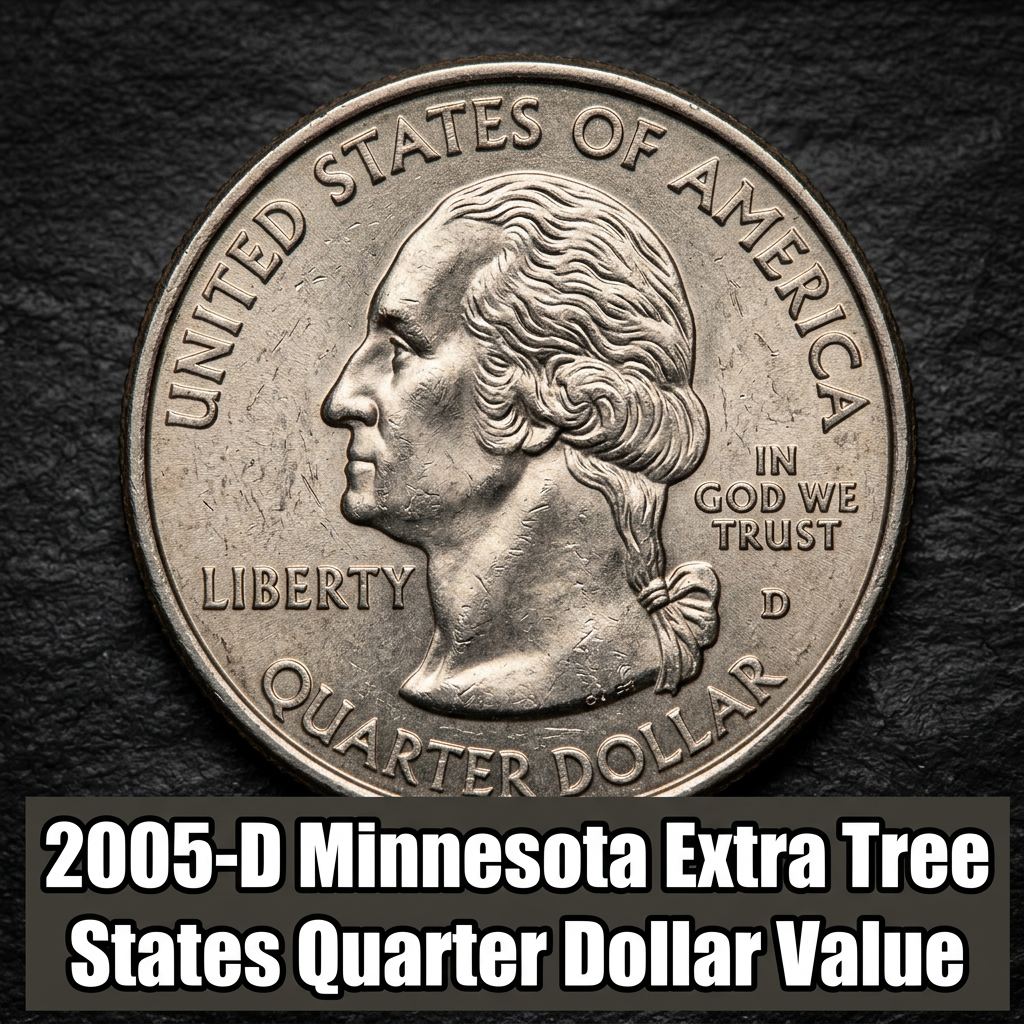
The 2005-D Minnesota Extra Tree States Quarter Dollar is worth anywhere from $1 to $5 in circulated condition, but error varieties — especially the famous “Extra Tree” doubled die — can fetch anywhere from $25 to over $100 depending on the grade and how prominent the doubling appears.
If you’ve been digging through your change jar or inherited a coin collection and found a 2005 Minnesota quarter, you’re in the right place. This guide breaks down exactly what you’re looking at, what makes certain versions more valuable, and how to tell if yours is the rare kind. To get a quick scan and identification of your coin at home, check out the best coin identifier app available right now — it can save you a lot of guesswork.
What Is the 2005-D Minnesota Extra Tree Quarter?
The 2005-D Minnesota State Quarter was minted at the Denver Mint as part of the popular 50 State Quarters Program. The standard design features the Minnesota state outline, a loon on a lake, and a pine tree in the foreground — a classic design representing the Land of 10,000 Lakes.
But here’s where it gets interesting. A small number of these quarters were struck with a doubled die error on the reverse, causing an extra tree to appear in the design. This variety is commonly called the “Extra Tree” error, and collectors have been hunting for it ever since it was discovered. The doubling is most visible on the trees to the right of center — you’ll see what looks like a ghost image or an additional tree trunk and branches just slightly offset from the original.
There are actually a few different Extra Tree varieties, ranging from subtle to very dramatic. The stronger the doubling, the more valuable the coin. Even a worn example with visible Extra Tree doubling is worth far more than a common circulated quarter.
How Much Is the 2005-D Minnesota Extra Tree Quarter Worth?
Value depends heavily on condition and which variety of the Extra Tree you have. Here’s a general breakdown:
| Condition | Standard 2005-D MN Quarter | Extra Tree Error Variety |
|---|---|---|
| Circulated (Fine) | $0.25 – $0.50 | $25 – $40 |
| Extremely Fine (XF) | $0.50 – $1.00 | $40 – $65 |
| Mint State (MS63–MS65) | $1 – $5 | $75 – $125+ |
| Gem Uncirculated (MS66+) | $5 – $15 | $150 – $300+ |
For the most current auction results and certified coin prices, you can explore live State Quarter price data for 2005 issues across major grades to see how similar coins are performing on the market today.
How to Spot the Extra Tree on Your Quarter
Identifying the Extra Tree variety doesn’t require a lot of fancy equipment. Here’s what to do:
Grab a 5x to 10x magnifying loupe and look at the reverse of your coin — specifically at the trees on the right side of the design. On a normal Minnesota quarter, the trees are clean and clearly defined. On the Extra Tree variety, you’ll notice a doubling effect, almost like a second set of tree outlines slightly overlapping the first.
The most notable doubled die varieties include what collectors call “Extra Tree Strong” (ETS) and “Extra Tree Weak” (ETW). The strong variety shows very visible doubling across multiple tree trunks and is significantly more valuable. The weak variety is subtler and harder to spot without magnification, but still commands a solid premium over face value.
If you’re not sure what you’re looking at, CoinHix is a great tool to use. The CoinHix app lets you photograph your coin and instantly compare it against known varieties in a searchable database — perfect if you’re new to coin collecting or don’t have access to a local coin dealer.
Is It Worth Getting Your Coin Graded?
If you’ve confirmed you have an Extra Tree variety in nice condition, professional grading from PCGS or NGC can significantly boost its value. A raw (ungraded) Extra Tree quarter might sell for $30–$50 casually, but the same coin in an NGC holder graded MS65 could bring two to three times that amount at auction.
Grading does cost money — usually $25 to $50 per coin for basic submissions — so it only makes financial sense if your coin looks clean, lustrous, and free of heavy marks. For a more detailed breakdown of what your 2005 quarter might be worth across all conditions, this complete 2005 quarter value guide with pricing across all grades is a helpful reference to keep bookmarked.
For quick on-the-go estimates without submitting to a grading service, CoinHix gives you solid real-world price ranges based on recent sales data, which is exactly what you need when you’re just starting out.
Frequently Asked Questions
Q: How do I know if my 2005-D Minnesota quarter is the Extra Tree error?
A: Use a magnifying loupe (5x–10x) and examine the trees on the reverse. If you see a doubled or ghost image of an extra tree overlapping the original design, especially on the right side, you likely have the Extra Tree variety. Comparing it to photos of confirmed examples online will help confirm what you have.
Q: Are all 2005-D Minnesota Extra Tree quarters valuable?
A: Not all to the same degree. The “strong” doubling varieties are the most sought-after and can bring $75–$300 or more in higher grades. Weaker varieties still have collector value — typically $25–$50 — but the strong errors are what most serious collectors want.
Q: Where is the best place to sell a 2005-D Minnesota Extra Tree quarter?
A: eBay is one of the most popular platforms for selling State Quarter errors because of the wide collector audience. If your coin is graded and slabbed, Heritage Auctions or Stack’s Bowers are excellent options. Local coin shows can also be great for quick, fair offers from dealers who specialize in modern errors.