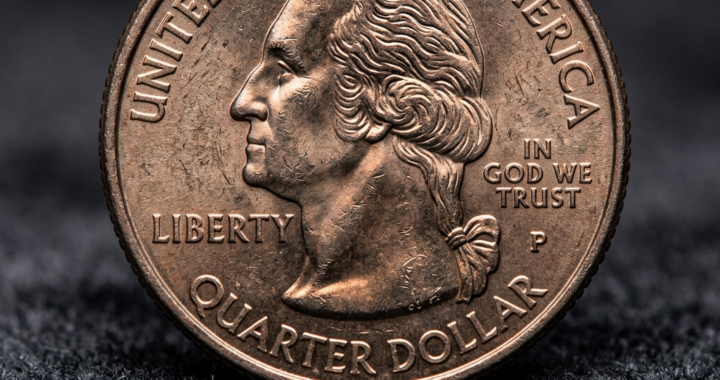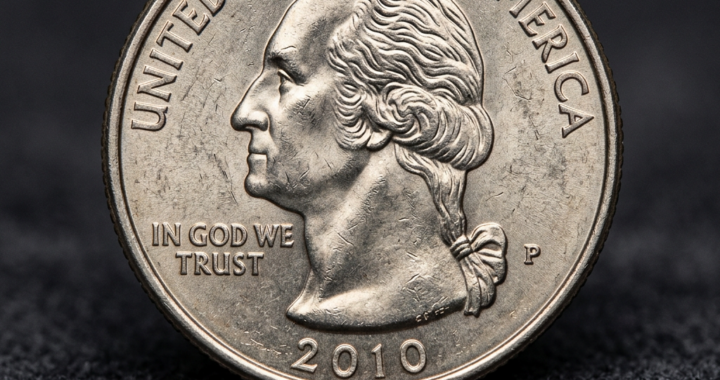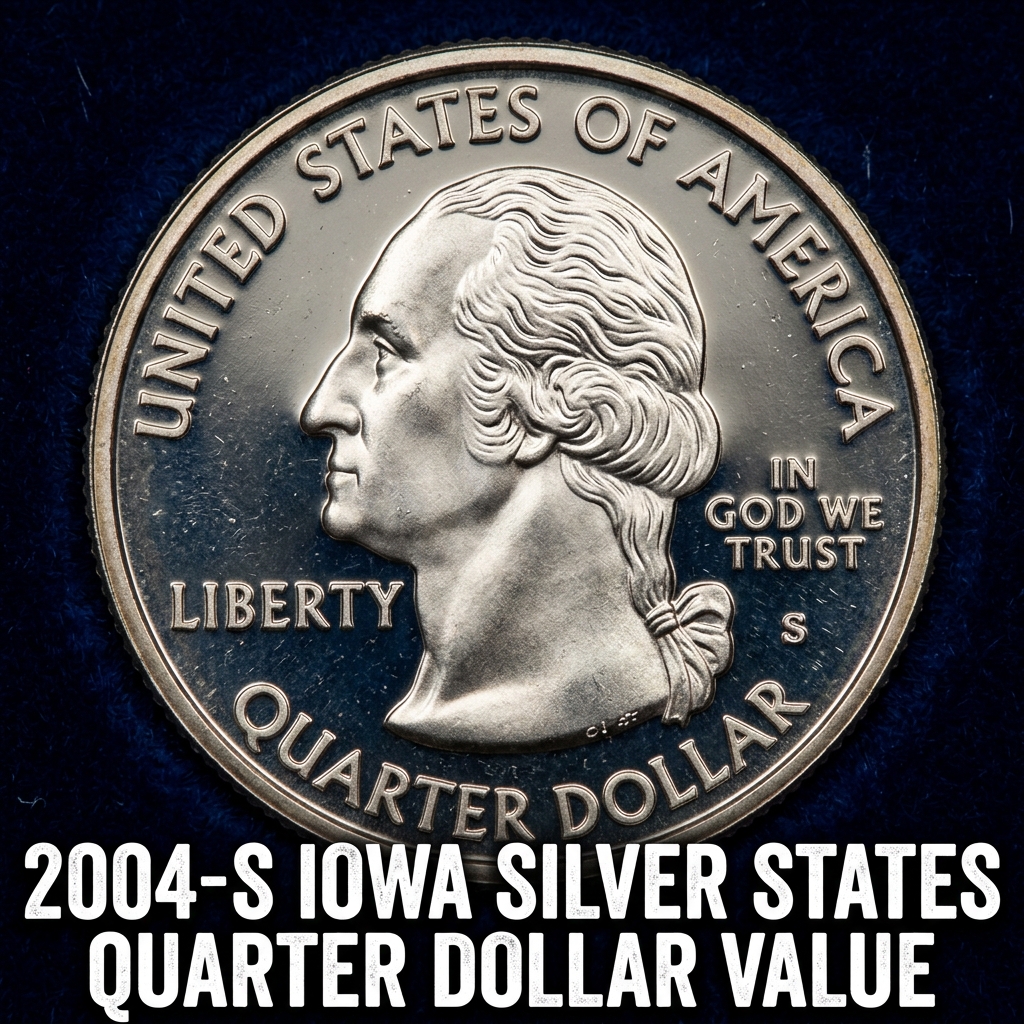
The 2004-S Iowa Silver State Quarter is worth anywhere from $5 in lightly circulated condition to over $25 or more in pristine proof grades, making it a surprisingly rewarding find for anyone who comes across one in a coin roll or old collection.
If you’ve stumbled onto one of these coins and you’re wondering whether it’s worth anything, you’re not alone. Thousands of Americans dig through old coin jars, inherited collections, and bank rolls every year looking for hidden gems. The 2004-S Iowa quarter is one of those coins that often gets overlooked — but it has real collector value, especially in silver. To get a quick read on what your coin might be worth, a best coin identifier app can help you identify the mint mark, metal type, and grade in seconds right from your phone.
What Makes the 2004-S Iowa Quarter Special
The 2004-S Iowa State Quarter was struck at the San Francisco Mint, which is why it carries the “S” mint mark. But what really sets it apart from the quarters you’d find in everyday pocket change is the metal. The U.S. Mint produced a special silver proof version of this coin, made with 90% silver and 10% copper — the same composition used in classic American coinage before 1965.
These silver proof quarters were sold directly to collectors in special proof sets and were never released for general circulation. That means they’re in far better condition than anything you’d find in a vending machine. The San Francisco Mint is known for its exceptional proof quality, and the 2004-S Iowa Silver Quarter is no exception. Each coin features a deeply mirrored background and sharp, frosted design details that give it a stunning cameo appearance.
The reverse design celebrates Iowa’s history, showing a one-room schoolhouse with a teacher and students, surrounded by a prairie landscape. The inscription reads “Foundation in Education,” honoring the state’s early commitment to public schooling. It’s a clean, attractive design that resonates with both coin collectors and history enthusiasts.
2004-S Iowa Silver Quarter Values by Grade
Coin value is heavily tied to condition and grade. Proof coins like the 2004-S Iowa Silver Quarter are graded on the Sheldon scale from PR-60 to PR-70, with PR-70 being absolutely perfect with no flaws under magnification. The cameo (CAM) and deep cameo (DCAM) designations add additional value when the contrast between the frosted design and mirror fields is sharp and dramatic.
Here’s a breakdown of typical values:
| Grade | Designation | Estimated Value |
|---|---|---|
| PR-65 | DCAM | $5 – $8 |
| PR-67 | DCAM | $8 – $14 |
| PR-68 | DCAM | $12 – $18 |
| PR-69 | DCAM | $18 – $25 |
| PR-70 | DCAM | $30 – $60+ |
Silver melt value also provides a baseline. With roughly 0.1808 troy ounces of silver per coin, the intrinsic metal value fluctuates with spot prices. Even in lower grades, the silver alone gives it more worth than a standard clad quarter.
For a broader look at what 2004 State Quarters are worth across different mints and conditions, it’s worth comparing your coin against recent sales data.
How the Iowa Silver Quarter Compares to Other 2004 State Quarters
The year 2004 was a big one for the State Quarters program. Five states were honored: Michigan, Florida, Texas, Iowa, and Wisconsin. Each was produced in both the standard clad version (copper-nickel) and the silver proof version from San Francisco.
If you want to compare the 2004 Michigan State Quarter prices and recent auction results, you’ll notice that values across 2004 silver proofs are fairly consistent, with slight premiums going to coins with better cameo contrast or certified perfect grades. Among the five, Wisconsin occasionally commands slightly higher prices due to a well-known variety (the “extra leaf” error), but Iowa holds its own as a solid collector piece.
Tips for Getting the Most Out of Your 2004-S Iowa Silver Quarter
If you think you have one of these coins, here’s how to maximize its value. First, never clean it. Cleaning destroys the mirror surfaces that make proof coins desirable and can wipe out most of its collector premium. Second, store it properly in a coin flip or airtight holder away from humidity and direct light.
Third, consider getting it graded by a professional service like PCGS or NGC if you believe it’s in exceptional condition — PR-69 or PR-70. A certified coin in a slab sells more easily and at higher prices than a raw coin of similar quality.
CoinHix is a great tool for tracking real-time market prices and seeing what similar coins have recently sold for at auction. Whether you’re a first-time finder or a seasoned collector, CoinHix gives you transparent pricing data so you’re never guessing. You can also snap a photo of your coin and use CoinHix to help identify its mint mark and get an instant ballpark value from your phone.
FAQ
Q: How do I know if my 2004-S Iowa quarter is silver or clad?
A: The easiest way is to look at the edge of the coin. A clad quarter will show a visible copper-colored stripe along the edge, while a silver proof quarter will have a uniform silver-colored edge with no copper layer. You can also check for the “S” mint mark — but remember, San Francisco also made clad proof sets, so the edge check is the most reliable method.
Q: Is the 2004-S Iowa Silver Quarter rare?
A: It’s not extremely rare, but it’s not something you’d find in circulation either. The Mint sold silver proof sets in limited quantities to collectors, so the population is controlled. Higher-grade examples certified by PCGS or NGC — especially PR-70 DCAM — are genuinely scarce and command real premiums.
Q: Where is the best place to sell a 2004-S Iowa Silver Quarter?
A: Online platforms like eBay, Heritage Auctions, or Great Collections are popular options. If your coin is raw (ungraded), you might also visit a local coin dealer for a quick offer. For certified coins, major auction houses tend to get the best results. Always research recent sales before accepting any offer.