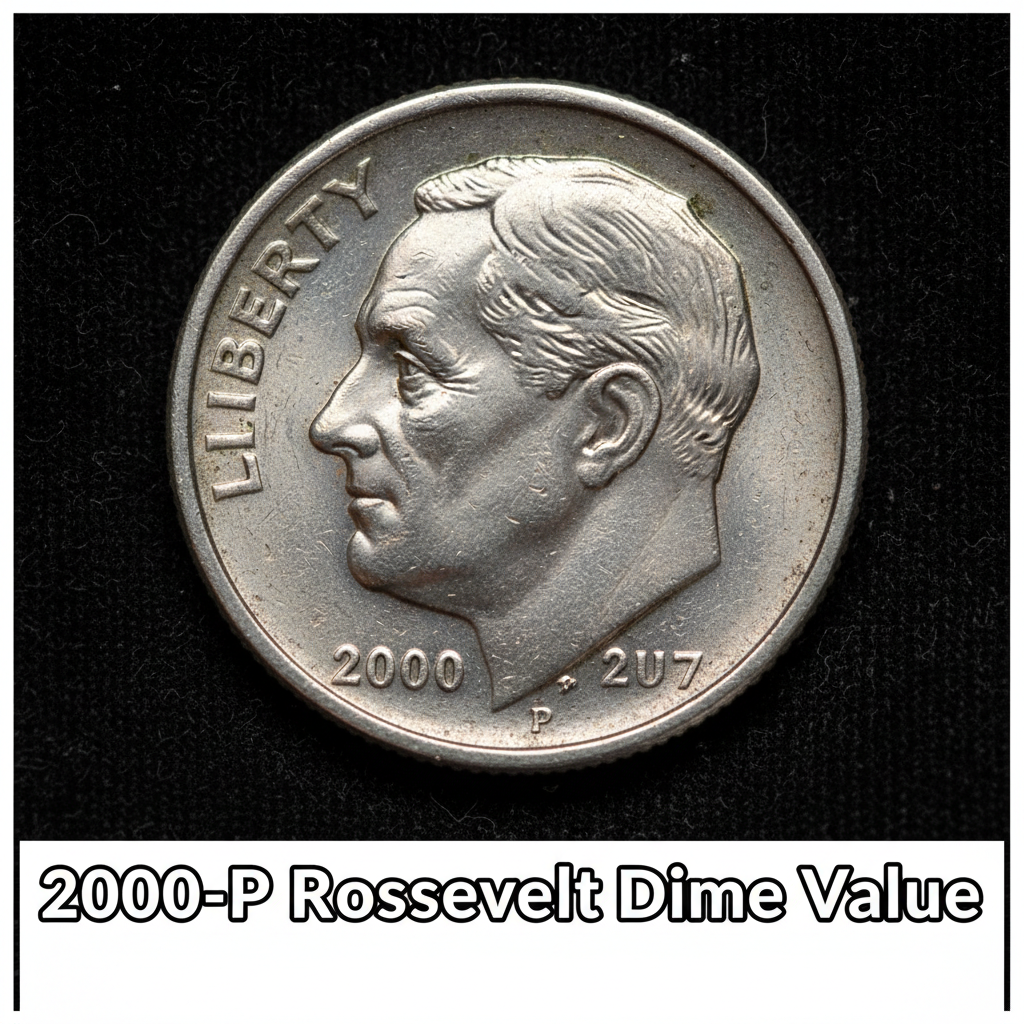
The 2000-P Roosevelt Dime is worth face value in circulated condition, but well-preserved uncirculated examples can fetch anywhere from $1 to $15 or more, with rare error coins climbing into the hundreds of dollars. If you found one in your change or a coin jar, here’s what you need to know.
What Makes the 2000-P Roosevelt Dime Special
The 2000-P Roosevelt Dime was struck at the Philadelphia Mint during the final year of the 20th century — technically the last full year before the new millennium truly began. Hundreds of millions of these dimes were produced, which is why most of them circulate freely without much premium attached. The “P” mintmark stands for Philadelphia and appears on the obverse side of the coin, just above the date. Roosevelt dimes have been minted since 1946 and are made of a copper-nickel clad composition. Despite their common status, collectors still pay attention to condition and striking quality. If you’re trying to figure out whether your coin is worth something beyond ten cents, using the best coin identifier app can help you identify key details like mint marks, strike quality, and grade estimates right from your phone. Tools like CoinHix make this process fast and beginner-friendly, even if you’ve never collected coins before.
2000-P Roosevelt Dime Value by Condition
The value of a 2000-P Roosevelt Dime depends almost entirely on its condition, also known as its grade. A coin that’s been rolling around in pockets and cash registers is going to look very different from one that came straight from a mint roll and has never been touched. Here’s a general breakdown of what collectors and dealers typically pay:
| Condition / Grade | Estimated Value |
|---|---|
| Circulated (Good to Fine) | $0.10 (face value) |
| Extremely Fine (EF-45) | $0.25 – $0.75 |
| Uncirculated (MS-63) | $1 – $3 |
| Choice Uncirculated (MS-65) | $4 – $8 |
| Gem Uncirculated (MS-67) | $10 – $30+ |
| Error Coins (varies) | $50 – $500+ |
For a more detailed look at certified mint state values and recent auction results for the 2000-P Roosevelt Dime, it’s worth checking up-to-date market data before buying or selling.
Error Coins That Can Be Worth Real Money
Here’s where things get exciting for everyday coin finders. Some 2000-P Roosevelt Dimes were struck with errors at the mint, and those mistakes can make an ordinary dime worth significantly more. Common errors to look for include doubled die obverse (DDO), where the lettering or date appears slightly doubled under magnification. Off-center strikes, where the design is noticeably shifted to one side of the coin, are also valuable. Even minor die cracks or cuds — raised blobs of metal along the coin’s edge — can attract collector interest. If your dime looks “off” in any way, don’t dismiss it. Take a close look under a magnifying glass. You can also scan it using CoinHix, which is designed to help everyday people spot errors and unusual characteristics without needing years of numismatic experience.
How to Check Your 2000-P Dime’s Grade at Home
Grading coins at home doesn’t require a professional setup. Start by examining the coin’s high points — on a Roosevelt Dime, that means the cheek, the hair above the ear, and the torch on the reverse. If these areas show flat, worn-looking metal with no original luster, the coin is circulated. If the coin still has its original mint shine (often described as a frosty or cartwheel luster when tilted under light), it may be uncirculated. Avoid touching the surfaces with your fingers, as oils and dirt cause permanent damage. Store promising coins in soft plastic flips or airtight holders. For a solid reference point, the current estimated value guide for the 2000-P Roosevelt Dime and other year variants can give you a starting baseline before you visit a dealer or submit for professional grading.
Should You Get It Professionally Graded
For most circulated 2000-P Roosevelt Dimes, professional grading through services like PCGS or NGC simply isn’t cost-effective. Grading fees typically start around $20–$30 per coin, which would far exceed the coin’s value. However, if you believe you have a high-grade MS-67 or better specimen, or if you’ve found a genuine mint error, professional certification is absolutely worth considering. A certified MS-67 example of the 2000-P Roosevelt Dime can sell for multiples of what an ungraded coin commands. Dealers and auction platforms trust certified coins far more than raw examples. CoinHix can help you do a quick preliminary assessment before you spend money on formal grading — a smart first step that many experienced collectors recommend.
FAQ
Q: Is a 2000-P Roosevelt Dime rare?
A: No, it is not rare. The Philadelphia Mint produced hundreds of millions of them in 2000, making it one of the most common modern dimes in existence. However, high-grade uncirculated examples and mint error coins can still carry collector premiums.
Q: What does the “P” mintmark mean on a 2000 dime?
A: The “P” mintmark indicates the coin was struck at the Philadelphia Mint. The Philadelphia Mint began adding the “P” mintmark to dimes in 1980. Dimes from the Denver Mint carry a “D” mintmark instead.
Q: Can a 2000-P Roosevelt Dime be worth more than face value?
A: Yes, under the right circumstances. Uncirculated coins in grades MS-65 and above, along with documented mint error coins, can fetch anywhere from a few dollars to several hundred dollars depending on the specific variety and quality.