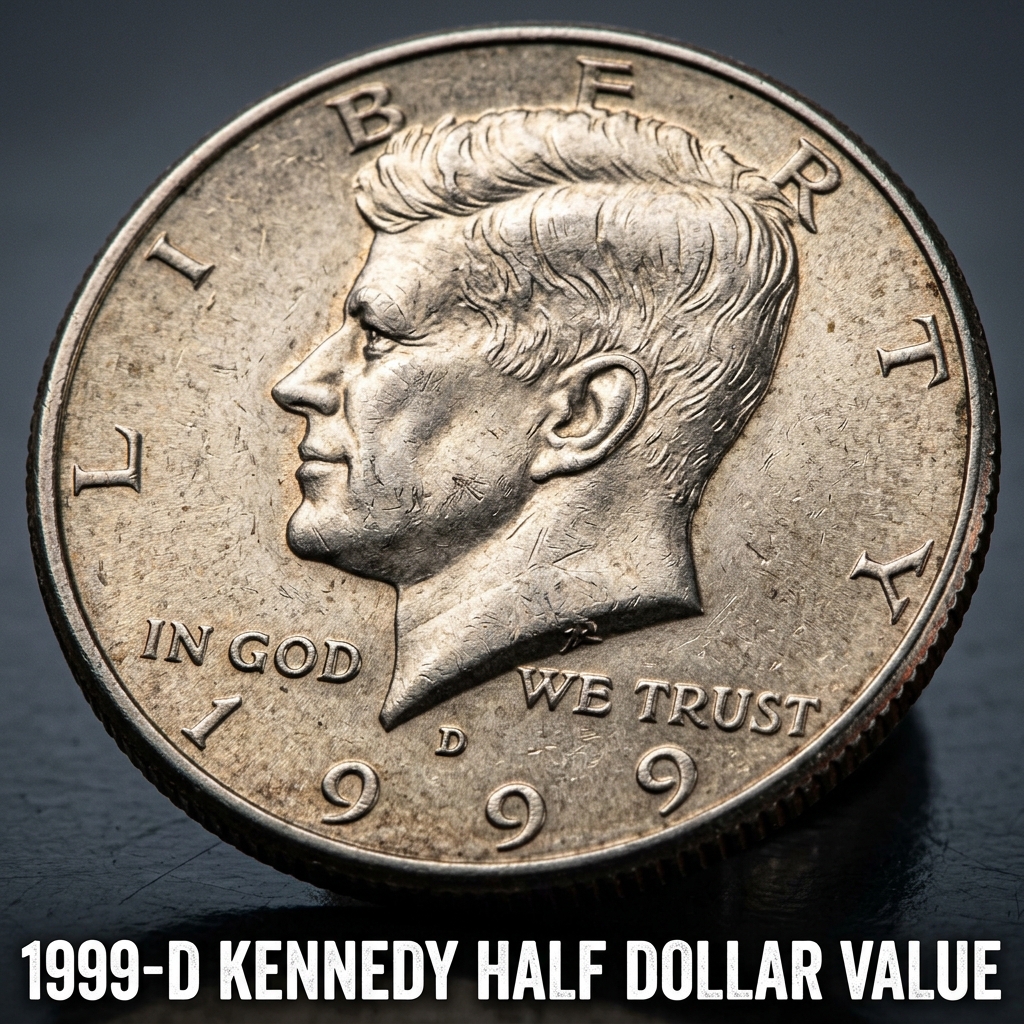
The 1999-D Kennedy Half Dollar is worth between $0.50 and $15 for most circulated examples, but well-preserved uncirculated coins can climb to $30 or more depending on grade and eye appeal. If you found one in a drawer or old coin jar, here’s exactly what you need to know.
What Makes the 1999-D Kennedy Half Dollar Special
The 1999-D Kennedy Half Dollar was struck at the Denver Mint, indicated by the small “D” mintmark on the obverse just below Kennedy’s portrait. That year, the Denver Mint produced approximately 8,900,000 half dollars — a relatively modest number compared to some earlier decades when half dollars were common in everyday commerce. By 1999, however, half dollars had largely disappeared from regular circulation, which means many of these coins went directly into collector hands or sat untouched in mint sets.
If you want a quick and accurate identification of your coin before diving deeper into valuation, using the best coin identifier app can save you a lot of guesswork. Simply snap a photo and get instant results on mint mark, date, and estimated grade — a great first step for any beginner.
The coin features the classic Gilroy Roberts portrait of President John F. Kennedy on the obverse and Frank Gasparro’s Presidential Seal design on the reverse, a combination that has remained largely unchanged since 1964. The 1999-D is made of a copper-nickel clad composition, not silver, which is an important distinction for value purposes.
How Much Is a 1999-D Kennedy Half Dollar Worth?
Value depends heavily on condition. A coin that’s been circulated and shows heavy wear is really only worth face value or just slightly above it — about 50 cents to $1. Lightly circulated examples might fetch $1 to $3 from a collector. The real money is in uncirculated specimens.
Here’s a quick reference table for 1999-D Kennedy Half Dollar values by grade:
| Grade | Condition Description | Estimated Value |
|---|---|---|
| VF-20 to EF-45 | Circulated, moderate to light wear | $0.50 – $2 |
| MS-60 to MS-63 | Uncirculated, some bag marks | $3 – $8 |
| MS-64 to MS-65 | Choice to Gem Uncirculated | $10 – $20 |
| MS-66 and above | Superb Gem, nearly perfect | $25 – $100+ |
For more detailed grade-by-grade pricing, check out the 1999 Kennedy Half Dollar price data tracked in MS grades to understand how the market is moving right now.
How to Grade Your 1999-D Half Dollar at Home
Grading coins at home isn’t always easy, but you can make a solid estimate with a few simple checks. Start by looking at the high points of the design — Kennedy’s cheekbone, hair above his ear, and the eagle’s breast feathers on the reverse. If these areas show smooth, worn-down surfaces, the coin has seen circulation.
An uncirculated coin will have its original mint luster intact. When you tilt it under a light source, the surface should show a cartwheel effect — a rotating sheen that rolls across the coin. If that luster is gone or dull, it’s circulated.
CoinHix is a fantastic tool for this step. The CoinHix app uses AI-powered image recognition to estimate your coin’s grade from a photo taken on your phone. It’s one of the most popular options among hobbyist collectors and beginners who want a reliable second opinion before buying or selling.
Errors and Varieties Worth Looking For
Most 1999-D Kennedy Half Dollars are standard strikes, but like any coin, there are occasional errors that significantly boost value. Look for:
– Double die obverse — doubling visible in the date or lettering
– Off-center strikes — where the design is shifted from center
– Die cracks or cuds — raised lines or blobs from a damaged die
Error coins in uncirculated condition can bring anywhere from $50 to several hundred dollars depending on severity and collector demand. If you suspect your coin has an error, consider getting it professionally graded by PCGS or NGC before selling. You can find a more complete breakdown of 1999 half dollar value information including error varieties and condition grades to see how much more these special coins command.
Should You Keep or Sell Your 1999-D Kennedy Half Dollar
For most people, a circulated 1999-D is a fun piece of history but not a retirement fund. That said, if you have a roll or bag of them in uncirculated condition — maybe pulled from a mint set — they’re worth sorting carefully. Even a few MS-65 examples could add up quickly.
If you’re just getting started, CoinHix can help you build a picture of what you have across an entire collection, not just one coin. It tracks market values and keeps a digital inventory, which is incredibly useful as your collection grows.
—
FAQ
Q: Is the 1999-D Kennedy Half Dollar made of silver?
A: No. Kennedy Half Dollars minted from 1971 onward, including the 1999-D, are made of copper-nickel clad. Only the 1964 issue was 90% silver, and 1965–1970 issues were 40% silver.
Q: How can I tell if my 1999-D half dollar is uncirculated?
A: Look for original mint luster — a shiny, flowing cartwheel effect under light. Circulated coins look flat or dull on the high points of the design.
Q: Where is the best place to sell a 1999-D Kennedy Half Dollar?
A: eBay is a good starting point for circulated coins. For higher-grade examples, coin shows or PCGS/NGC-certified auction houses will get you the best prices. Always check recent sold listings before committing to a price.