The 1988-D Jefferson Nickel is worth anywhere from face value (5 cents) in circulated condition to around $5 or more in pristine mint state — and certain error coins can fetch significantly higher prices from the right collector.
If you recently dug through a coin jar or inherited an old collection, chances are you’ve come across a few Jefferson nickels from the late 1980s. These coins are common, but that doesn’t mean they’re all worthless. Knowing what to look for can make a real difference. Using the best coin identifier app on your smartphone is a great first step to quickly identifying your coin’s mint mark, grade, and approximate value without needing to visit a coin shop.
—
What Is the 1988-D Jefferson Nickel?
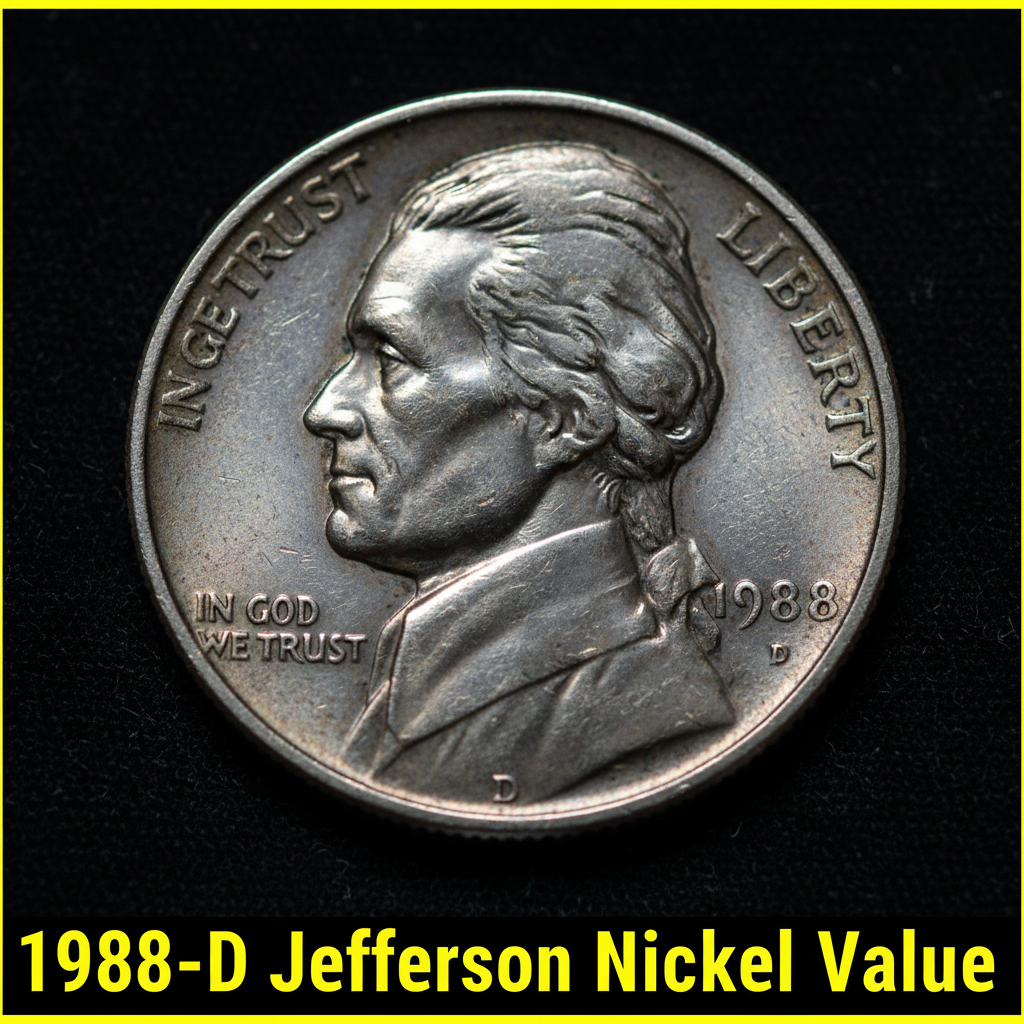
The 1988-D Jefferson Nickel was struck at the Denver Mint, which is indicated by the small “D” mint mark located on the obverse (front) of the coin, to the right of Jefferson’s portrait. In 1988, the Denver Mint produced approximately 663,771,652 of these nickels — that’s over 663 million coins. Because of this enormous mintage, the 1988-D is considered a very common coin in most grades.
The coin features the classic design by Felix Schlag: Thomas Jefferson on the front and Monticello (Jefferson’s famous Virginia home) on the reverse. This design has been a staple of American coinage since 1938. The 1988-D is composed of 75% copper and 25% nickel, with a diameter of 21.2mm and a weight of 5 grams. Nothing about the basic specs makes this coin rare — but condition, errors, and eye appeal can still make individual examples quite desirable to collectors.
—
1988-D Jefferson Nickel Value by Grade
Most 1988-D Jefferson Nickels you find in pocket change are heavily worn and worth exactly five cents. However, coins that have been kept in better condition — especially those that never entered circulation — can carry a modest collector premium.
Here’s a general value breakdown:
| Grade | Condition Description | Estimated Value |
|---|---|---|
| Good (G-4) | Heavy wear, major details visible | Face value ($0.05) |
| Fine (F-12) | Moderate wear, all features clear | Face value ($0.05) |
| Extremely Fine (EF-40) | Light wear on high points | $0.10 – $0.25 |
| Mint State 63 (MS-63) | Uncirculated, minor blemishes | $0.50 – $1.50 |
| Mint State 65 (MS-65) | Gem uncirculated, sharp strike | $2 – $5 |
| Mint State 67+ (MS-67+) | Superb gem, virtually perfect | $50 – $200+ |
For up-to-date auction results and certified coin prices, you can browse recent 1988 Jefferson Nickel market data across mint state grades to see what collectors are actually paying right now.
—
Are Any 1988-D Jefferson Nickels Worth More Than Face Value?
Yes — but only under specific circumstances. The biggest value drivers for any modern coin like the 1988-D are grade, strike quality, and errors. At the top of the grading scale, MS-67 and MS-67+ examples have sold at auction for $100 to over $200 because coins this perfect from a high-mintage year are surprisingly hard to find in certified top grades.
Error coins are another story entirely. Known varieties to watch for on 1988-D nickels include doubled die obverse errors (where lettering or Jefferson’s features appear slightly doubled), off-center strikes, and die cap errors. These can be worth anywhere from $10 to several hundred dollars depending on the severity of the error and collector demand.
CoinHix is a great tool for tracking down error coin prices and seeing how similar coins have sold at auction. The CoinHix app pulls live market data so you’re never guessing blindly.
—
How to Check the Condition of Your 1988-D Nickel
Grading coins at home takes a little practice, but here are some basics. Look at the high points of the design — the top of Jefferson’s hair and the steps of Monticello on the reverse. If those areas show significant flattening or wear, the coin is circulated and probably worth face value. If the coin looks bright, sharp, and has never been in circulation, it may qualify as mint state.
Use a magnifying glass (at least 5x) and a bright light to check for contact marks, scratches, and luster. Original mint luster has a cartwheel-like shine that disappears once a coin is handled or circulated. If you’re unsure about your coin’s grade, check out a detailed 1988 nickel value guide with condition photos and price comparisons to match your coin to a known grade.
You can also use CoinHix to photograph your coin and get an instant AI-powered estimate — no coin shop visit needed.
—
FAQ
Q: Is a 1988-D Jefferson Nickel rare?
A: No, the 1988-D Jefferson Nickel is not rare. With over 663 million minted in Denver alone, it’s one of the most common modern nickels you’ll find. However, gem uncirculated examples in MS-66 and above are genuinely scarce in certified form.
Q: What makes a 1988-D nickel more valuable?
A: The main value drivers are grade (uncirculated coins in MS-65 and above are worth more), errors (doubled dies, off-center strikes, etc.), and eye appeal. A coin with strong luster, sharp strike, and no distracting marks will always command a premium over an average example.
Q: Should I clean my 1988-D nickel before selling it?
A: Absolutely not. Cleaning a coin — even gently — removes the original mint luster and can dramatically reduce its value. Collectors and grading services can easily spot cleaned coins, and they’re typically worth far less than problem-free examples. Store your coins in protective flips or holders instead.