The 1986-S Washington Quarter is worth anywhere from $1 to $5 in typical proof condition, with high-grade examples graded PR70 by PCGS or NGC fetching up to $50 or more at auction. If you stumbled across one of these shiny coins and wondered whether it’s a hidden treasure, you’re in the right place — let’s break it all down.
What Is the 1986-S Washington Quarter?
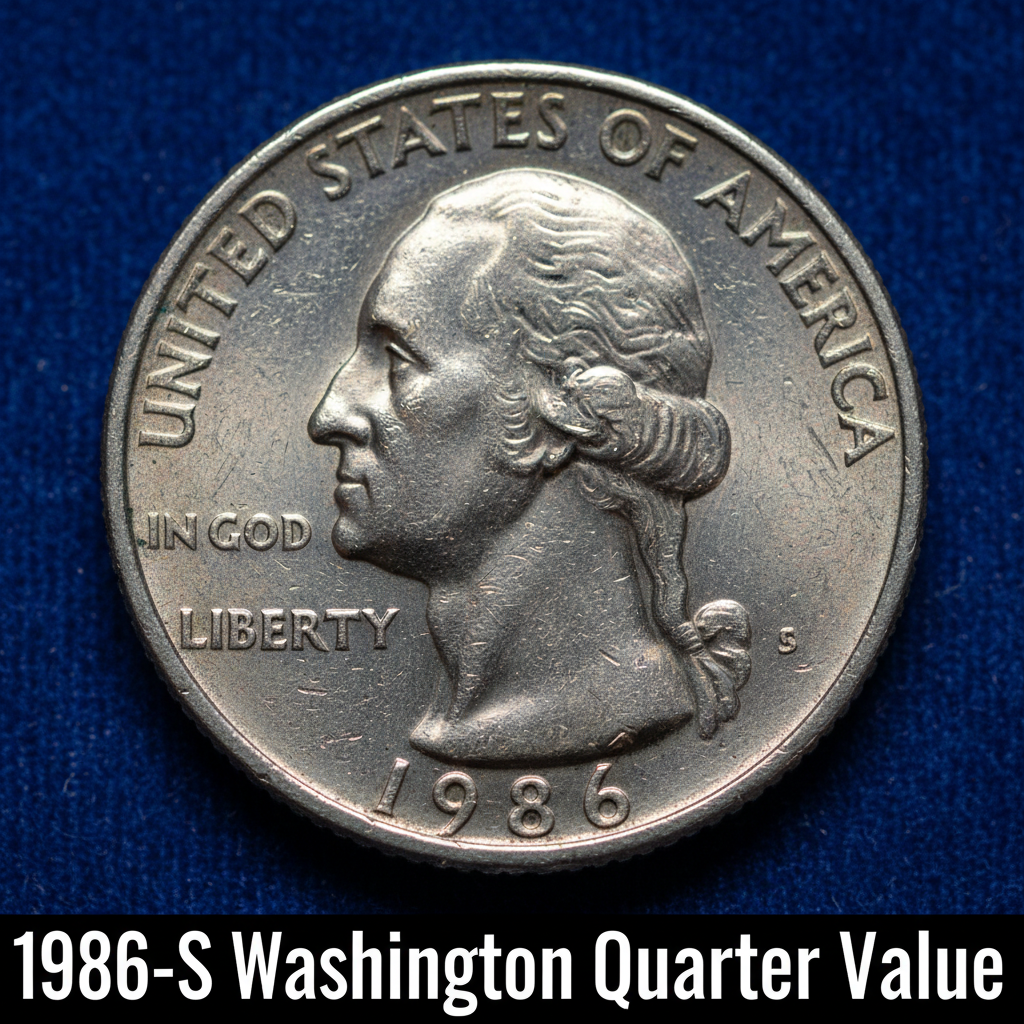
Before diving into values, it helps to understand what you’re holding. The 1986-S Washington Quarter was struck at the San Francisco Mint exclusively as a proof coin — meaning it was never released into general circulation. That “S” mintmark on the obverse, just below Washington’s neck, is your first clue. Proof coins are made with specially polished dies and planchets, giving them that mirror-like finish and sharp, frosted design details collectors love.
These quarters were sold directly to collectors as part of the 1986 United States Mint Proof Set, not handed out as change at the grocery store. That’s why finding one loose can be a little surprising — it likely came from a broken-up proof set. If you want to quickly identify your coin and confirm the mintmark, using the best coin identifier app on your phone can save a lot of guesswork.
The coin features the classic John Flanagan portrait of George Washington on the obverse and the heraldic eagle reverse design that was standard throughout the Washington quarter series before the 50 State Quarters program launched in 1999.
1986-S Washington Quarter Value by Grade
Since the 1986-S was only made as a proof coin, grading works a little differently here. Instead of the standard MS (mint state) scale, proof coins are graded on a PR scale. Most 1986-S quarters you’ll find are in PR65 to PR69 condition, since they were made for collectors. Only a small percentage earn the perfect PR70 designation, and those command the highest prices.
You can check detailed 1986-S Washington Quarter price data across multiple grades to see exactly how the market is trending right now.
Here’s a general value table based on current market data:
| Grade | Description | Estimated Value |
|---|---|---|
| PR65 | Gem Proof, minor blemishes | $1 – $3 |
| PR67 | Superb Gem Proof | $4 – $8 |
| PR68 | Near flawless surfaces | $8 – $20 |
| PR69 | Nearly perfect | $15 – $35 |
| PR70 | Perfect Proof | $40 – $75+ |
Factors That Affect the 1986-S Quarter’s Worth
Not all 1986-S Washington Quarters are equal in value. Several key factors push prices up or down:
Cameo vs. Deep Cameo Designation: Proof coins can also earn a CAMEO (CAM) or DEEP CAMEO (DCAM) designation if the frosted design elements contrast sharply against the mirror-like fields. Deep Cameo examples are the most desirable and can be worth two to three times more than a standard proof of the same grade.
Certification: A coin slabbed by PCGS or NGC carries more buyer confidence and typically sells for a premium over raw (uncertified) examples. If your coin is loose and ungraded, its real-world value is usually at the lower end of the range.
Condition of the surfaces: Even proof coins can develop hairlines, spots, or haze from improper storage. These flaws reduce the grade — and the value — significantly.
For a deeper look at how all these variables affect pricing, the 1986 Washington Quarter value breakdown at Coin Value App is a helpful resource worth bookmarking.
How to Identify and Sell Your 1986-S Quarter
If you’ve found a 1986-S Washington Quarter and want to know its true worth, your first step is proper identification. Look for the “S” mintmark on the obverse just below Washington’s portrait. The coin should have a distinctly shiny, mirror-like appearance with frosted raised details — that’s the hallmark of a proof strike.
Once identified, CoinHix is a great tool for getting a quick market value estimate. The app pulls real auction data so you’re not guessing based on outdated price guides. It’s especially useful for proof coins where small grade differences mean big price swings.
For selling, options include eBay (great for reaching collectors directly), local coin shows, or established coin dealers. If your coin grades PR69 or PR70, it’s worth getting it professionally certified before listing — it could significantly increase what a buyer is willing to pay.
Is the 1986-S Washington Quarter Rare?
In short, no — the 1986-S is not a rare coin. The San Francisco Mint produced over 3.1 million proof sets that year, so these quarters are relatively common in the collector market. That said, perfect PR70 specimens with Deep Cameo designation are genuinely scarce and attract real collector interest.
CoinHix regularly tracks auction results for proof Washington quarters, and you can see that most PR70 DCAM examples sell in the $50–$75+ range, while standard PR65 coins often go for under $3. Understanding that spectrum is key to setting realistic expectations.
—
FAQ
Q: Is the 1986-S Washington Quarter worth anything out of the original proof set?
A: Yes, it still has value on its own, typically $1–$5 for a typical proof grade. However, a complete 1986 Proof Set in its original packaging can sell for $8–$15, so it may actually be worth more kept together.
Q: How can I tell if my 1986-S quarter is a Deep Cameo?
A: Hold the coin under a light and tilt it slightly. If you see a strong contrast between the frosted (white/matte) raised design and the deeply reflective mirror-like background fields, it likely qualifies as a Deep Cameo. For official designation, you’ll need to submit it to PCGS or NGC for grading. CoinHix can also help you estimate where your coin might fall before you spend money on certification.
Q: Can I find a 1986-S quarter in everyday change?
A: It’s extremely unlikely. Since the 1986-S was only struck as a proof coin for collectors, it was never released into circulation. If you found one in your pocket change, it was almost certainly accidentally spent from a broken-up proof set — a happy accident worth holding onto.