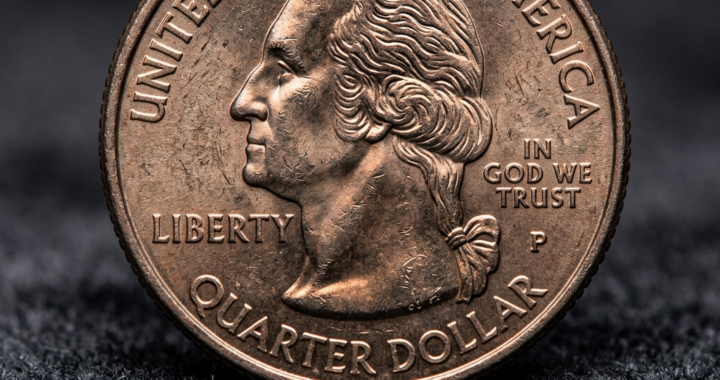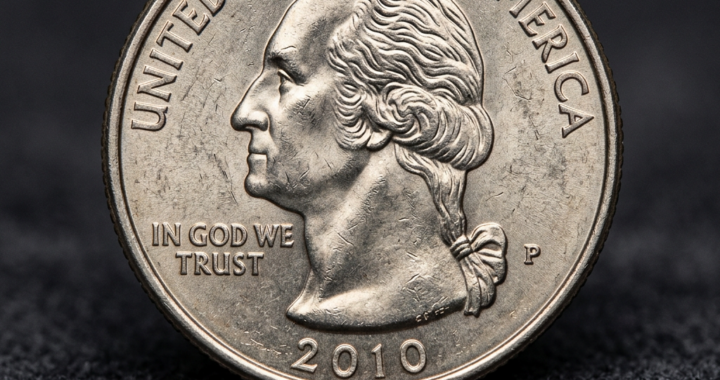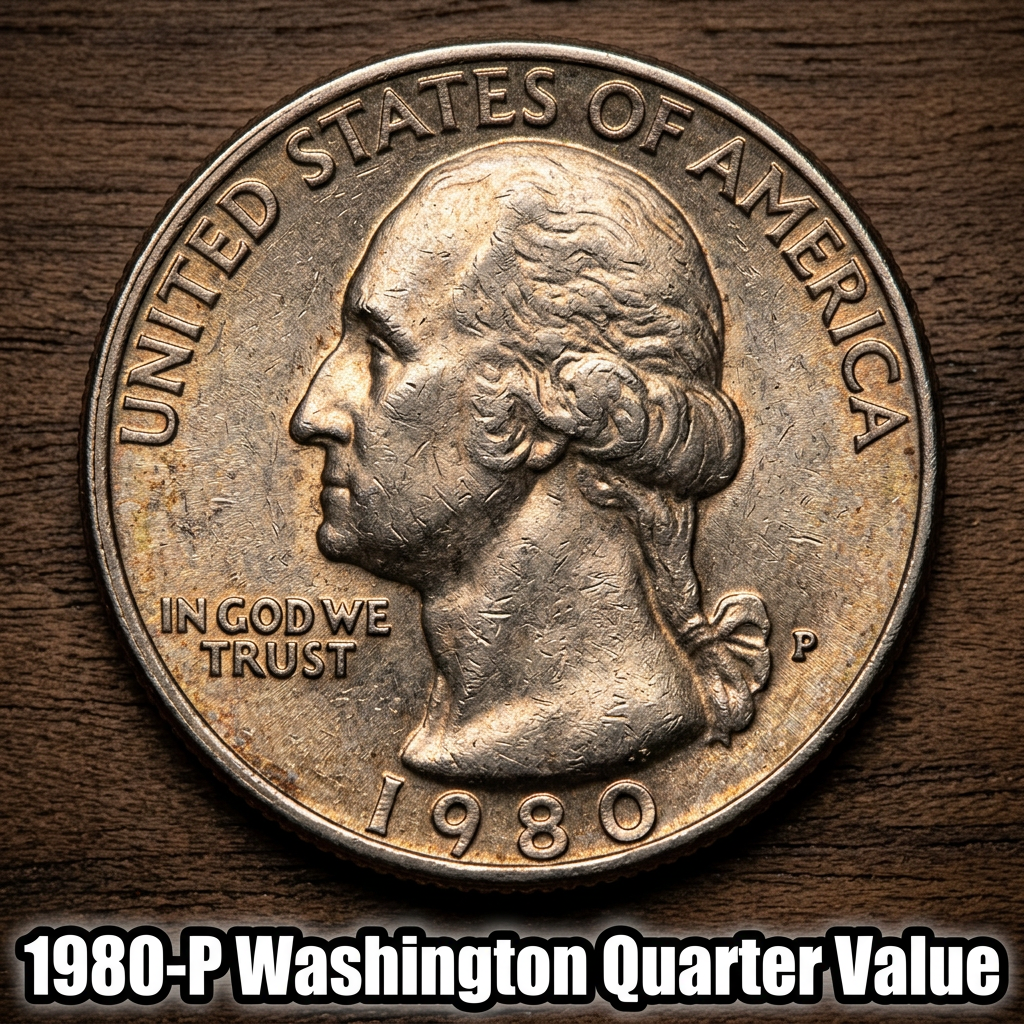
The 1980-P Washington Quarter is worth between $0.25 in heavily circulated condition and around $10 to $20 or more in uncirculated mint state grades. Most examples you find in pocket change are worth face value, but nicer coins can surprise you.
If you dug one of these out of an old jar or found it in a roll of coins, you’re in the right place. This guide breaks down everything you need to know about the 1980-P Washington Quarter value — no numismatic jargon required. Using the best coin identifier app can also help you quickly identify the condition and grade of your coin before you try to sell or trade it.
What Makes the 1980-P Washington Quarter Special
The 1980-P Washington Quarter was struck at the Philadelphia Mint in 1980. The “P” mintmark has been used on Philadelphia quarters since 1980 — interestingly, this was actually the first year the Philadelphia Mint used the P mintmark on quarters at all. That makes it a small historical footnote in U.S. coin history.
The coin features the classic portrait of George Washington on the obverse, designed by John Flanagan, and the heraldic eagle reverse that has been a staple of the Washington Quarter series since 1932. The coin is composed of a copper-nickel clad composition — 91.67% copper with outer layers of 25% nickel — which replaced silver on quarters starting in 1965.
The Philadelphia Mint produced over 635 million of these coins in 1980, which is a huge number. High mintage means most 1980-P quarters are not rare, and the vast majority you encounter will be worth only face value. However, condition is everything in coin collecting, and pristine examples do carry premiums.
1980-P Washington Quarter Value by Grade
Coin values vary significantly depending on how worn or well-preserved a coin is. Here’s a general breakdown of what the 1980-P Washington Quarter is worth across different grades:
| Grade | Description | Estimated Value |
|---|---|---|
| Good (G-4) | Heavy wear, design visible | $0.25 (face value) |
| Fine (F-12) | Moderate wear, details clear | $0.25 – $0.50 |
| Extremely Fine (EF-40) | Light wear on high points | $0.50 – $1.00 |
| About Uncirculated (AU-55) | Slight wear, most luster remains | $1.00 – $3.00 |
| Mint State (MS-63) | Uncirculated, minor blemishes | $3.00 – $8.00 |
| Mint State (MS-65) | Gem uncirculated, sharp strike | $10.00 – $20.00+ |
For the most up-to-date graded coin auction results, you can check the 1980-P Washington Quarter mint state price data on CoinHix, which tracks real market values across different MS grades.
How to Check the Condition of Your 1980-P Quarter
If you want to know whether your coin is worth more than face value, condition is the first thing to assess. Look at the high points of Washington’s portrait — the cheekbone, jaw, and hair above the ear. If these areas look flat or smooth from wear, the coin has circulated and is likely only worth face value.
If the coin has original luster — that soft, cartwheel-like sheen you see when you tilt it under a light — there’s a good chance it’s in uncirculated or near-uncirculated condition and worth a few dollars. Avoid cleaning your coins with any chemical or abrasive material, as cleaned coins are worth far less to collectors.
CoinHix is a great tool for comparing your coin to certified examples and understanding where it might fall on the grading scale. The app pulls real auction data so you can see what people are actually paying, not just estimated book values.
Are Any 1980-P Quarters Worth Big Money
Most 1980-P quarters are common coins, but there are always exceptions. Error coins — such as off-center strikes, doubled dies, or coins struck on the wrong planchet — can be worth significantly more than face value. A dramatic off-center error might fetch $25 to $100 or more depending on how severe the error is and how well-preserved the coin is.
Coins certified by PCGS or NGC in MS-67 or higher grades can also command strong premiums. High-grade examples in MS-67 have sold for over $100 at auction because so few exist in truly flawless condition. For a deeper look at what your specific 1980 quarter could be worth, the detailed 1980 Washington Quarter value breakdown at CoinValueApp is a helpful resource that walks through different varieties and conditions.
If you suspect you have an error coin, it’s worth getting it authenticated by a professional grading service before selling.
Where to Sell Your 1980-P Washington Quarter
If your coin is in circulated condition, it’s likely only worth face value and you can just spend it. But if it appears uncirculated or has an error, consider these options:
– eBay — Great for reaching collectors directly. Search completed sales to see realistic prices.
– Local coin shops — Fast and easy, though dealers buy at wholesale prices.
– Coin shows — Good for meeting multiple buyers at once.
– Online grading services — Worth it if you believe your coin grades MS-65 or higher.
CoinHix also helps you benchmark your coin’s value against recent sales so you don’t leave money on the table when negotiating with a dealer.
—
Frequently Asked Questions
Q: Is a 1980-P Washington Quarter rare?
A: No, it is not rare. Over 635 million were minted in Philadelphia alone in 1980. The vast majority are common coins worth only face value in circulated grades. Error coins and high-grade uncirculated examples are the exception.
Q: What does the P mintmark on a 1980 quarter mean?
A: The P stands for the Philadelphia Mint. The 1980-P Washington Quarter holds a small distinction — 1980 was the first year Philadelphia used its P mintmark on quarters. Before that, Philadelphia quarters had no mintmark at all.
Q: Can I clean my 1980-P quarter to make it worth more?
A: No — please don’t. Cleaning a coin actually destroys its numismatic value. Collectors and dealers can easily spot a cleaned coin under magnification, and cleaned coins sell for a fraction of what naturally preserved examples fetch. Leave the coin as-is and assess its value in its current state.