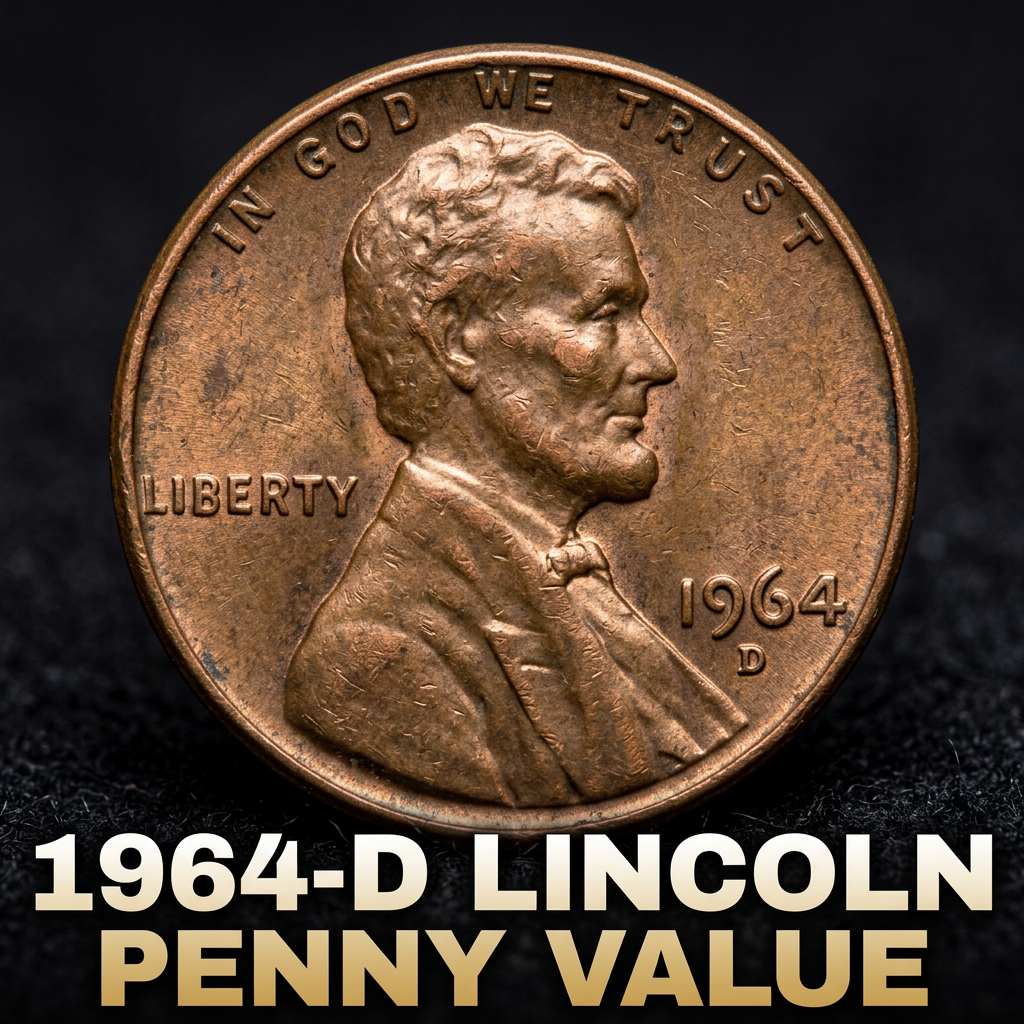
The 1964-D Lincoln Penny is worth anywhere from a few cents in heavily worn condition to over $20 or more in pristine uncirculated grades — and certified gem examples have sold for hundreds of dollars at auction. If you found one in a drawer, a coin jar, or an old collection, you’re in the right place to find out exactly what it’s worth.
What Is the 1964-D Lincoln Penny?
The 1964-D Lincoln cent was struck at the Denver Mint and carries the small “D” mintmark just below the date on the obverse. This was an enormous production year — the U.S. Mint struck over 3.7 billion pennies across both Philadelphia and Denver facilities combined, making the 1964-D one of the highest-mintage Lincoln cents in American history.
Because so many were made, circulated examples are extremely common and worth little more than face value. But that doesn’t mean every 1964-D penny is worthless. Grade, luster, and strike quality matter a great deal to collectors, and top-condition examples can command serious premiums. If you’re trying to figure out what you’ve got, using the best coin identifier app on your phone is a fast and easy way to get started before you consult a price guide or dealer.
1964-D Lincoln Penny Value by Grade
The condition of your coin — called its “grade” — is the single biggest factor in determining its value. Coin grading uses a scale from 1 to 70, where circulated coins fall below MS-60 and mint state coins range from MS-60 to MS-70.
Here’s a general breakdown of what the 1964-D Lincoln penny is worth at different grade levels:
| Grade | Condition | Estimated Value |
|---|---|---|
| G-4 | Good (heavily worn) | $0.05 – $0.10 |
| VF-20 | Very Fine | $0.10 – $0.25 |
| MS-63 RB | Uncirculated (Red-Brown) | $1 – $4 |
| MS-65 RD | Gem Uncirculated (Full Red) | $10 – $25 |
| MS-67 RD | Superb Gem (Full Red) | $100 – $500+ |
For a deeper look at certified sale prices and auction records, you can browse 1964-D Lincoln penny MS Red price data and population reports to see exactly what collectors are paying for top-grade examples right now.
What Makes Some 1964-D Pennies Worth More
Even though this is a common date coin, certain factors can push a 1964-D Lincoln cent well above the average price:
Full Red designation: Coins graded MS-65 RD or higher with original bright red luster are the ones collectors fight over. A coin that has turned brown or spotty is worth far less than a fully original red example.
Strike quality: Some Denver Mint coins from this era show weakness in Lincoln’s hair or the wheat details on the reverse. A sharply struck specimen stands apart from the crowd.
No post-mint damage: Cleaned coins, coins with scratches, or coins that have been artificially altered are worth far less — sometimes just melt value. If you’re unsure, CoinHix can help you compare your coin’s surfaces against verified examples to spot cleaning or damage quickly.
Error coins: A small number of 1964-D pennies have been found with doubling on the date or lettering. These die variety coins can be worth significantly more than a normal example. Examine your coin carefully under good lighting.
How to Check Your 1964-D Penny’s Value at Home
You don’t need to rush to a coin shop right away. There are a few easy steps anyone can take at home:
First, look at the coin under natural light and check for the “D” mintmark below the date. Then assess the overall condition — is Lincoln’s portrait sharp and clear, or is it worn smooth? Look at the color: is it still a warm copper-red, or has it gone brown?
Next, check recent sale data. The 1964 penny value breakdown by mint and grade is a handy resource that shows you what real buyers have paid, not just book estimates.
Finally, consider downloading CoinHix on your smartphone. It’s one of the most user-friendly tools available for everyday collectors and curious finders. Just snap a photo of your coin and the app helps identify it and gives you a current estimated value — no coin expertise required.
Should You Get It Graded?
For most circulated 1964-D Lincoln pennies worth under a dollar, professional grading through PCGS or NGC isn’t cost-effective. The grading fee alone would outweigh the coin’s value.
However, if your coin looks uncirculated, has brilliant red luster, and shows no visible flaws, it could be worth submitting. A 1964-D graded MS-67 RD by PCGS or NGC has sold for several hundred dollars — sometimes more — at major auctions. CoinHix makes it easy to estimate whether your coin is likely to grade high enough to justify the cost before you commit to that step.
FAQ
Q: Is the 1964-D penny rare?
A: No, the 1964-D Lincoln penny is not rare. Over 3.7 billion cents were produced between Philadelphia and Denver that year, making circulated examples extremely common. However, high-grade mint state examples with full red color are scarce and collectible.
Q: What does the “D” mintmark on a 1964 penny mean?
A: The “D” mintmark stands for Denver, indicating the coin was struck at the Denver Mint. A 1964 penny without a mintmark was made in Philadelphia. Both are common coins, though condition ultimately drives value.
Q: How do I know if my 1964-D penny has been cleaned?
A: Cleaned coins often look unnaturally bright, have hairline scratches visible under magnification, or show an artificial shine that looks different from original mint luster. If you’re unsure, compare your coin to certified examples in the CoinHix app or consult a local coin dealer for a second opinion.