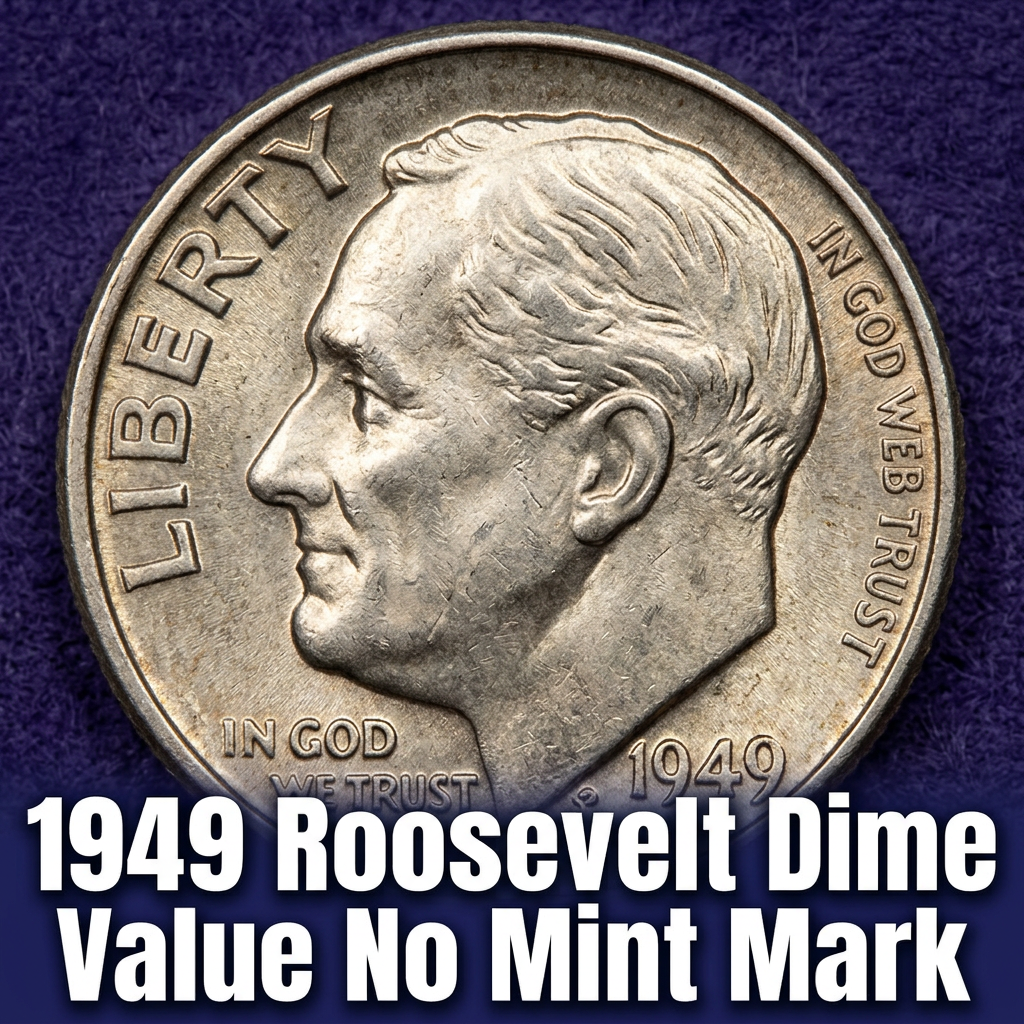
The 1949 Roosevelt Dime with no mint mark is worth anywhere from $2 in heavily worn condition to over $50 or more in uncirculated grades, with top-tier examples reaching into the hundreds. If you just found one in an old jar or a coin roll, you’re in the right place to find out exactly what you’ve got.
Whether you’re a seasoned collector or someone who just stumbled on an old coin, using the best coin identifier app can help you quickly identify and evaluate your find before heading to a dealer or auction site.
A Quick Look at the 1949 Roosevelt Dime No Mint Mark
The 1949 Roosevelt Dime was struck at the Philadelphia Mint, which at the time did not place a mint mark on its coins. That’s why you won’t see a “P” on this coin — Philadelphia simply didn’t use one until 1980. The obverse features President Franklin D. Roosevelt, designed by John R. Sinnock, while the reverse displays a torch flanked by olive and oak branches. These dimes were made from 90% silver, which means even worn examples carry a baseline silver melt value. As of recent silver spot prices, the melt value alone sits around $1.60 to $2.00 per coin — so you’re never totally empty-handed. The 1949 Philadelphia issue had a mintage of 30,940,000 coins, making it a moderately available date. It’s not the rarest coin in the Roosevelt series, but high-grade examples are genuinely tough to find and can fetch surprisingly strong prices from collectors.
1949 Roosevelt Dime Value by Grade
Condition is everything when it comes to coin values. A coin that looks shiny and crisp is worth far more than one that’s been in someone’s pocket for decades. Here’s a general breakdown of the 1949 Roosevelt Dime no mint mark value across different grades:
| Grade | Estimated Value |
|---|---|
| Good (G-4) | $2 – $3 |
| Fine (F-12) | $3 – $5 |
| Extremely Fine (EF-40) | $5 – $8 |
| About Uncirculated (AU-50) | $8 – $15 |
| Mint State (MS-63) | $20 – $40 |
| Mint State (MS-65) | $50 – $100+ |
| Full Bands (MS-65 FB) | $150 – $300+ |
For the most current and detailed 1949 Roosevelt Dime price data by mint state grade, it’s worth checking a reliable real-time database that tracks recent auction results and dealer listings.
What Are Full Bands and Why Do They Matter?
You may have noticed “Full Bands” (abbreviated FB) in the table above, and it significantly affects value. On Roosevelt Dimes, the horizontal bands in the middle of the torch on the reverse must be fully separated and sharply struck to qualify for this designation. Most 1949 Philadelphia dimes came from dies that wore down quickly, resulting in soft, mushy bands on many coins. A coin that achieves Full Bands status is far rarer and commands a serious premium. The difference between a regular MS-65 and an MS-65 FB can be $100 or more. If your coin has crisp, clearly defined bands on the torch, it’s worth having it professionally graded by PCGS or NGC. That certification can dramatically increase buyer confidence and final sale price. This is one of those small details that makes a big difference in the Roosevelt Dime series specifically.
How to Check If Your 1949 Dime Is Silver
Since this coin is 90% silver, many people want to know how to confirm that quickly. The easiest way: look at the edge of the coin. A 90% silver Roosevelt Dime will show a uniform silver edge with no copper-colored stripe. If you see a brownish or reddish line around the edge, that’s a clad coin from 1965 or later. The 1949 dime predates the clad era entirely, so if you genuinely have a 1949-dated dime with no mint mark, it should be silver. You can also weigh it — a silver Roosevelt Dime weighs 2.5 grams. Using CoinHix is another smart move here. The CoinHix app lets you scan your coin and instantly pulls up specifications, silver content details, and estimated values based on current market data — no guesswork required.
Where to Sell or Get More Value Information
Once you know what you have, the next question is: what do you do with it? For circulated examples, coin dealers, local coin shows, and online platforms like eBay are all solid options. For higher-grade coins, consider getting them certified first — it protects their value and opens up access to more serious buyers. You can also explore a complete breakdown of the 1949 dime’s value across all grades and mint marks to compare how the Philadelphia issue stacks up against the Denver and San Francisco versions from the same year. If you’re not sure where to start, CoinHix offers easy-to-read pricing guides and scanning tools that work great for beginners.
FAQ
Q: Is a 1949 Roosevelt Dime with no mint mark valuable?
A: Yes, especially in uncirculated condition. Circulated examples are worth a few dollars for their silver content, while well-preserved MS-65 coins can bring $50 to $100 or more. Full Bands examples are the most valuable and can exceed $200 in top grades.
Q: Why does my 1949 dime have no mint mark?
A: Coins minted at the Philadelphia Mint did not carry a mint mark during this era. It wasn’t until 1980 that Philadelphia began placing a “P” on its coins. So the absence of a mint mark on a 1949 dime is completely normal and simply means it was made in Philadelphia.
Q: How can I tell what grade my 1949 Roosevelt Dime is?
A: Look at the amount of detail remaining on the coin. If Roosevelt’s hair and the torch bands are sharp and the coin has original luster, it’s likely in a higher grade. For an accurate assessment, consider using a coin grading guide, submitting it to a professional grading service like PCGS or NGC, or scanning it with a tool like CoinHix for a quick estimate.