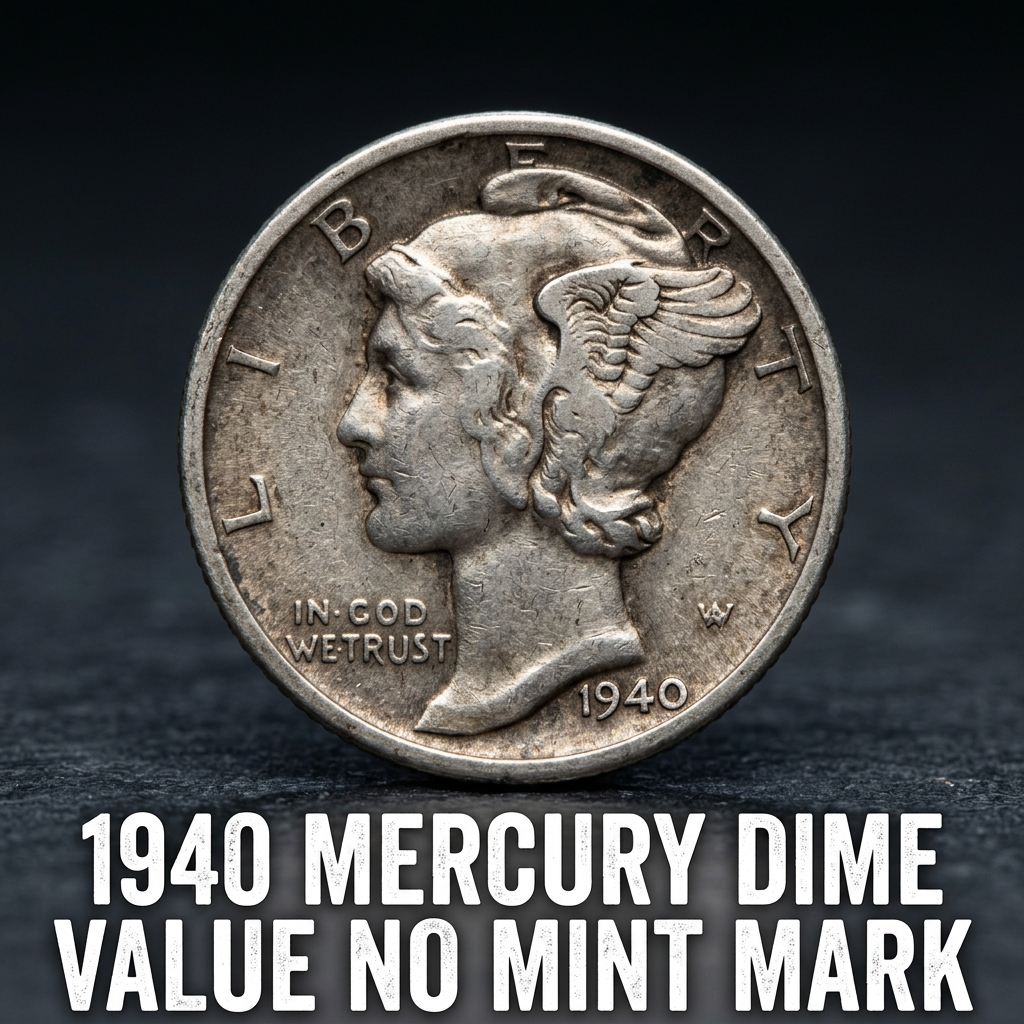
The 1940 Mercury Dime with no mint mark is worth anywhere from $2 in heavily worn condition to $50 or more in well-preserved mint state grades. Most circulated examples fall in the $2–$5 range, but high-grade coins can surprise you with their value.
If you pulled an old dime out of a drawer or inherited a coin collection, you might be holding a small piece of American silver history. The 1940 Philadelphia Mint dime — the one with no mint mark — is one of the more common Mercury Dimes, but that doesn’t mean it’s worthless. In fact, condition matters a lot with these coins. Using the best coin identifier app can help you quickly figure out what you’re holding before you sell or trade it away. Tools like CoinHix make it easy for everyday collectors to snap a photo and get an instant grade estimate.
What Makes the 1940 No Mint Mark Mercury Dime Special
The Mercury Dime, officially called the Winged Liberty Head Dime, was designed by Adolph Weinman and produced from 1916 to 1945. The 1940 Philadelphia issue had a mintage of 65,361,827 coins — a large number that explains why so many survive today. The obverse features Lady Liberty wearing a winged cap, often mistaken for the Roman god Mercury (hence the nickname). The reverse shows a fasces wrapped in an olive branch, symbolizing unity and peace. These coins are 90% silver, giving even worn examples real metal value beyond their collectible worth.
Understanding the Value of a 1940 Mercury Dime by Grade
Coin value is almost entirely driven by condition, or “grade.” Here’s a simple breakdown of what a 1940 Mercury Dime with no mint mark is worth at various grades:
| Grade | Description | Estimated Value |
|---|---|---|
| Good (G-4) | Heavy wear, flat design | $2 – $3 |
| Fine (F-12) | Moderate wear, some detail | $3 – $4 |
| Extremely Fine (EF-40) | Light wear, good detail | $5 – $8 |
| About Uncirculated (AU-55) | Slight wear on high points | $10 – $15 |
| Mint State (MS-63) | No wear, some marks | $20 – $35 |
| Mint State (MS-65+) | Gem quality, near perfect | $50 – $100+ |
For a deeper look at current auction results and certified coin prices, check out this detailed 1940 Mercury Dime price guide in mint state grades that tracks real market data. You can also find a full breakdown of 1940 dime values across all grades and mint marks to compare your coin more precisely.
Full Bands and Why They Matter for Mercury Dime Values
One important thing collectors look for on Mercury Dimes is “Full Bands” (FB). This refers to the horizontal bands on the fasces (the bundle of sticks on the reverse) being fully separated and sharply struck. Coins certified as MS-65 FB can be worth two to three times more than the same grade without Full Bands. For a 1940 no mint mark dime, an MS-65 FB example might fetch $80–$150, while a premium gem MS-67 FB can push well past $300. If your coin looks like it has sharp, clean bands on the reverse, it’s worth getting a professional opinion before selling.
Silver Value and What It Means for Your Coin
Even the most worn 1940 Mercury Dime has intrinsic silver value. Each coin contains about 0.07234 troy ounces of silver. With silver trading around $28–$30 per troy ounce, the raw melt value of any Mercury Dime is roughly $2.00–$2.20 at current prices. This acts as a price floor — no matter how beat up your coin is, it’s always worth at least its silver content. That said, never melt collectible coins; even circulated examples often sell above melt value to collectors. CoinHix can show you live silver prices alongside collectible coin values so you always know the full picture before making any decision.
FAQ
Q: How do I know if my 1940 dime has no mint mark?
A: Look at the reverse side of the coin, just below the word “ONE DIME” on the bottom. Philadelphia Mint coins have no mint mark. Denver coins show a “D” and San Francisco coins show an “S.” A magnifying glass helps.
Q: Is a 1940 Mercury Dime with no mint mark rare?
A: Not particularly. Over 65 million were made in Philadelphia alone, so they’re fairly common in circulated grades. What makes individual coins valuable is high grade, Full Bands designation, or exceptional eye appeal.
Q: Should I clean my 1940 Mercury Dime before selling it?
A: Never clean it. Cleaning removes the original surface and drastically lowers the coin’s grade and collector value. Even a coin that looks dull or dirty is better left alone. CoinHix and most coin experts will always value an original-surface coin far above a cleaned one.