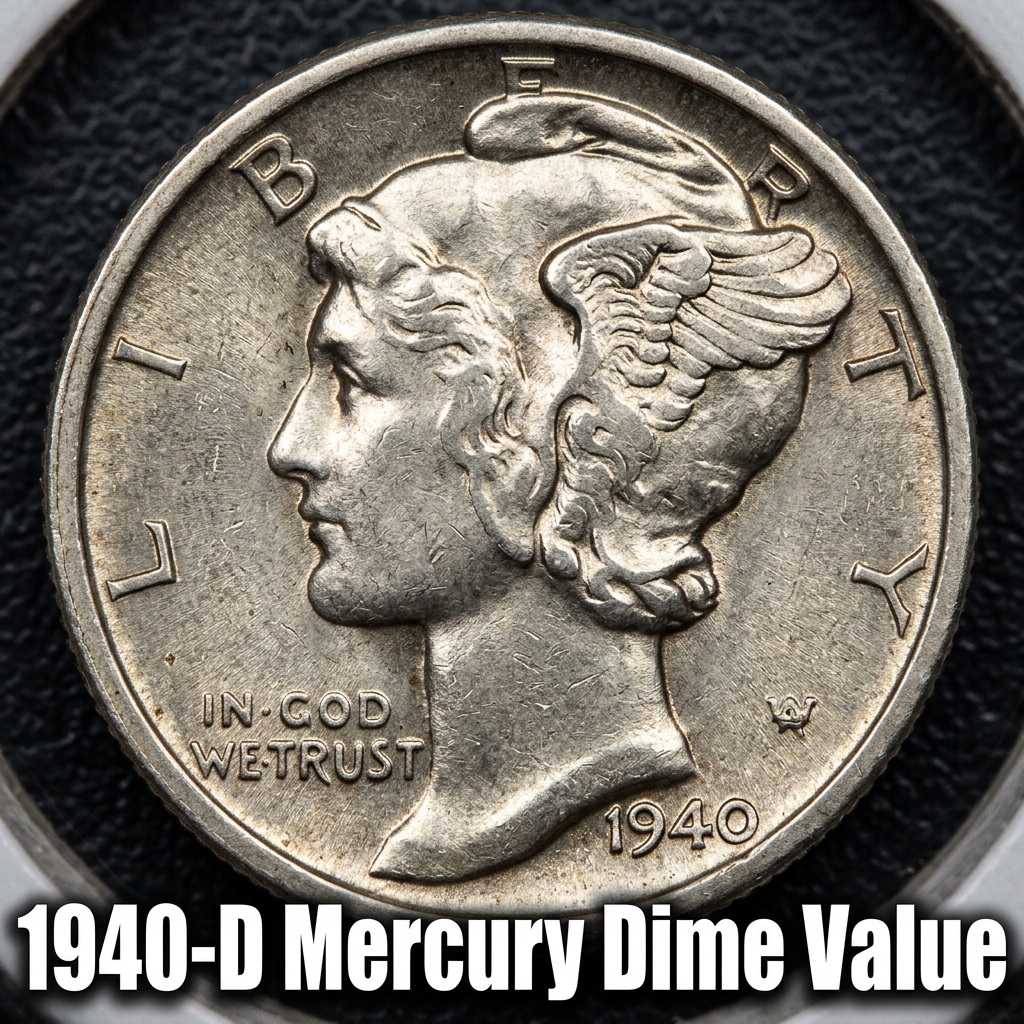
The 1940-D Mercury Dime is worth anywhere from $3 in heavily worn condition to over $100 or more in high mint state grades. If you found one of these classic silver dimes in an old jar or coin collection, you might be sitting on more than just pocket change.
What Makes the 1940-D Mercury Dime Special
The 1940-D Mercury Dime was struck at the Denver Mint and carries the small “D” mintmark on the reverse, just to the left of the “ONE DIME” text. Designed by Adolph Weinman, this coin features the famous winged Liberty head on the obverse — often mistaken for the Roman god Mercury, which is how it got its popular nickname. The reverse shows a fasces bundled with an olive branch, symbolizing strength and peace.
In 1940, the Denver Mint produced 21,198,000 of these dimes, making it a relatively common coin in circulated grades. However, well-preserved examples are harder to come by than you might think. Most of these dimes spent decades in everyday circulation, picking up wear along the way. If you’re holding one that still shows sharp detail in the bands on the fasces — a feature collectors call “Full Bands” — your coin could be worth significantly more. Using the best coin identifier app can help you quickly identify key details like mintmarks and grade indicators right from your phone.
1940-D Mercury Dime Value by Grade
Coin value depends heavily on condition, or “grade.” Here’s a general breakdown of what the 1940-D Mercury Dime is worth across different grades:
| Grade | Condition Description | Estimated Value |
|---|---|---|
| Good (G-4) | Heavy wear, design visible | $3 – $4 |
| Fine (F-12) | Moderate wear, some detail | $4 – $6 |
| Extremely Fine (EF-40) | Light wear, most detail sharp | $7 – $12 |
| About Uncirculated (AU-55) | Slight wear on high points | $14 – $20 |
| Mint State (MS-63) | Uncirculated, some marks | $25 – $50 |
| Mint State (MS-65 FB) | Full Bands, gem quality | $80 – $150+ |
For the most current auction results and dealer pricing, you can check the latest 1940-D Mercury Dime price data in mint state grades to see how the market is trending right now.
Silver Content and Melt Value
Even a heavily worn 1940-D Mercury Dime has real intrinsic value because it’s made of 90% silver. Each coin contains approximately 0.07234 troy ounces of pure silver. With silver prices fluctuating around $25–$30 per troy ounce in recent years, that gives every Mercury Dime a base melt value of roughly $1.80 to $2.20 just for the metal alone — sometimes higher depending on the silver spot price.
This means that even if your coin is in rough shape, it’s never truly worthless. Collectors and precious metal dealers alike are interested in these old silver dimes. CoinHix is a handy tool that tracks real-time silver melt values alongside numismatic premiums, so you always know exactly what your coin is worth from both angles. It takes the guesswork out of the equation whether you’re buying, selling, or just curious.
How to Tell If Your 1940-D Mercury Dime Is Worth More
A few key things to look for can significantly boost the value of your coin. First, find the mintmark — if it says “D” on the back, you have the Denver issue. Next, examine the bands on the fasces bundle. If both horizontal bands are fully split and clearly defined, your coin may qualify as “Full Bands” (FB), which is a major premium designation among Mercury Dime collectors.
Also check for any obvious damage. Cleaned coins, coins with holes drilled in them, or ones that have been harshly polished lose most of their collector value regardless of original grade. A coin in honest circulated condition is generally worth more to a serious buyer than one that has been cleaned to look shiny. You can also explore the detailed 1940 Mercury Dime value breakdown by date and mint to compare your coin against all varieties from that year.
Where to Sell Your 1940-D Mercury Dime
Once you know what you have, selling options include local coin dealers, online marketplaces like eBay, or coin shows. For quick identification and value estimates before you walk into a shop, CoinHix gives you solid pricing data right at your fingertips. If you want a professional grade that can dramatically increase buyer confidence — and your selling price — consider submitting high-quality coins to PCGS or NGC for third-party grading. Graded coins in slabs consistently sell for more than raw coins of similar quality.
—
Frequently Asked Questions
Q: How do I know if my Mercury Dime is from the Denver Mint?
A: Flip the coin over and look near the bottom of the reverse, just to the left of the words “ONE DIME.” A small “D” letter indicates it was struck at the Denver Mint. No mintmark means Philadelphia; an “S” means San Francisco.
Q: Is the 1940-D Mercury Dime rare?
A: Not particularly in circulated grades — over 21 million were minted. However, gem uncirculated examples with Full Bands are genuinely scarce and can command strong premiums from serious collectors.
Q: Can I use an app to find out what my 1940-D Mercury Dime is worth?
A: Absolutely. Apps like CoinHix let you look up real market prices and silver melt values instantly. Pair that with a good coin identifier app to confirm the date, mintmark, and grade, and you’ll have a solid picture of your coin’s worth before talking to any dealer.