The 1939 Wheat Penny with no mint mark is worth anywhere from $0.10 in heavily worn condition to over $8 in well-circulated grades, and certified mint state examples can climb above $20 or more depending on color and strike quality. If you found one in a jar, a drawer, or an old collection, you’re in the right place to find out exactly what you’ve got.
What Is the 1939 No Mint Mark Wheat Penny?
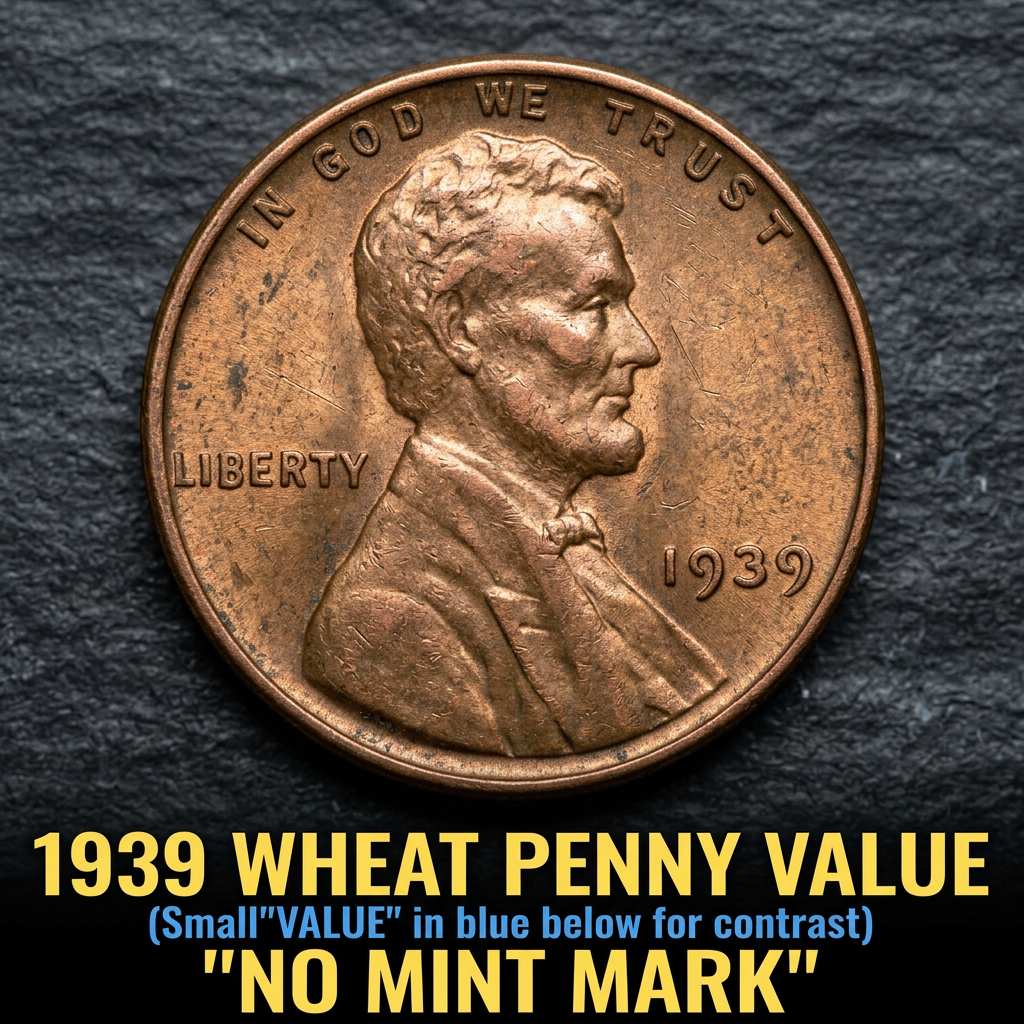
The 1939 Lincoln Wheat Penny with no mint mark was struck at the Philadelphia Mint, which traditionally did not add a mint mark to its coins. That year, Philadelphia produced over 316 million of these cents, making it one of the higher-mintage years of the era. The coin features the familiar portrait of Abraham Lincoln on the obverse and two wheat stalks framing the words “ONE CENT” on the reverse — a design that ran from 1909 to 1958.
Because so many were made, the 1939 Philadelphia Wheat Penny is not considered rare. But that doesn’t mean it’s worthless. Condition is everything with these coins. A coin pulled from circulation and worn smooth is worth a few cents to a dime. One that was saved early and shows crisp details can be worth considerably more. If you’re just getting started identifying old coins in your collection, using the best coin identifier app can help you quickly confirm what you’re holding and get a ballpark value before diving deeper.
1939 Wheat Penny Value Chart by Grade
Understanding coin grades is the key to knowing what your 1939 no mint mark penny is actually worth. Collectors use a scale from 1 to 70, with circulated coins falling between Good (G-4) and About Uncirculated (AU-58), and mint state coins graded MS-60 and above.
| Grade | Description | Estimated Value |
|---|---|---|
| G-4 (Good) | Heavily worn, flat details | $0.10 – $0.25 |
| VG-8 (Very Good) | Some detail visible | $0.25 – $0.50 |
| F-12 (Fine) | Moderate wear, clear lettering | $0.50 – $1.00 |
| EF-40 (Extremely Fine) | Light wear on high points | $2.00 – $4.00 |
| MS-63 RB (Mint State) | Uncirculated, mixed red-brown | $8 – $15 |
| MS-65 RD (Gem Red) | Full luster, original red color | $20 – $40+ |
For a deeper look at certified mint state price data for the 1939 Wheat Penny in MS Red, the numbers can vary quite a bit depending on the auction house and current market demand.
What Makes Some 1939 Wheat Pennies Worth More
Even within a single year and mint, some coins stand out. The biggest factor for the 1939 Philadelphia Wheat Penny is color designation. Copper cents that retain their original bright red surfaces are called “RD” coins and command the highest prices. Coins that have turned partially brown but still show some red are designated “RB,” and fully brown coins are simply “BN.” A gem MS-65 RD can easily be worth five to ten times more than an MS-65 BN.
Strike quality also plays a role. Well-struck examples with sharp wheat stalks and a clear portrait of Lincoln are more desirable to collectors. Minor varieties, die doubling, or other anomalies can occasionally push values higher, though the 1939 Philadelphia cent doesn’t carry any widely documented major varieties.
If you want to track these coins and stay on top of current pricing without having to dig through auction records, CoinHix is a smart tool to have on your phone. The app pulls together real market data so you can see what collectors are actually paying right now.
How to Check Your 1939 Wheat Penny Value at Home
You don’t need to visit a coin dealer to get a starting estimate. Here’s a simple process you can follow at home:
First, look at the reverse of the coin for a mint mark below the date. If there’s nothing there, it’s a Philadelphia coin — the subject of this article. If you see a “D,” it was minted in Denver, and an “S” means San Francisco.
Next, examine the coin under good lighting. How much detail remains on Lincoln’s hair, cheek, and ear? Can you still read “LIBERTY” clearly? Those details help you estimate the grade range.
You can also look up the full 1939 penny value breakdown by mint and grade to compare your coin against established pricing references. Having a few sources is always smart before deciding whether to sell or hold.
Finally, for a quick scan-and-identify experience, CoinHix lets you photograph your coin and instantly see key details, grade estimates, and current value ranges — all without needing any prior numismatic experience.
Should You Clean or Sell Your 1939 Wheat Penny?
One common mistake new collectors make is cleaning old coins to make them look nicer. This almost always backfires. Cleaning removes the natural patina that collectors prize and can drop a coin’s value significantly — sometimes by 50% or more. Leave the coin as you found it.
As for selling, a single 1939 no mint mark Wheat Penny in average circulated condition isn’t going to fund a vacation. But if you have a small collection of wheat cents, the combined value can add up. Mint state examples, particularly in RD designation, are worth pursuing professionally graded if the coin looks exceptional. For everyday worn examples, a local coin shop or online marketplace is your best bet. And before you sell anything, run your coins through CoinHix to make sure you know what you’re working with.
FAQ
Q: Is the 1939 Wheat Penny with no mint mark rare?
A: No, it is not rare. Over 316 million were struck at the Philadelphia Mint in 1939, making it one of the more common Wheat Pennies. Most examples in circulated condition are worth under a dollar, but high-grade mint state coins with original red surfaces can be worth $20 to $40 or more.
Q: How do I know if my 1939 penny is worth getting professionally graded?
A: If the coin appears uncirculated — meaning it shows no wear and still has bright copper color — it may be worth submitting to PCGS or NGC for grading. A certified MS-65 RD example can be worth significantly more than a raw ungraded coin of the same quality.
Q: Where can I sell a 1939 Wheat Penny?
A: Common options include local coin dealers, online marketplaces like eBay, and coin shows. For everyday circulated examples, a local dealer is the most convenient route. For higher-grade or certified coins, online auction platforms typically reach more serious collectors and may yield better results.