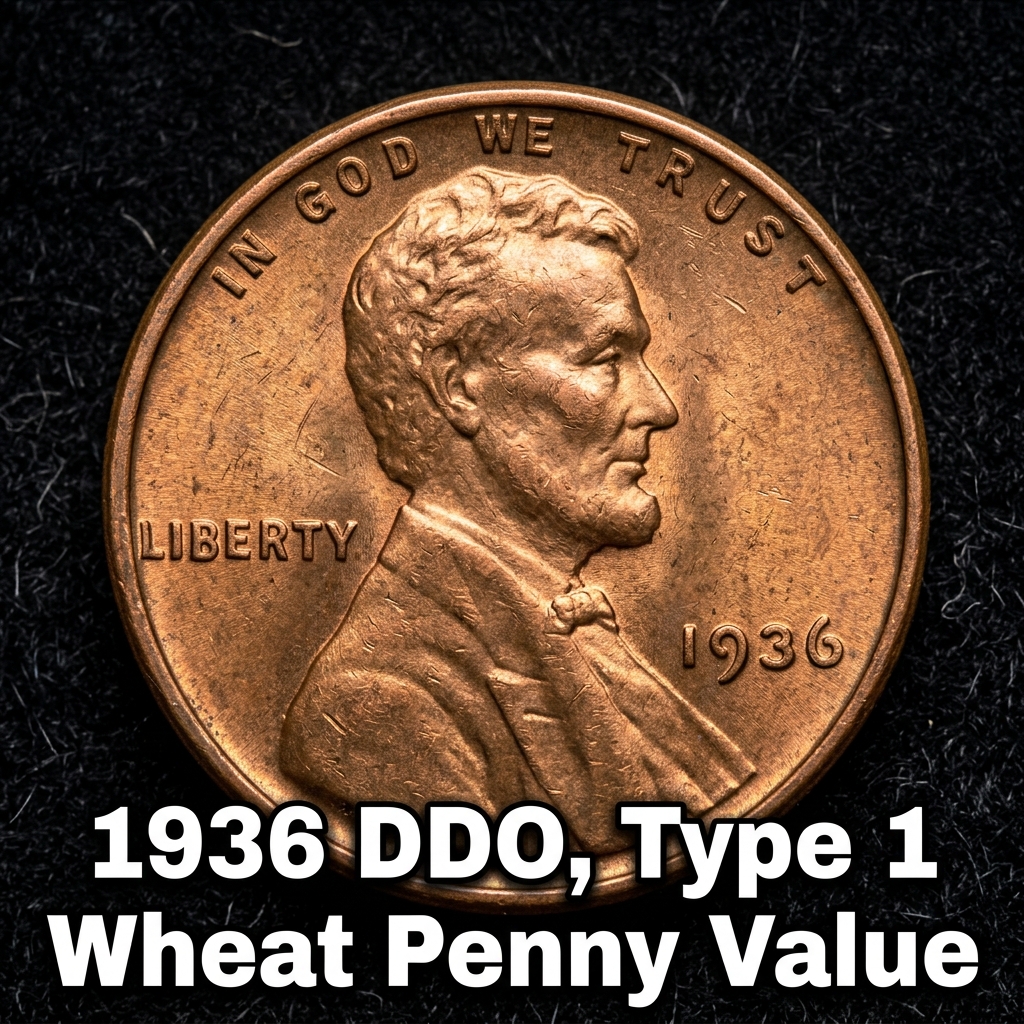
The 1936 DDO (Doubled Die Obverse) Type 1 Wheat Penny is worth anywhere from $5 in heavily worn condition to well over $500 or more in high mint state grades, making it one of the more exciting finds among Lincoln Wheat Penny varieties from the 1930s. If you’ve recently come across one of these coins, you’re in the right place to learn exactly what it might be worth.
What Makes the 1936 DDO Type 1 Wheat Penny Special
Before diving into values, it helps to understand what you’re actually looking at. The 1936 DDO Type 1 Wheat Penny is a variety of the standard 1936 Lincoln Wheat Penny that features a doubled die error on the obverse (the front side of the coin). This means the die used to strike the coin was itself doubled during the hubbing process, leaving visible doubling on design elements like the date, lettering, and Lincoln’s portrait.
The “Type 1” designation refers to the specific doubling classification assigned by variety specialists. This is not just any worn penny — it’s a coin with a recognized error variety that collectors actively seek out. Because it takes a sharp eye to spot the doubling, many of these coins have passed through ordinary hands without anyone realizing their true value.
If you’re not sure whether your coin has the doubled die feature, a good magnifying glass or loupe is your best friend. Better yet, using the best coin identifier app on your phone can help you scan the coin and quickly identify the variety before you take any further steps.
1936 DDO Type 1 Wheat Penny Value by Grade
Like all collectible coins, the value of the 1936 DDO Type 1 Wheat Penny depends heavily on its condition, or “grade.” Coin grading runs on a scale from 1 (Poor) to 70 (Perfect Uncirculated). Here’s a general breakdown of what you can expect at various grade levels:
| Grade | Description | Estimated Value |
|---|---|---|
| G-4 (Good) | Heavy wear, design visible but flat | $5 – $10 |
| VG-8 (Very Good) | Moderate wear, major features clear | $10 – $20 |
| F-12 (Fine) | Light to moderate wear overall | $20 – $40 |
| VF-20 (Very Fine) | Light wear on high points only | $40 – $80 |
| EF-40 (Extremely Fine) | Slight wear, sharp details | $80 – $150 |
| MS-63 (Mint State) | Uncirculated, minor contact marks | $150 – $300 |
| MS-65 RD (Gem Uncirculated) | Full red luster, nearly flawless | $300 – $600+ |
For the most up-to-date figures, you can check current 1936 Wheat Penny auction prices and market data by grade to see exactly what certified examples are selling for right now.
How to Identify the Doubled Die on Your 1936 Penny
Identifying a genuine DDO variety requires careful examination. On the 1936 DDO Type 1, the doubling is most visible on the date numerals and the inscriptions “LIBERTY” and “IN GOD WE TRUST.” Under magnification, these elements will appear to have a shadow or second impression offset from the primary design.
It’s important not to confuse machine doubling — a common form of strike damage that adds no value — with a true doubled die. Machine doubling tends to produce a flat, shelf-like appearance rather than a rounded, fully formed second image. A genuine DDO will show distinct, rounded doubling that matches the original design.
If you want a fast, reliable identification, CoinHix is a great tool to use. The CoinHix app lets you scan your Lincoln cent and cross-reference it against a database of known varieties, making it easy to determine whether you have a regular 1936 penny or a valuable DDO example without needing to be an expert yourself.
Where to Sell or Get Your 1936 DDO Wheat Penny Appraised
Once you’ve identified your coin as a potential 1936 DDO Type 1, you’ll want to think about next steps. If the coin appears to be in Fine grade or better, consider submitting it to a professional grading service like PCGS or NGC. A certified grade adds credibility and typically increases the selling price significantly at auction.
For casual sellers, platforms like eBay, Heritage Auctions, and Great Collections are all solid options. If you’d rather get a quick ballpark estimate before committing to anything, you can review detailed 1936 penny value information including DDO variety pricing to better understand what buyers are currently willing to pay.
Local coin shows and dealers are also worthwhile, especially if you prefer face-to-face transactions. Just be sure to get multiple opinions before accepting an offer — variety errors like the DDO can be undervalued by dealers who specialize in bullion rather than numismatics.
Is the 1936 DDO Type 1 Wheat Penny Worth Holding Onto
Absolutely. Error varieties like the 1936 DDO have historically held and grown in value over time, particularly as the collector base for Lincoln Wheat Pennies continues to expand. While the mintage of the regular 1936 Lincoln cent was enormous — over 309 million from Philadelphia alone — DDO varieties represent only a tiny fraction of those coins. Scarcity drives collector demand, and demand drives value.
Even if your coin is worn, it’s still worth more than a regular 1936 cent. And if you happen to have a high-grade example with strong red color, you could be sitting on a very pleasant surprise. Using CoinHix to track real-time values can help you decide exactly when and where to sell for the best return.
Frequently Asked Questions
Q: How do I know if my 1936 penny is a DDO and not just normal doubling from wear?
A: True doubled die obverse errors show distinct, rounded doubling on design elements like the date and lettering, visible under 5x to 10x magnification. Machine doubling, by contrast, looks flat and shelf-like. If you’re unsure, a coin identification app or professional grader can confirm the variety for you.
Q: Does the mint mark affect the value of the 1936 DDO Type 1 Wheat Penny?
A: Yes, it can. The 1936 DDO variety is primarily associated with Philadelphia Mint coins (no mint mark), but coins from Denver (D) and San Francisco (S) may also show doubling. Philadelphia examples tend to be the most studied and documented, while S-mint and D-mint examples can sometimes carry a premium due to lower overall populations.
Q: Should I clean my 1936 DDO Wheat Penny before selling it?
A: No — never clean a collectible coin. Cleaning removes the original surface and patina, which significantly lowers the coin’s grade and value in the eyes of collectors and grading services. Even a lightly cleaned coin will receive a “details” grade rather than a clean numerical grade, which can cut the value in half or more. Leave the coin as-is and let a professional evaluate it in its natural state.