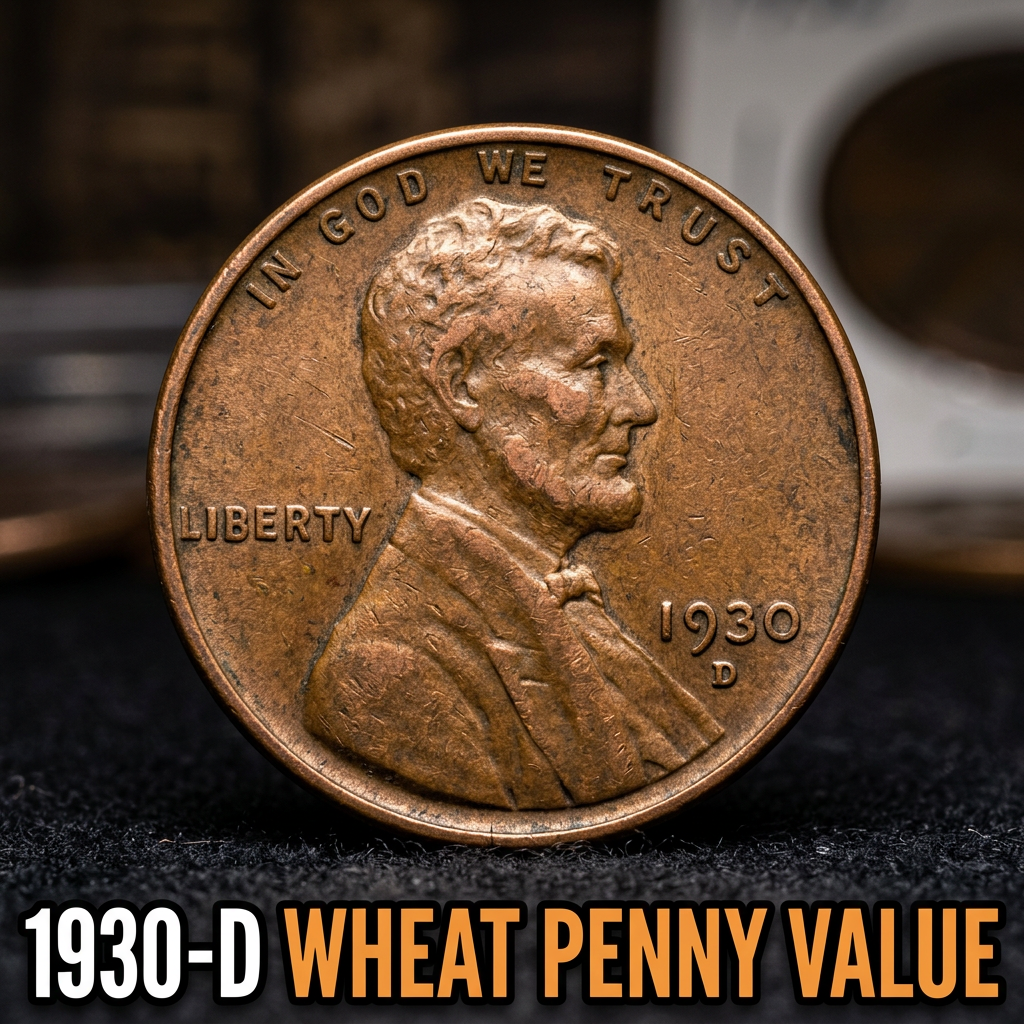
The 1930-D Wheat Penny is worth anywhere from $0.25 in heavily worn condition to well over $100 in higher mint state grades. If you found one of these coins in an old jar or inherited collection, you may be holding something more valuable than you think. Let’s break it down.
What Makes the 1930-D Wheat Penny Special
The “D” in 1930-D tells you this penny was struck at the Denver Mint, one of three U.S. Mint facilities producing Lincoln Wheat Pennies that year. Denver produced around 40,100,000 of these coins in 1930 — a decent mintage, but far fewer than the Philadelphia Mint’s output that same year. That relatively modest production number, combined with the fact that most of these coins circulated heavily during the Great Depression era, means finding a well-preserved example today is genuinely exciting.
If you’re just getting started identifying old coins, using the best coin identifier app can help you quickly confirm what you have before diving into valuations. Once you’ve confirmed your coin is a genuine 1930-D Lincoln Wheat Penny, condition becomes everything.
Collectors and dealers grade coins on a scale from Poor (P-1) all the way up to Mint State 70 (MS-70). For everyday pocket change finds, most 1930-D pennies land somewhere in the Good to Very Fine range.
1930-D Wheat Penny Value by Grade
Here’s a quick look at approximate retail values depending on the condition of your coin:
| Grade | Description | Estimated Value |
|---|---|---|
| Good (G-4) | Heavy wear, date and lettering visible | $0.25 – $0.50 |
| Fine (F-12) | Moderate wear, all features clear | $0.75 – $1.50 |
| Very Fine (VF-20) | Light wear on high points | $2.00 – $5.00 |
| Extremely Fine (EF-40) | Slight wear only on highest points | $8.00 – $15.00 |
| About Uncirculated (AU-55) | Trace wear, mostly original luster | $18.00 – $35.00 |
| Mint State (MS-63) | Uncirculated, minor blemishes | $45.00 – $75.00 |
| Mint State (MS-65+) | Gem uncirculated, full red luster | $100.00 – $200.00+ |
For the most current auction results and certified coin sales, you can check out the 1930-D Wheat Penny price data in MS-RD condition to see what top-grade examples are actually selling for right now.
How to Check Your 1930-D Penny’s Condition at Home
You don’t need to be an expert to get a general sense of your coin’s grade. Start by looking at Lincoln’s cheekbone and the wheat stalks on the reverse — these are the first areas to show wear. If the details look flat and worn smooth, you’re probably looking at a Good or Fine grade coin. If you can still see sharp details and the coin has a bit of shine, it could be Extremely Fine or better.
Color also matters. Lincoln Wheat Pennies in mint state are graded as Red (RD), Red-Brown (RB), or Brown (BN). Full Red coins — those that have retained most of their original copper luster — are significantly more valuable than their brown counterparts. A 1930-D in MS-65 Red can sell for two to three times more than the same grade in Brown.
Don’t clean your coins. This is one of the biggest mistakes new collectors make. Cleaning removes the natural surface and destroys value. Leave your coin exactly as you found it.
Should You Get Your 1930-D Wheat Penny Graded
If your coin looks uncirculated or close to it, professional grading through PCGS or NGC could be worth the investment. Certified coins sell for more because buyers trust the independent grade. For circulated coins in Good to Very Fine condition, the cost of grading usually outweighs the benefit since values are relatively modest.
CoinHix is a great tool for getting a quick sense of what your coin might be worth before committing to professional grading fees. The CoinHix app lets you look up current market prices across multiple grades, so you can make a smarter decision about whether to submit your coin or just enjoy it as a collector piece.
For a full breakdown of what your 1930 penny could be worth across all mint marks and conditions, the detailed 1930 penny value guide covers everything you need in one place.
Where to Sell a 1930-D Wheat Penny
If you decide to sell, your options include eBay, local coin shops, coin shows, and online auction platforms like Heritage Auctions or Great Collections. For circulated coins, eBay is often the fastest route. For certified high-grade examples, specialty coin auction houses will get you the best price. Always compare recent sold listings — not asking prices — to understand true market value. Apps like CoinHix make this research much easier by aggregating real sales data in one place.
—
Frequently Asked Questions
Q: How do I know if my penny is a 1930-D and not a 1930-P?
A: Look just below the date on the obverse side. If you see a small “D” mint mark, it was made in Denver. No mint mark means it came from Philadelphia. A magnifying glass helps a lot here.
Q: Is a 1930-D Wheat Penny rare?
A: It’s not considered a rare coin by most standards, but well-preserved examples in Extremely Fine or better condition are definitely scarce. The challenge is finding one that wasn’t heavily circulated during the Depression years when every penny counted.
Q: What’s the most valuable 1930-D Wheat Penny ever sold?
A: Top-grade examples certified as MS-66 Red or MS-67 Red by PCGS or NGC have sold for several hundred dollars at major auctions. The finest known specimens in gem condition represent the upper end of what collectors will pay for this date.