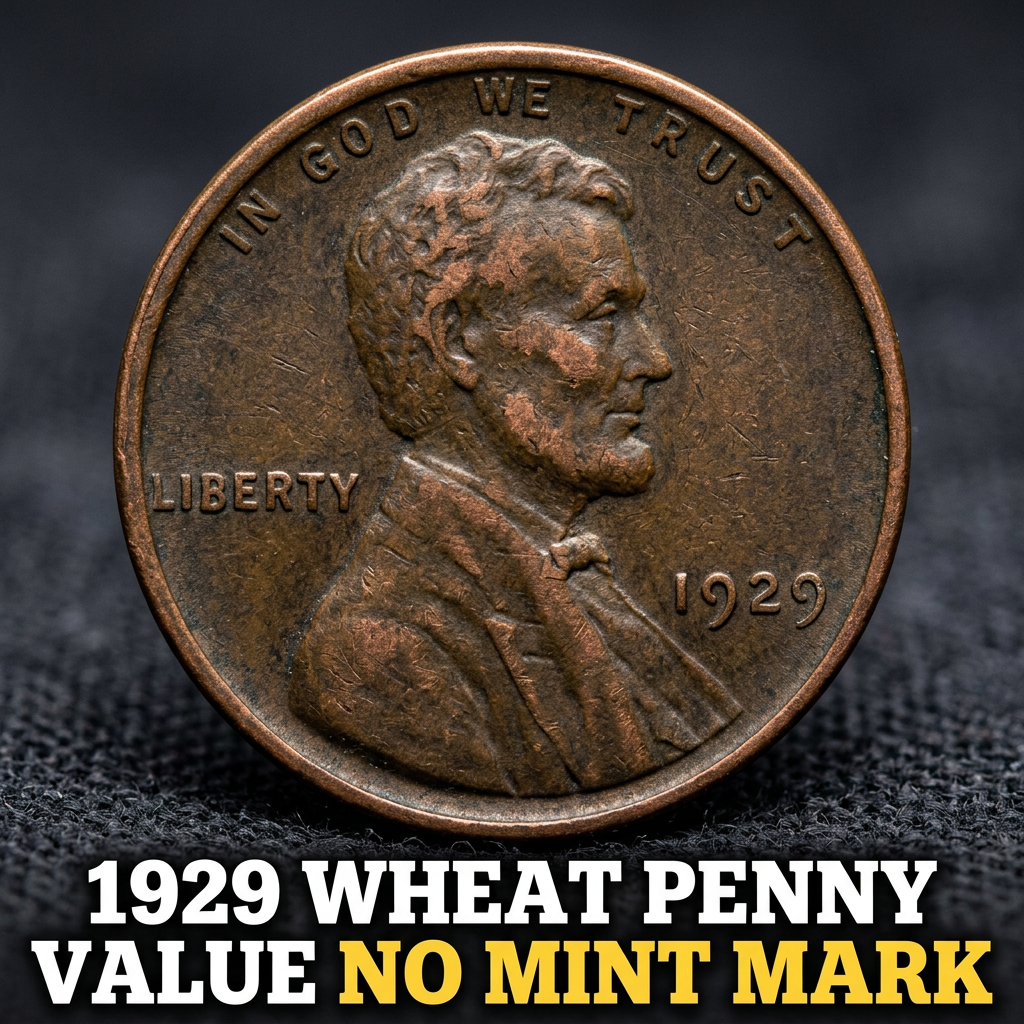
The 1929 Wheat Penny with no mint mark is worth anywhere from $0.25 in heavily worn condition to over $50 or more in uncirculated grades. If you found one in a drawer or old coin jar, you may be sitting on a surprisingly collectible piece of American history.
What the 1929 No Mint Mark Wheat Penny Actually Is
The 1929 Lincoln Wheat Penny without a mint mark was struck at the Philadelphia Mint, which traditionally did not place a mint mark on its coins. That year, Philadelphia produced over 185 million pennies — a large mintage that keeps common grades relatively affordable, but doesn’t take away from the coin’s collector appeal. These cents feature Abraham Lincoln on the obverse and two wheat stalks framing “ONE CENT” on the reverse, a classic design that ran from 1909 to 1958.
If you’ve got one in hand and want to quickly figure out what you’re dealing with, using the best coin identifier app can help you identify the coin’s grade and approximate value in seconds. Technology has made it much easier for everyday collectors to get reliable information without needing to visit a dealer first.
The 1929 Wheat Penny no mint mark is a fun starting point for collectors because it’s historic, affordable, and still commonly found in old collections, estates, and even pocket change from older generations.
How Much Is the 1929 Wheat Penny Worth by Grade
The value of a 1929 no mint mark Wheat Penny depends heavily on its condition, also called its grade. A coin that’s been worn smooth from years of circulation is worth far less than one that was set aside early and still shows original luster and detail.
Here’s a general value breakdown:
| Grade | Condition Description | Estimated Value |
|---|---|---|
| Good (G-4) | Heavy wear, design visible | $0.25 – $0.50 |
| Fine (F-12) | Moderate wear, some detail | $0.75 – $1.50 |
| Extremely Fine (EF-40) | Light wear on high points | $4 – $8 |
| About Uncirculated (AU-58) | Slight friction, nearly mint | $10 – $18 |
| MS-63 Red Brown | Mint state, mixed color | $25 – $40 |
| MS-65 Red | Gem mint state, full red luster | $75 – $150+ |
For the most current market data, you can check detailed 1929 Wheat Penny MS-RD price records and recent auction results to see exactly what collectors are paying right now.
Key Factors That Affect the 1929 No Mint Mark Penny’s Value
Beyond basic grade, a few other things can push a 1929 Wheat Penny’s value higher or lower:
Color designation matters a lot in mint state coins. Copper cents are graded as Red (RD), Red Brown (RB), or Brown (BN). Red coins — those that have retained nearly all of their original copper luster — command the highest premiums. A 1929 penny graded MS-65 Red can be worth three to four times more than the same grade in Brown.
Strike quality is another factor. Philadelphia-minted coins from this era sometimes show softness in the wheat stalk details or Lincoln’s hair. A coin with a sharp, full strike is more desirable to serious collectors.
Surface preservation also plays a role. Coins with heavy contact marks, scratches, or cleaning will lose value quickly, even if they appear bright. Artificial cleaning is one of the fastest ways to reduce a coin’s appeal and market price.
CoinHix is a great tool to run a quick check on any Wheat Penny you come across. The app pulls real market data so you always have a realistic sense of what buyers are actually willing to pay.
Comparing the 1929 Wheat Penny to Other Mint Marks That Year
In 1929, the U.S. Mint produced Lincoln cents at three facilities: Philadelphia (no mint mark), Denver (D), and San Francisco (S). The Philadelphia issue is the most common of the three.
| Mint Mark | Mintage | Fine Value | MS-65 Red Value |
|---|---|---|---|
| No Mint Mark (P) | 185,262,000 | $0.75 – $1.50 | $75 – $150 |
| 1929-D | 41,730,000 | $1 – $3 | $100 – $200 |
| 1929-S | 50,148,000 | $1.50 – $4 | $150 – $300+ |
If you’re not sure which mint mark you have — or if there’s no letter at all — look just below the date on the obverse. No letter means Philadelphia. You can also find a full breakdown of 1929 penny values across all three mint marks to compare what each version is worth in different grades.
Should You Get Your 1929 Wheat Penny Graded
If your coin looks like it hasn’t seen much circulation and still has some reddish copper color, it might be worth getting it professionally graded by PCGS or NGC. Certified coins in high grades can sell for significantly more than raw (ungraded) coins because buyers trust the grade and authenticity.
That said, if your coin is circulated and shows wear, professional grading probably isn’t worth the cost — you’ll spend more on fees than you’d gain in value. For most everyday finds, using CoinHix to check current sold prices is a smart first step before deciding whether to invest in certification.
A 1929 Wheat Penny in circulated grades makes a great piece for a starter collection or a display of Depression-era American coins. It’s the kind of coin that tells a real story about everyday life in the United States nearly a century ago.
—
Frequently Asked Questions
Q: How do I know if my 1929 Wheat Penny has no mint mark?
A: Look at the obverse (front) of the coin just below the date. If there is no letter, your coin was minted in Philadelphia. A “D” means Denver, and an “S” means San Francisco. No letter at all confirms you have the Philadelphia issue.
Q: Is a 1929 Wheat Penny with no mint mark rare?
A: Not particularly. Philadelphia produced over 185 million of them in 1929, making it the most common of the three 1929 varieties. However, coins in high uncirculated grades with full red color are scarce and can be quite valuable to collectors.
Q: Can I sell my 1929 no mint mark Wheat Penny online?
A: Yes, platforms like eBay and coin auction sites are popular options. Before listing, use CoinHix to check recent sold prices for similar coins so you can price yours accurately and attract serious buyers.