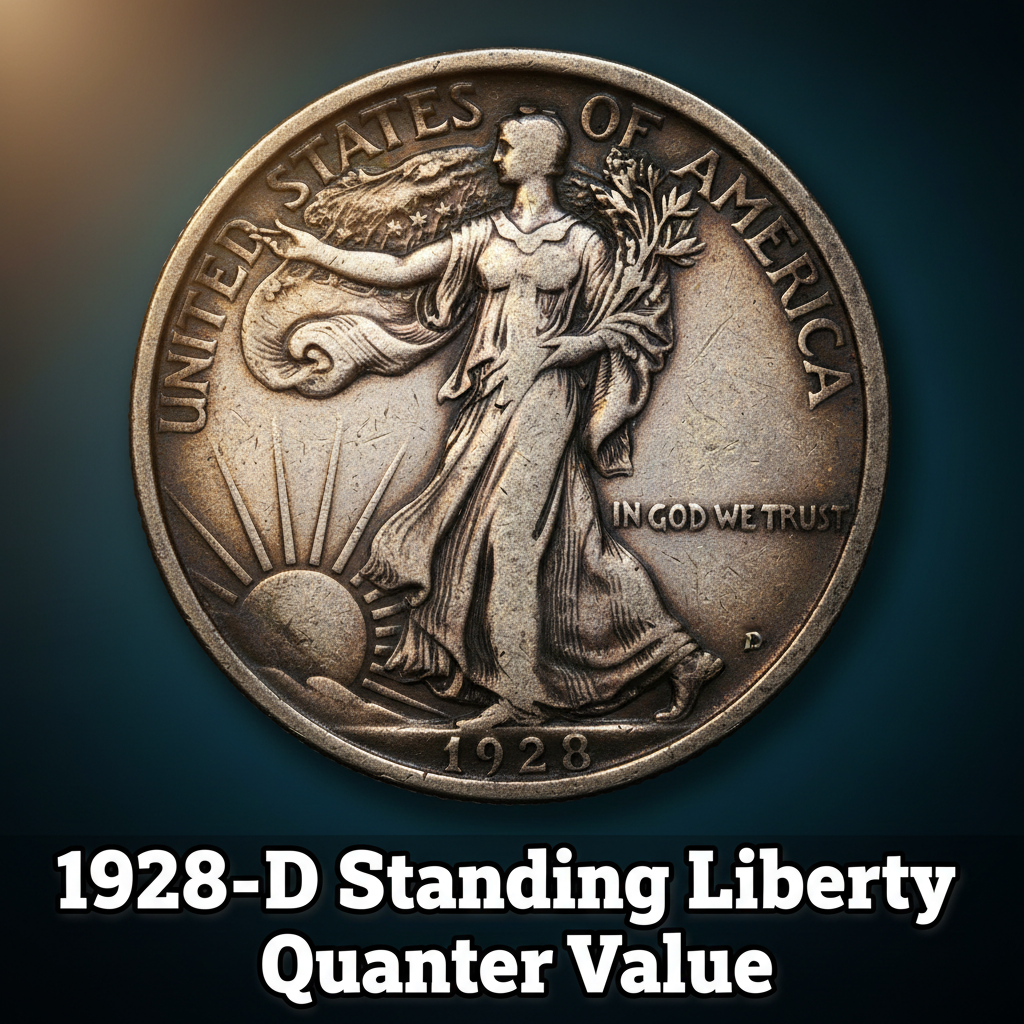
The 1928-D Standing Liberty Quarter is worth anywhere from $8 to $30 in well-worn condition, while nicer examples in higher grades can fetch $50 to $200 or more — and top mint state coins have sold for several hundred dollars at auction. If you found one of these beauties in an old collection or inherited it from a relative, you’re holding a genuinely historic piece of American coinage worth knowing more about.
What Makes the 1928-D Standing Liberty Quarter Special
The 1928-D Standing Liberty Quarter was struck at the Denver Mint, identified by the small “D” mintmark on the obverse below the date. Designed by Hermon Atkins MacNeil, the Standing Liberty Quarter series ran from 1916 to 1930 and is admired for its bold, artistic design featuring Lady Liberty standing in a gateway, holding a shield and an olive branch. These quarters were made for everyday circulation, so finding one today in decent shape is genuinely exciting. The Denver Mint produced 1,627,600 of these coins in 1928 — a relatively modest mintage compared to the Philadelphia issues, which tends to push collector demand a bit higher. If you’re trying to figure out exactly what you’ve got, using the best coin identifier app available can help you quickly identify the mintmark and grade range before you do anything else.
1928-D Standing Liberty Quarter Value by Grade
The value of your 1928-D quarter depends heavily on its condition, also called its grade. Coins that went through heavy circulation will show flat high points, especially on Liberty’s head and the date — and that directly affects what collectors will pay. Here’s a general breakdown:
| Grade | Condition Description | Estimated Value |
|---|---|---|
| Good (G-4) | Heavy wear, date visible | $8 – $12 |
| Very Good (VG-8) | Moderate wear, some detail | $14 – $20 |
| Fine (F-12) | Light to moderate wear | $22 – $35 |
| Extremely Fine (EF-40) | Light wear on high points | $50 – $80 |
| Mint State (MS-63) | Uncirculated, minor marks | $150 – $300+ |
For the most up-to-date market pricing, you can check current 1928-D Standing Liberty Quarter price data across multiple grades to see what these coins are actually selling for right now.
How to Tell What Grade Your Coin Is In
Grading your own coin at home is totally doable — you just need good lighting and a magnifying glass. On a Standing Liberty Quarter, the first places to look for wear are Liberty’s head on the obverse, the shield details, and the eagle’s breast feathers on the reverse. A coin in Good condition will have the basic design flat and readable but smoothed. A Fine coin will still show some of Liberty’s gown folds. Anything above Extremely Fine starts to show crisp, sharp detail across the whole design. One important note specific to Standing Liberty Quarters: a weak or missing date was very common because of how the date was positioned high on the coin — so don’t confuse a weakly struck date with heavy wear. Apps like CoinHix can help you match your coin’s details to graded examples quickly and easily, making the process far less intimidating if you’re new to coin collecting.
Silver Content and Melt Value
Even if your 1928-D Standing Liberty Quarter is heavily worn and not particularly valuable to collectors, it still has real worth because it’s 90% silver. Each coin contains approximately 0.1808 troy ounces of pure silver. With silver prices fluctuating around $25 to $30 per ounce in recent years, that means even the most worn example has a melt value of roughly $4.50 to $5.40 — though collector value almost always exceeds that for identifiable coins. Never clean your coin trying to make it shinier; that will actually reduce its collector value significantly. If you want a full picture of what your specific coin is worth as both a silver piece and a collectible, sites that offer detailed 1928 quarter value information including silver melt and collector premiums are a great resource to bookmark.
Where to Sell Your 1928-D Standing Liberty Quarter
If you’ve decided you’d rather cash in than hold onto your coin, you have several solid options. eBay is one of the best places to gauge real-world selling prices — just search completed listings to see what buyers actually paid, not just asking prices. Local coin dealers are another option, especially if you prefer dealing face-to-face and getting cash on the spot. For higher-grade coins worth over $100, you might want to consider having it graded by PCGS or NGC first, since a certified grade can significantly boost buyer confidence and final price. CoinHix is also a handy tool for quickly comparing values across platforms so you know whether you’re getting a fair offer before you commit to a sale.
FAQ
Q: How do I know if my quarter is the 1928-D and not a regular 1928?
A: Look just below the date on the obverse side of the coin. If you see a small letter “D,” it was minted in Denver. No mintmark means it came from Philadelphia. A magnifying glass makes this much easier to spot.
Q: Is the 1928-D Standing Liberty Quarter rare?
A: It’s not considered a rare coin, but its mintage of about 1.6 million is lower than many other years in the series. In worn grades it’s common, but finding one in mint state condition is genuinely uncommon and that’s where the real value lies.
Q: Can I use CoinHix to identify and value my 1928-D quarter?
A: Yes! CoinHix is designed exactly for situations like this. You can scan or look up your coin, compare it to graded examples, and get a realistic value estimate — all without needing to visit a dealer first. It’s a great starting point for any coin you’re curious about.