The 1920-S Buffalo Nickel is worth anywhere from $10 in heavily worn condition to over $2,000 or more in high-grade mint state — and certain rare examples have sold for even higher at auction. If you’ve recently found one of these classic American nickels, you’re in for a treat. This guide will walk you through everything you need to know about its value, history, and what makes some examples worth far more than others.
—
What Makes the 1920-S Buffalo Nickel Special
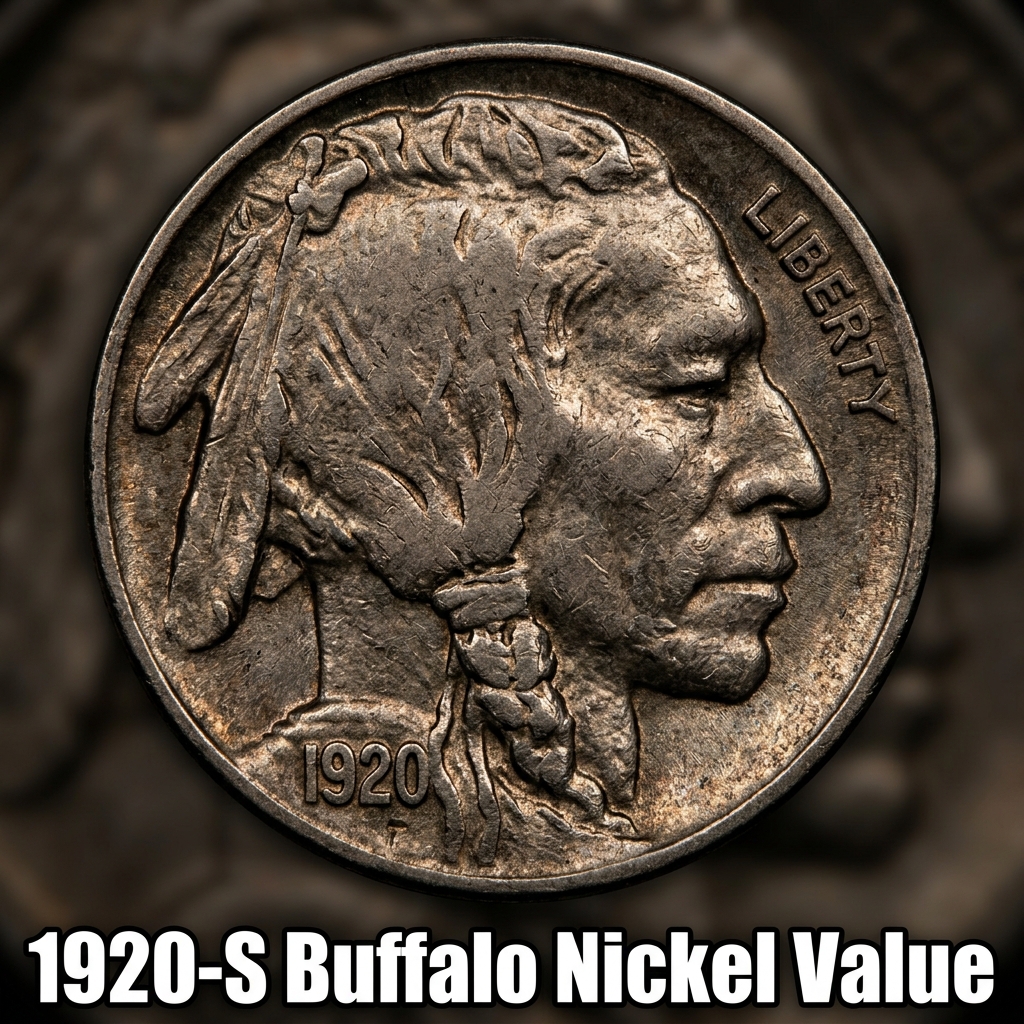
The 1920-S Buffalo Nickel was struck at the San Francisco Mint, identified by the small “S” mintmark found on the reverse side just below the words “FIVE CENTS.” The Buffalo Nickel series, officially called the Indian Head Nickel, ran from 1913 to 1938 and is considered one of the most beautiful American coin designs ever produced. Sculptor James Earle Fraser designed it, featuring a Native American portrait on the obverse and an American bison on the reverse.
In 1920, the San Francisco Mint produced approximately 9,689,000 Buffalo Nickels. While that sounds like a large number, surviving examples — especially in nice condition — are far fewer than you might expect. Most of these coins circulated heavily and show significant wear. To quickly identify whether your coin is the S-mint variety, use the best coin identifier app available on your phone, which can help you read mintmarks and grade your coin in seconds.
—
1920-S Buffalo Nickel Value by Grade
The condition of your coin — known as its “grade” — is the single biggest factor determining value. Coin collectors use a scale from Poor (P-1) to Perfect Mint State (MS-70). Here’s a quick look at typical values for the 1920-S Buffalo Nickel across different grades:
| Grade | Description | Estimated Value |
|---|---|---|
| Good (G-4) | Heavy wear, date visible | $10 – $15 |
| Fine (F-12) | Moderate wear, details clear | $25 – $40 |
| Extremely Fine (EF-40) | Light wear on high points | $80 – $120 |
| About Uncirculated (AU-55) | Slight wear, mostly sharp | $175 – $275 |
| Mint State (MS-63) | No wear, some marks | $500 – $800 |
| Mint State (MS-65) | Gem quality, sharp luster | $1,800 – $2,500+ |
For the most up-to-date auction results and dealer pricing, you can check the 1920-S Buffalo Nickel mint state price data to see how recent sales compare and where the market currently sits.
—
How to Tell What Grade Your Coin Is
You don’t need to be an expert to get a rough sense of your coin’s grade. Start by examining the highest points of the design — the Native American’s cheekbone and hair braid on the obverse, and the bison’s shoulder and hip on the reverse. If those areas are completely flat and worn smooth, the coin is likely in Good or Fine condition. If you can still see distinct hair strands or muscle detail on the bison, you’re probably looking at Extremely Fine or better.
Lighting matters too. Use a magnifying glass and a single light source angled at the coin. If the surfaces still show a faint cartwheel luster — that shimmering effect that rolls across an uncirculated coin — there’s a good chance your 1920-S is in the Mint State range. That’s where values climb quickly.
CoinHix offers a fast, reliable way to grade and value Buffalo Nickels right from your smartphone. Just take a clear photo of both sides of the coin, and CoinHix will give you an instant estimated grade and current market value — no coin dealer required.
—
Key Factors That Can Increase the 1920-S Buffalo Nickel Value
Beyond basic grade, a few specific factors can push your coin’s value higher:
Strike quality: Some Buffalo Nickels were poorly struck at the mint, meaning design details were weak right from the start. A sharply struck 1920-S with full horn on the bison and full feathers on the Native American is significantly more desirable — and valuable — than a weakly struck example of the same grade.
Luster: Original, undisturbed mint luster adds a premium. Coins that have been cleaned (you can spot cleaning by unnatural brightness or hairline scratches under magnification) are worth considerably less, even if they look shiny.
Eye appeal: Collectors pay more for coins that simply look great. A coin with attractive, original surfaces and no distracting marks will outperform a technically similar coin at auction.
You can explore a detailed breakdown of 1920 Buffalo Nickel values including the S mint variety that covers strike quality and other nuances that affect pricing.
—
Where to Sell Your 1920-S Buffalo Nickel
If you’ve confirmed your coin is worth something meaningful, you have several solid options. Local coin dealers offer quick cash but may pay wholesale prices. Online auction platforms like eBay give you access to a broader collector market, though they require effort to photograph and list properly. For higher-value coins in MS-63 and above, consider submitting to a third-party grading service like PCGS or NGC — an officially graded coin in a sealed holder typically sells for significantly more than a raw, ungraded example.
Before you sell, use CoinHix to benchmark the current market value so you know exactly what a fair offer looks like. Walking into any negotiation with accurate data on your side always pays off.
—
FAQ
Q: How do I know if my coin is the 1920-S and not the 1920 or 1920-D?
A: Look at the reverse side of the coin just below “FIVE CENTS.” If you see a small “S,” it’s the San Francisco Mint issue. A “D” means Denver, and no mintmark means Philadelphia. The mintmark is tiny, so use a magnifying glass or the coin scanner in CoinHix for a clearer look.
Q: Is a 1920-S Buffalo Nickel with a worn date still worth anything?
A: Yes, even heavily worn examples with a fully visible date are worth $10 to $15 to collectors and dealers. If the date is partially worn away and hard to read, value drops significantly, though some collectors still pay a few dollars for dateless Buffalo Nickels as fillers.
Q: Should I clean my 1920-S Buffalo Nickel before selling it?
A: Absolutely not. Cleaning a coin — even with gentle soap and water — removes the original surface patina and luster, which permanently lowers its collector value. Experienced buyers can spot a cleaned coin immediately, and it will cost you money at sale time. Leave it exactly as you found it.