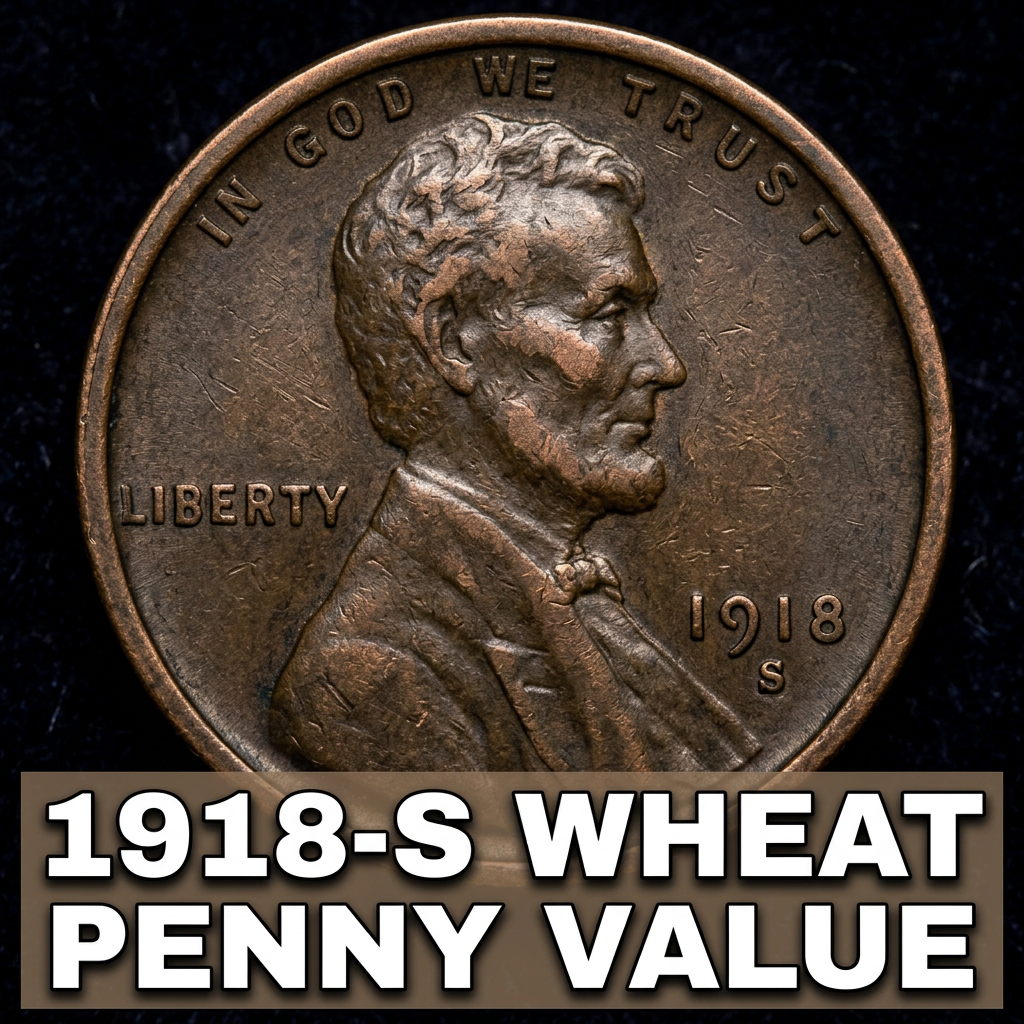
The 1918-S Wheat Penny is worth anywhere from $0.50 in heavily worn condition to well over $150 or more in higher mint state grades. If you found one of these old Lincoln cents tucked away in a drawer or jar, you might be sitting on a nice little piece of American history — and some real money.
best coin identifier app can help you quickly identify and grade your coin right from your phone before you buy, sell, or trade. Whether you’re brand new to coin collecting or just curious about what grandma’s old coins are worth, this guide will walk you through everything you need to know about the 1918-S Wheat Penny value.
What Is the 1918-S Wheat Penny?
The 1918-S Wheat Penny was struck at the San Francisco Mint, which is where that small “S” mintmark under the date comes from. During World War I, the U.S. Mint was producing cents at all three of its facilities — Philadelphia, Denver, and San Francisco. The San Francisco Mint produced 34,680,000 Lincoln cents in 1918, making this a moderately common coin in circulated grades but increasingly scarce in uncirculated or mint state condition.
The coin features the classic Victor David Brenner design introduced in 1909 — Abraham Lincoln’s portrait on the obverse, and two wheat stalks flanking the words “ONE CENT” on the reverse. These are often called “Wheat Pennies” or “Wheaties” by collectors. The 1918-S version is a solid mid-series coin that’s always in demand among Lincoln cent collectors who are trying to complete date-and-mintmark sets.
How Much Is a 1918-S Wheat Penny Worth?
The value of your 1918-S Wheat Penny depends heavily on its condition, also called its “grade.” A coin that’s been rattling around in someone’s pocket for decades will be worth far less than one that was carefully saved and shows minimal wear.
Here’s a general value chart to give you a quick idea:
| Grade / Condition | Estimated Value |
|---|---|
| Good (G-4) | $0.50 – $1.50 |
| Very Good (VG-8) | $1.50 – $3.00 |
| Fine (F-12) | $3.00 – $6.00 |
| Very Fine (VF-20) | $6.00 – $12.00 |
| Extremely Fine (EF-40) | $12.00 – $25.00 |
| About Uncirculated (AU-50) | $25.00 – $50.00 |
| Mint State (MS-63) | $60.00 – $100.00 |
| Mint State (MS-65 Red) | $150.00 – $300.00+ |
For the most current auction results and market pricing, you can check out real-time 1918-S Wheat Penny price data in mint state red grades to see exactly what collectors are paying today.
What Condition Is Your Coin In?
Grading is probably the most important factor when it comes to value. Even if you’re not a professional numismatist, you can make a rough assessment at home. Look at the high points of Lincoln’s portrait — his cheekbone, jaw, and the top of his head. If these areas are smooth and flat with no detail, the coin is heavily worn and falls into the “Good” or “Very Good” category.
If you can still see Lincoln’s hair strands, the letters are sharp, and there’s only minor wear on the highest points, you’re looking at a Fine to Very Fine coin. An uncirculated coin will show no wear at all — it will still have some of its original mint luster, which is that soft, silky shine that coins have when they first leave the mint. Red coins (original copper color) are worth significantly more than brown ones that have fully toned over time.
Using CoinHix to scan your coin can give you an instant estimate based on visible condition, saving you time and guesswork.
Special Varieties and Errors to Watch For
Like many early Lincoln cents, the 1918-S has a few minor varieties that sharp-eyed collectors look for. Repunched mintmarks (RPMs) are among the most common — these occur when the “S” mintmark was stamped into the die more than once at a slightly different angle. Under magnification, you’ll see a shadow or doubling of the mintmark. These varieties can add a premium of 10–30% or more to the standard value depending on how dramatic the doubling is.
There are also doubled die varieties to watch for, though they are relatively subtle on this issue compared to more famous Lincoln cent errors. Always examine your coin under good lighting with a 5x or 10x loupe. If something looks off or interesting, it’s worth getting a second opinion. CoinHix can flag unusual features and help you decide if professional grading is worth the investment.
Where to Sell Your 1918-S Wheat Penny
Once you know what you have, you’ve got several options for selling. Online auction platforms like eBay are popular and get your coin in front of a large audience of collectors. Local coin dealers are a faster option but may offer less than full market value since they need to resell at a profit. Coin shows are another great venue to get multiple offers in person.
For a complete breakdown of what your specific coin is worth based on grade and color designation, the 1918 Wheat Penny value breakdown by grade and mint mark is an excellent resource to bookmark. If you’re serious about selling in higher grades, consider having the coin certified by PCGS or NGC first — a graded slab adds credibility and can significantly boost what buyers are willing to pay. And don’t forget that CoinHix lets you track coin values over time, so you’ll know exactly when the market is in your favor.
—
FAQ
Q: How do I know if my penny is a 1918-S or 1918 Philadelphia?
A: Look just below the date on the obverse (front) of the coin. If you see a small “S” mintmark, it was made in San Francisco. If there’s no mintmark at all, it came from the Philadelphia Mint.
Q: Is a 1918-S Wheat Penny rare?
A: It’s not considered rare in circulated grades since over 34 million were made. However, finding one in uncirculated condition with original red color is genuinely difficult, and those coins can command strong prices from serious collectors.
Q: Should I clean my 1918-S Wheat Penny before selling it?
A: Absolutely not. Cleaning a coin — even gently — removes the natural patina and can permanently reduce its value by 50% or more. Collectors strongly prefer original, uncleaned surfaces, even if the coin looks dark or dirty to an untrained eye.