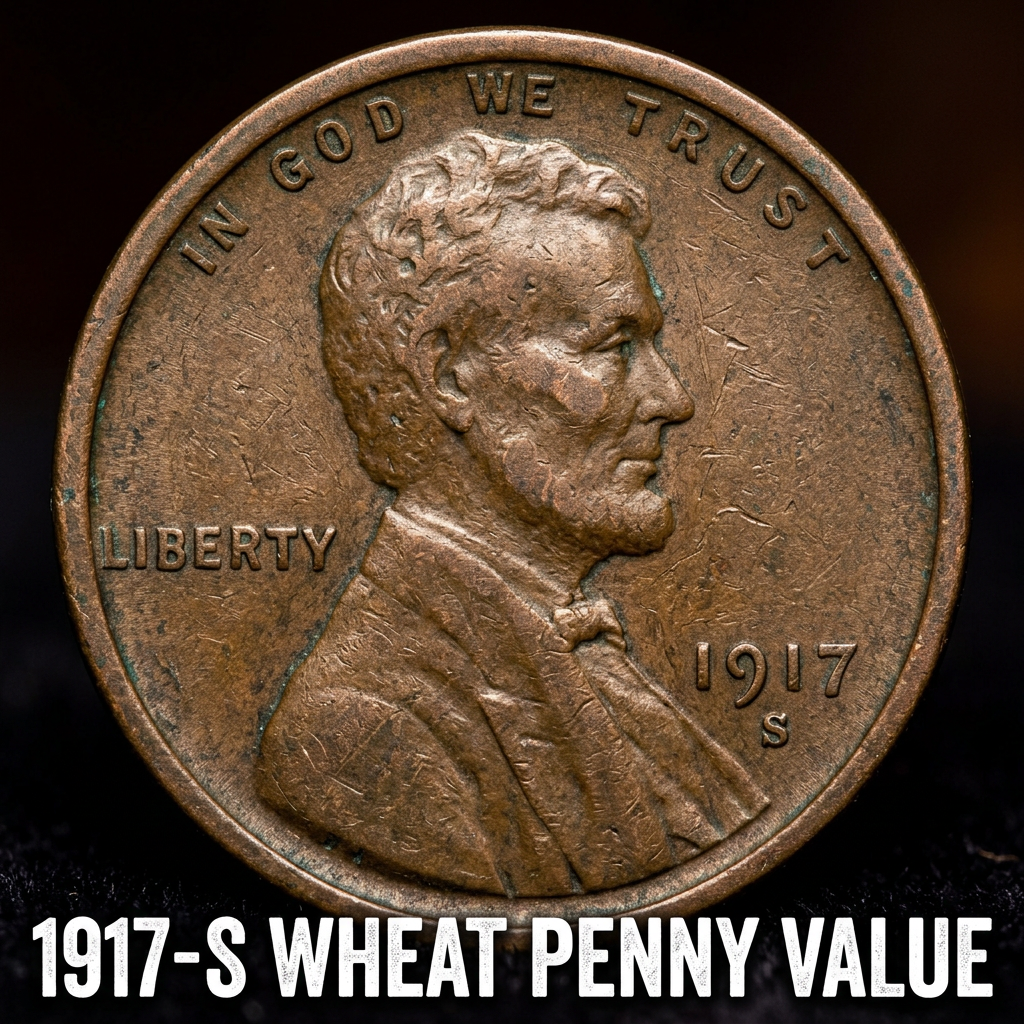
The 1917-S Wheat Penny is worth anywhere from $0.50 in heavily worn condition to over $150 or more in well-preserved mint state grades. If you’ve found one of these old Lincoln cents in a jar or collection, you might be sitting on a surprisingly nice little coin.
What Makes the 1917-S Wheat Penny Special
The 1917-S Lincoln Wheat Penny was struck at the San Francisco Mint, which is indicated by the small “S” mintmark found just below the date on the obverse. That year, the San Francisco Mint produced around 32,620,000 of these coins — a respectable mintage, but far fewer than what the Philadelphia Mint turned out the same year. Lincoln Wheat Pennies from branch mints like San Francisco have always drawn interest from collectors, partly because of that regional character and partly because well-preserved examples are harder to track down than you might expect.
If you recently discovered one of these coins and want a quick, accurate ID, using the best coin identifier app can save you a lot of guesswork. Apps like these let you snap a photo of your coin and get instant details on its mint, year, and approximate value — a great starting point before you dig deeper.
The design on the 1917-S, like all Wheat Pennies from this era, features Victor David Brenner’s portrait of Abraham Lincoln on the front and two stylized wheat stalks framing the words “ONE CENT” on the reverse. It was a classic design that ran from 1909 all the way through 1958.
1917-S Wheat Penny Value by Grade
The value of your 1917-S Wheat Penny depends almost entirely on its condition, or “grade.” A coin that’s been passed from hand to hand for decades will show heavy wear on Lincoln’s cheekbones and the high points of the design. A coin that was tucked away early on, however, might still show original luster and sharp detail — and that’s where real value kicks in.
Here’s a general breakdown of what collectors and dealers typically pay:
| Grade / Condition | Description | Estimated Value |
|---|---|---|
| Good (G-4) | Heavy wear, flat design but date visible | $0.50 – $1.50 |
| Fine (F-12) | Moderate wear, some detail remains | $3 – $7 |
| Extremely Fine (EF-40) | Light wear on high points only | $15 – $30 |
| About Uncirculated (AU-55) | Slight friction, nearly full luster | $35 – $60 |
| Mint State Red (MS-63+) | Uncirculated with original red luster | $80 – $175+ |
For the most up-to-date auction results and certified coin prices, you can check out current 1917-S Wheat Penny price data in mint state red grades, which reflects real market trends as they shift.
How to Tell What Grade Your Coin Is
You don’t need to be a professional numismatist to get a rough sense of your coin’s grade. Start by looking at Lincoln’s cheek and jawline under a good light — those are the first places to show wear. If the hair strands above his ear are sharp and distinct, you’re likely looking at a coin in Fine or better condition. If the coin still has some reddish-brown color rather than being fully gray, that original copper luster adds to the value.
CoinHix is a fantastic tool here. The CoinHix app lets you look up certified sale prices filtered by grade, so you can compare your coin’s appearance to professionally graded examples and get a realistic sense of what yours might fetch. It’s free, easy to use, and pulls real auction data.
Keep in mind that cleaning a coin — even gently — will significantly reduce its value. Collectors strongly prefer original, untouched surfaces, even if they’re a bit dark or spotted.
Where to Sell Your 1917-S Wheat Penny
Once you have a rough idea of your coin’s grade, you have several solid options for selling. eBay is the most accessible marketplace and gives you access to thousands of active coin buyers. For more valuable examples in AU or MS grades, consider submitting your coin to PCGS or NGC for professional grading — a certified coin almost always sells for more than a raw, ungraded one.
Local coin shows and dealers are also worth visiting if you want a quick, in-person appraisal. Many dealers will give you a free verbal estimate even if you’re not ready to sell. For a broader look at the full 1917 Lincoln Penny series across all mint marks and conditions, this complete 1917 penny value guide breaks down each variety with detailed pricing.
And if you enjoy tracking coin values over time, CoinHix has a portfolio feature that lets you log your coins and monitor how their market values change — handy if you’re building a collection or thinking long-term.
Frequently Asked Questions
Q: How do I know if my penny is a 1917-S and not a Philadelphia issue?
A: Look just below the date on the front of the coin. If you see a small “S” mintmark, it was made in San Francisco. Philadelphia coins from 1917 have no mintmark at all.
Q: Is a 1917-S Wheat Penny worth keeping or should I just spend it?
A: Even in worn condition, it’s worth more than face value to a collector — typically at least 50 cents to a dollar. If it’s in decent shape with visible detail, definitely hold onto it and get it evaluated before spending or discarding it.
Q: Does color affect the value of my 1917-S Wheat Penny?
A: Absolutely. Copper cents are graded not just by wear but also by color: Red (RD), Red-Brown (RB), and Brown (BN). Full red coins with original luster are the most desirable and can be worth several times more than brown examples in the same grade.