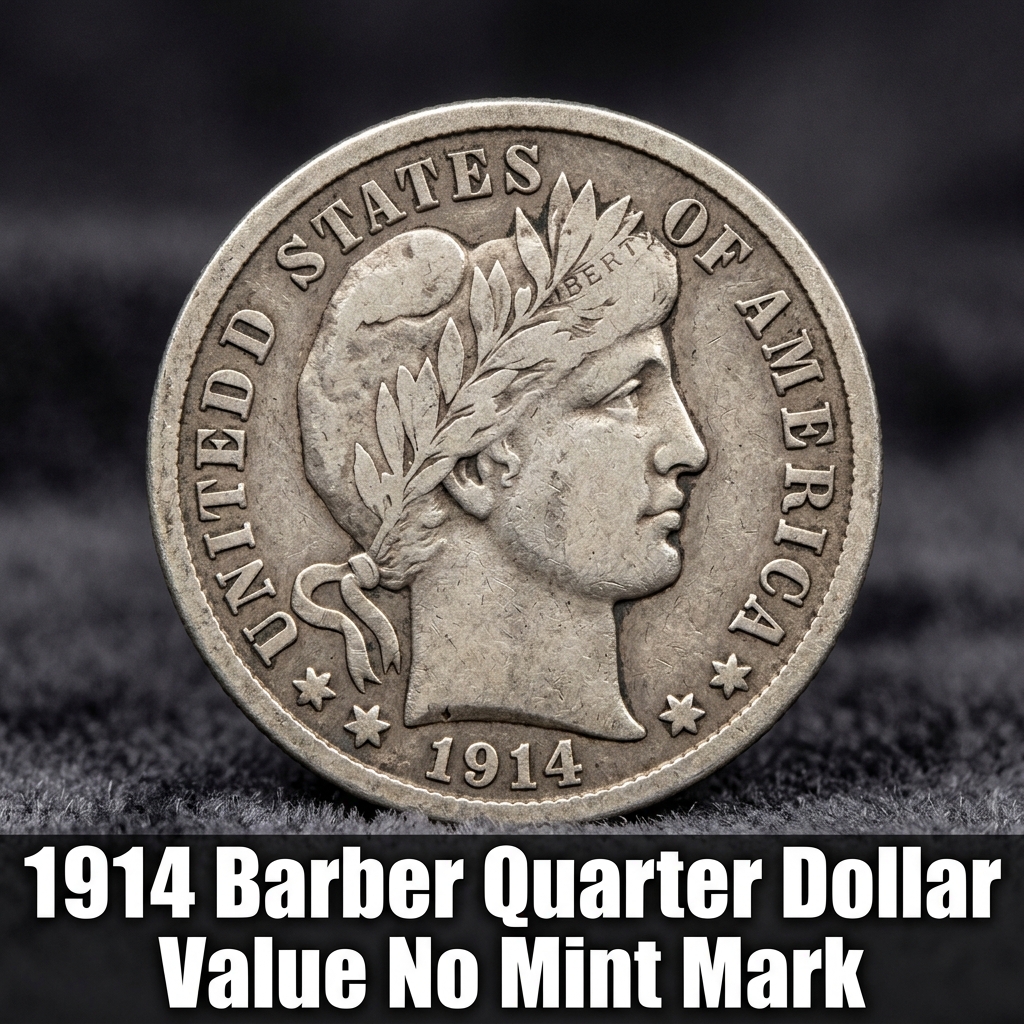
The 1914 Barber Quarter Dollar with no mint mark is worth anywhere from $6 in heavily worn condition to well over $200 in fine or better grades — and in pristine uncirculated condition, values can climb into the thousands. If you recently found one of these old silver coins, you’re in the right place to learn exactly what it might fetch.
What Is the 1914 Barber Quarter?
The 1914 Barber Quarter is part of a classic American coin series designed by Charles E. Barber, the U.S. Mint’s Chief Engraver. It was produced at the Philadelphia Mint — which is why coins from that facility carry no mint mark. The obverse features Lady Liberty wearing a laureate crown, while the reverse displays a heraldic eagle. These coins were made of 90% silver, which alone gives them intrinsic metal value today.
If you’re just getting started identifying old coins in your collection, using the best coin identifier app can save you a lot of time and guesswork. A good app will help you match your coin’s features to known varieties quickly.
The 1914 Philadelphia quarter had a mintage of 6,244,230 coins — a moderate number for the era. While not considered rare in lower grades, finding a well-preserved example is increasingly difficult, which drives up value for higher-grade pieces significantly.
How Much Is a 1914 Barber Quarter Worth by Grade?
Coin value is almost entirely dependent on condition. The grading scale runs from Poor (P-1) up to Mint State (MS-65 and beyond). For the 1914 Barber Quarter with no mint mark, here’s a general value breakdown:
| Grade | Description | Estimated Value |
|---|---|---|
| Good (G-4) | Heavy wear, design visible | $6 – $10 |
| Very Good (VG-8) | Moderate wear, key details remain | $12 – $18 |
| Fine (F-12) | Even wear, lettering clear | $25 – $40 |
| Very Fine (VF-20) | Light wear on high points | $50 – $75 |
| Extremely Fine (EF-40) | Slight wear, sharp details | $100 – $150 |
| Mint State (MS-63+) | No wear, original luster | $400 – $2,500+ |
These values reflect the coin market as of recent years and can shift based on silver prices and collector demand. For the most current pricing, CoinHix offers real-time coin value estimates right from your smartphone.
Silver Melt Value and Why It Matters
Even a heavily worn 1914 Barber Quarter has baseline value thanks to its silver content. Each coin contains approximately 0.1808 troy ounces of pure silver. With silver trading around $27–$30 per ounce in recent markets, that puts the melt value alone at roughly $4.80 to $5.40.
This is important because no matter the grade, you’ll almost never sell a genuine Barber Quarter for less than its silver melt value. It acts as a floor beneath the coin’s price. Collectors and dealers always factor this in, especially for low-grade examples.
If you collect or flip silver coins regularly, it helps to track both numismatic (collector) value and metal value simultaneously. The CoinHix app does exactly that — it shows you live silver calculations alongside collector grade values, so you always know what you’re really holding.
Comparing the 1914 No Mint Mark to Other Barber Quarters
The Barber Quarter series ran from 1892 to 1916. Not all years and mint marks are created equal. The 1914 Philadelphia issue is considered a common-date coin, making it accessible to collectors without breaking the bank. Compare it to the 1896-S or 1901-S, which are considered key dates and can be worth thousands even in lower grades.
If you want to understand how the 1914 quarter fits into the broader landscape of early 20th-century U.S. coinage, it’s worth exploring related issues. For example, learning about the 1914 Buffalo Nickel value and what makes certain 1914 coins more desirable can give you useful context when evaluating your collection from this era.
Within the Barber Quarter series, the 1914-D (Denver) and 1914-S (San Francisco) issues both have lower mintages than the Philadelphia coin, making them notably more valuable across all grades.
Tips for Selling Your 1914 Barber Quarter
Once you know your coin’s approximate grade and value, you have several selling options. Online platforms like eBay and Heritage Auctions reach large collector audiences and often yield strong prices. Local coin dealers offer convenience but may pay closer to wholesale. Coin shows can connect you with serious collectors willing to pay fair market value.
Before selling, always get a second opinion on grade and value. Photos matter enormously when selling online — clear shots of both obverse and reverse in good lighting will attract more buyers. If your coin grades MS-60 or above, consider professional grading through PCGS or NGC, as a certified grade dramatically increases buyer confidence and resale value.
For quick, on-the-go estimates before you head to a dealer or post an auction, CoinHix is a handy tool that gives you real-time value ranges based on grade and current market data.
Frequently Asked Questions
Q: How do I know if my 1914 quarter is from Philadelphia?
A: Philadelphia Mint coins from this era carry no mint mark. Look just above the eagle on the reverse — if you see nothing there, it’s a Philadelphia coin. Denver coins show a “D” and San Francisco coins show an “S” in that location.
Q: Is the 1914 Barber Quarter rare?
A: The 1914 no mint mark Philadelphia issue is considered a common date within the Barber Quarter series due to its mintage of over 6 million. It’s not rare, but high-grade examples (EF-40 and above) are genuinely scarce and command strong premiums.
Q: Can cleaning my coin increase its value?
A: No — cleaning almost always reduces a coin’s value. Collectors strongly prefer original, untouched surfaces. Even lightly polished coins are considered “cleaned” and will be graded and valued lower than unaltered examples of the same grade.