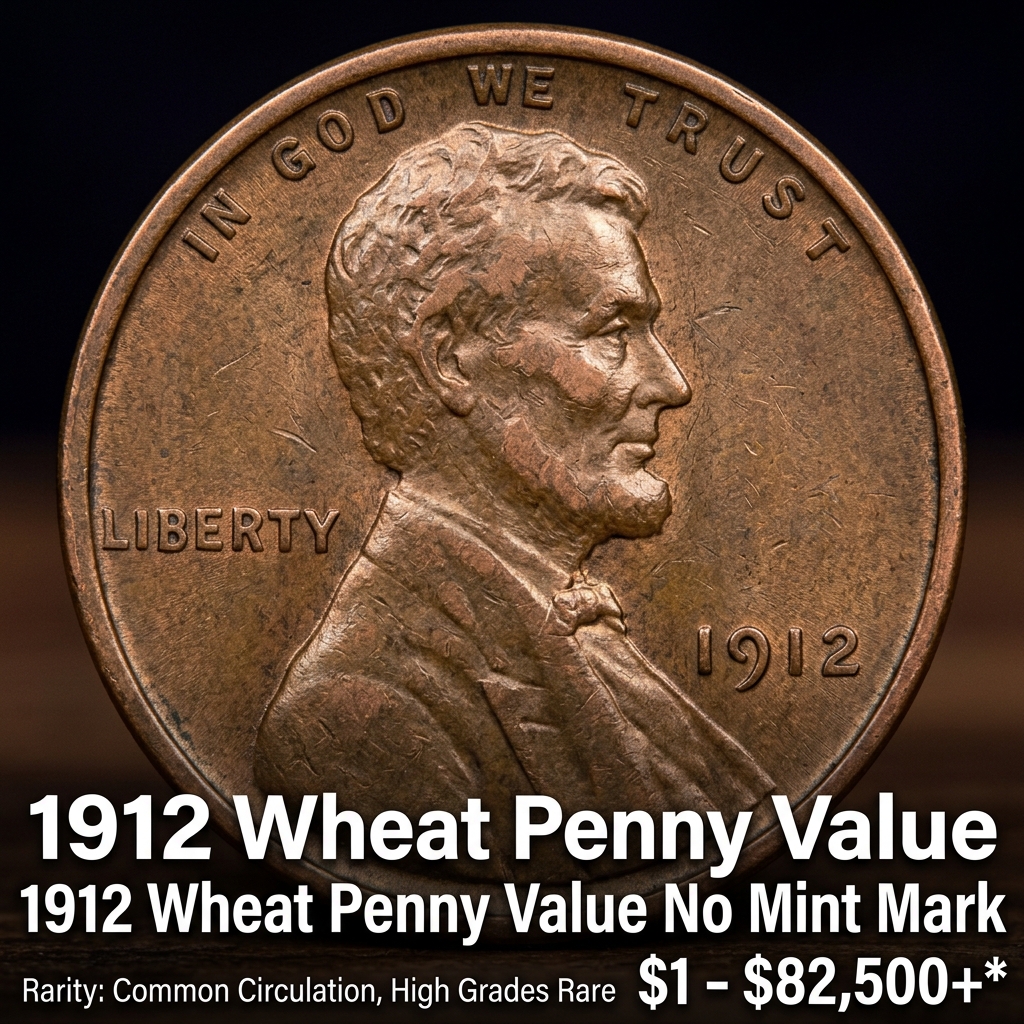
The 1912 Wheat Penny with no mint mark is worth anywhere from $0.50 in heavily worn condition to over $100 or more in uncirculated grades. Most coins you find in old jars or inherited collections fall somewhere in between, making this a surprisingly valuable little cent.
What Makes the 1912 No Mint Mark Penny Special
If you’ve got an old Lincoln cent sitting on your desk with the date 1912 and no mint mark, you’re holding a coin struck at the Philadelphia Mint. Philadelphia was the main U.S. mint at the time, and it didn’t use a mint mark on its cents — which is why the absence of a letter beneath the date actually tells you exactly where it came from. The 1912 Philadelphia Wheat Penny had a mintage of around 68.1 million coins, which sounds like a lot, but over a century of circulation, loss, and melting means that high-grade examples are much harder to find than you’d think.
The coin features Victor David Brenner’s iconic portrait of Abraham Lincoln on the obverse, with two wheat stalks framing the words ONE CENT on the reverse — the design that gave these coins the beloved “Wheat Penny” nickname. Whether you found yours in a grandparent’s coin jar or picked it up at a flea market, using the best coin identifier app can help you quickly confirm what you have and get a ballpark value before you read further.
1912 Wheat Penny Value by Grade
Condition is everything in coin collecting. A coin that looks barely worn is worth dramatically more than one that’s been passed hand to hand for decades. Here’s a general value breakdown for the 1912 no mint mark Wheat Penny:
| Grade | Condition Description | Estimated Value |
|---|---|---|
| Good (G-4) | Heavy wear, design visible | $0.50 – $1.50 |
| Fine (F-12) | Moderate wear, details clear | $2 – $5 |
| Extremely Fine (EF-40) | Light wear on high points | $15 – $25 |
| Mint State (MS-63) | Uncirculated, minor marks | $50 – $75 |
| Mint State (MS-65 RD) | Full original red luster | $100 – $200+ |
For the most current market data, you can check out the 1912 Wheat Penny price data in MS Red grade to see exactly how uncirculated examples are trading right now. Prices shift with collector demand, so live data is always more reliable than a printed price guide.
Red, Brown, and the Color Factor
Here’s something a lot of people don’t realize: for copper coins, color matters as much as grade. Uncirculated 1912 pennies are graded not just by wear, but by how much of their original copper-red color they retain. A coin graded MS-65 Red (RD) — meaning it still has 95% or more of its original brilliant red surface — is worth significantly more than the same grade in Brown (BN), which means the coin has naturally toned over time.
Most old Wheat Pennies you find will be brown or red-brown (RB). That’s completely normal. A full-red example that’s been stored properly since it left the mint over 100 years ago is genuinely rare and commands a premium at auction. If your coin still has a warm, coppery glow to it, that’s a very good sign.
How to Check Your 1912 Penny’s Value Quickly
You don’t need to be a professional numismatist to get a good idea of what your coin is worth. Start by examining it under a lamp or natural light. Look for sharpness in Lincoln’s hair and beard, and check the wheat stalks on the back for fine detail. The more detail you can see, the higher the grade — and the higher the value.
For a fast, accurate estimate, CoinHix is one of the most reliable tools out there. CoinHix tracks real-time auction data and dealer prices so you’re not stuck with outdated book values. Just search your coin’s date, mint mark, and condition, and you’ll get a solid market-based figure in seconds.
You can also dig into detailed 1912 penny value information broken down by mint mark and grade to compare how the Philadelphia issue stacks up against the 1912-D and 1912-S, both of which are significantly rarer and worth more across the board.
Is the 1912 No Mint Mark Penny Worth Keeping
Honestly? Yes. Even in circulated condition, this coin is over 110 years old and made of copper that predates World War I. Collectors actively seek out Wheat Pennies from the early Lincoln series (1909–1916), and the 1912 Philadelphia issue is a solid, collectible date. If you’ve got one in fine or better condition, it’s worth holding onto — or at minimum, worth getting a proper assessment before you trade it away for face value.
If you’re starting to build a collection or just curious about the coins in your family’s old box, CoinHix makes it easy to catalog and value multiple coins at once, which is a huge time-saver when you’re sorting through a full collection.
—
Frequently Asked Questions
Q: How do I know if my 1912 penny is from Philadelphia?
A: If there’s no mint mark below the date on the obverse, it was made in Philadelphia. The 1912-D has a small “D” and the 1912-S has a small “S” in that spot.
Q: What’s the most valuable 1912 Wheat Penny?
A: The 1912-S (San Francisco) is the rarest of the three mints that year, with only 4.4 million struck. In top uncirculated grades, it can fetch several hundred dollars or more. The Philadelphia no-mint-mark version is more common but still worth collecting.
Q: Should I clean my 1912 penny to make it look better?
A: Never clean a coin. Cleaning removes the original surface and dramatically reduces its value to collectors. Even a toned or dark penny is worth more in original condition than one that’s been polished or chemically treated.