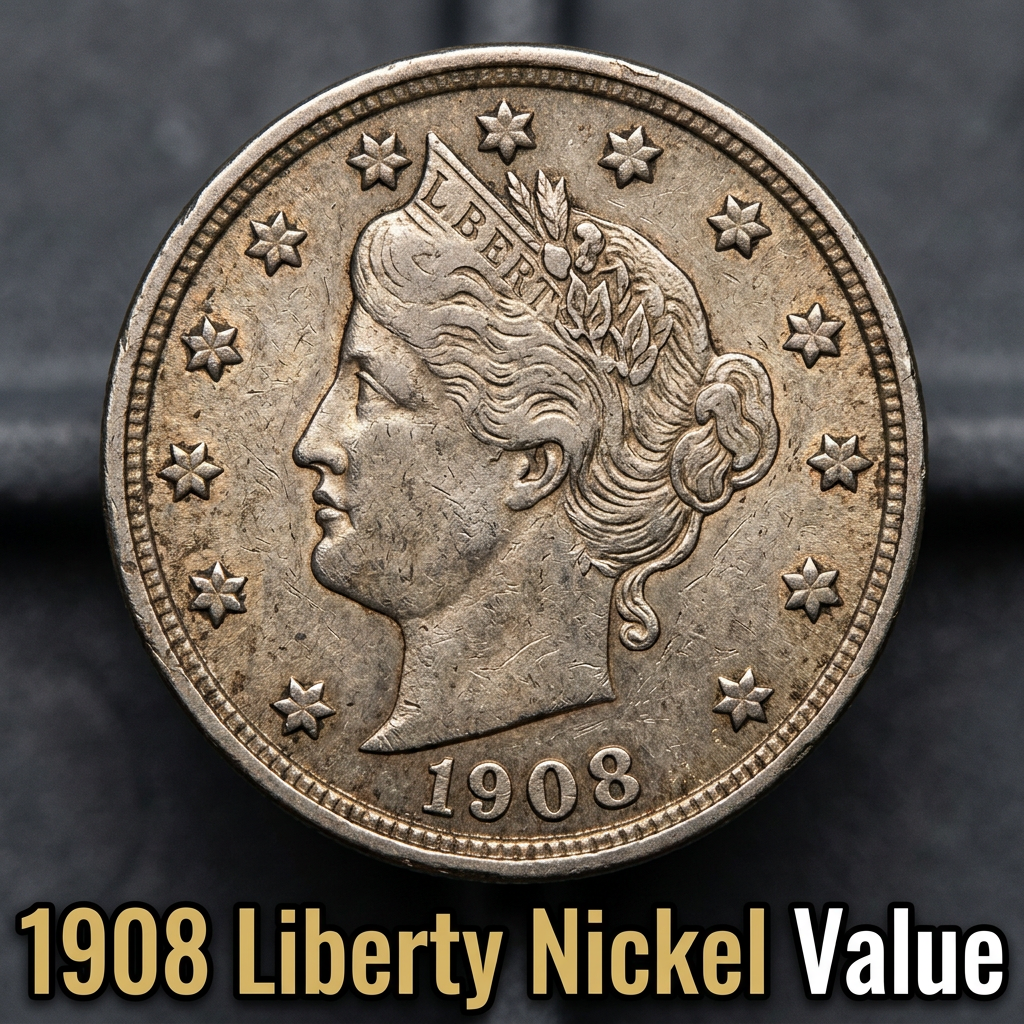
The 1908 Liberty Nickel is worth anywhere from $2 in heavily worn condition to over $100 or more in uncirculated grades — and certain rare varieties can climb even higher. If you stumbled across one of these coins in an old jar or inherited collection, you’re in the right place to learn exactly what you’ve got.
What Is the 1908 Liberty Nickel?
The 1908 Liberty Nickel, also known as the V Nickel, was struck at the Philadelphia Mint and features the classic design by Charles Barber — Lady Liberty facing left on the obverse and a large Roman numeral “V” on the reverse. These coins were produced as a standard part of U.S. currency in the early 1900s, making them relatively common in lower grades but quite collectible in better condition.
If you’ve found one of these nickels and want a quick identification before diving into research, using the best coin identifier app can help you confirm exactly what you’re looking at in seconds. That’s a great first step before digging into value charts or contacting a dealer.
The 1908 Liberty Nickel has no mint mark, which means it came from Philadelphia — the main mint of the era. Coins from branch mints like Denver or San Francisco carry a small “D” or “S” and can be worth more to collectors. For 1908, the Philadelphia issue is the one you’re most likely to encounter.
1908 Liberty Nickel Value by Grade
The condition of your coin — what collectors call the “grade” — matters more than almost anything else when it comes to value. A heavily circulated coin with lots of wear is worth much less than one that looks like it just left the mint. Here’s a general breakdown of what the 1908 Liberty Nickel is worth across common grades:
| Grade | Description | Estimated Value |
|---|---|---|
| Good (G-4) | Heavy wear, design visible | $2 – $4 |
| Very Good (VG-8) | Moderate wear, major details clear | $5 – $8 |
| Fine (F-12) | Even wear, all lettering sharp | $10 – $15 |
| Extremely Fine (EF-40) | Light wear on high points only | $30 – $45 |
| Uncirculated (MS-63) | No wear, some bag marks | $80 – $120 |
| Gem Uncirculated (MS-65) | Sharp strike, minimal contact marks | $150 – $300+ |
For the most up-to-date auction results and certified coin sales, you can browse live 1908 Liberty Nickel price data across mint state grades to see what real buyers are paying right now. Market prices shift, so real-time data is always more reliable than static charts.
How to Check the Condition of Your 1908 Liberty Nickel
You don’t have to be an expert to get a rough sense of your coin’s grade. Start by looking at the high points of the design — Liberty’s hair above her ear and the detail in the lettering around the rim. If those areas are smooth and flat, the coin has seen heavy circulation. If you can still see the individual hair strands and the lettering is sharp, you might have a finer example on your hands.
Lighting matters too. Hold your coin at an angle under a single light source and look for any original luster — a gentle, cartwheel-like shimmer across the surface. That’s a sign the coin has not been heavily worn or cleaned. Cleaned coins, by the way, are worth significantly less to collectors even if they look shiny. Harsh cleaning removes that original luster and leaves behind small scratches called hairlines.
If you want a fast and easy way to grade your coin at home, CoinHix offers a handy reference tool that breaks down Liberty Nickel grades by year and condition. It’s a smart starting point for beginners.
Key Factors That Affect 1908 Liberty Nickel Worth
Beyond grade, a few other things can push your 1908 Liberty Nickel value up or down. Here’s what collectors watch for:
Strike quality: Some 1908 nickels were struck with soft, weak dies that left the design blurry or incomplete. A sharp, well-struck example is more desirable and typically commands a premium.
Luster and eye appeal: Two coins with the same technical grade can look very different. A coin with bright, original surfaces and strong eye appeal will always outsell a dull or unattractive piece.
Toning: Light, natural toning can sometimes enhance a coin’s appeal, but heavy or uneven toning usually hurts the value.
Certification: Coins graded and certified by PCGS or NGC carry more trust in the marketplace. A certified MS-64 will consistently sell for more than a raw (uncertified) coin claimed to be the same grade.
If you want a complete picture of what comparable 1908 nickels and other coins from the same era are fetching, check out detailed 1908 coin value information including the 1908 Barber Dime — understanding the broader context of that year’s coinage can help you become a smarter collector.
Where to Sell or Get Your 1908 Liberty Nickel Appraised
Once you’ve done your homework, you have a few solid options. Local coin dealers can give you a quick in-person appraisal, though they’ll typically offer you wholesale pricing since they need room for profit. Online auction platforms like eBay and Heritage Auctions let you reach a wider audience of serious collectors, which often means a better final price for better-grade coins.
For a free and instant value estimate from your phone, CoinHix is one of the most convenient tools available. Just enter the coin details and the app pulls up current market data so you always know where you stand before you walk into any negotiation.
—
Frequently Asked Questions
Q: Is a 1908 Liberty Nickel rare?
A: Not especially in circulated grades — millions were minted. However, examples in uncirculated condition with strong luster and sharp strikes are genuinely scarce and can be quite valuable to serious collectors.
Q: What does the “V” on the back of the nickel mean?
A: The “V” stands for five in Roman numerals, representing the coin’s five-cent denomination. That’s why the Liberty Nickel is often called the “V Nickel” by collectors.
Q: Should I clean my 1908 Liberty Nickel before selling it?
A: Absolutely not. Cleaning a coin — even gently — almost always reduces its value significantly. Collectors prefer original, uncleaned surfaces even if they look a little dark or dirty. Leave the coin exactly as you found it.