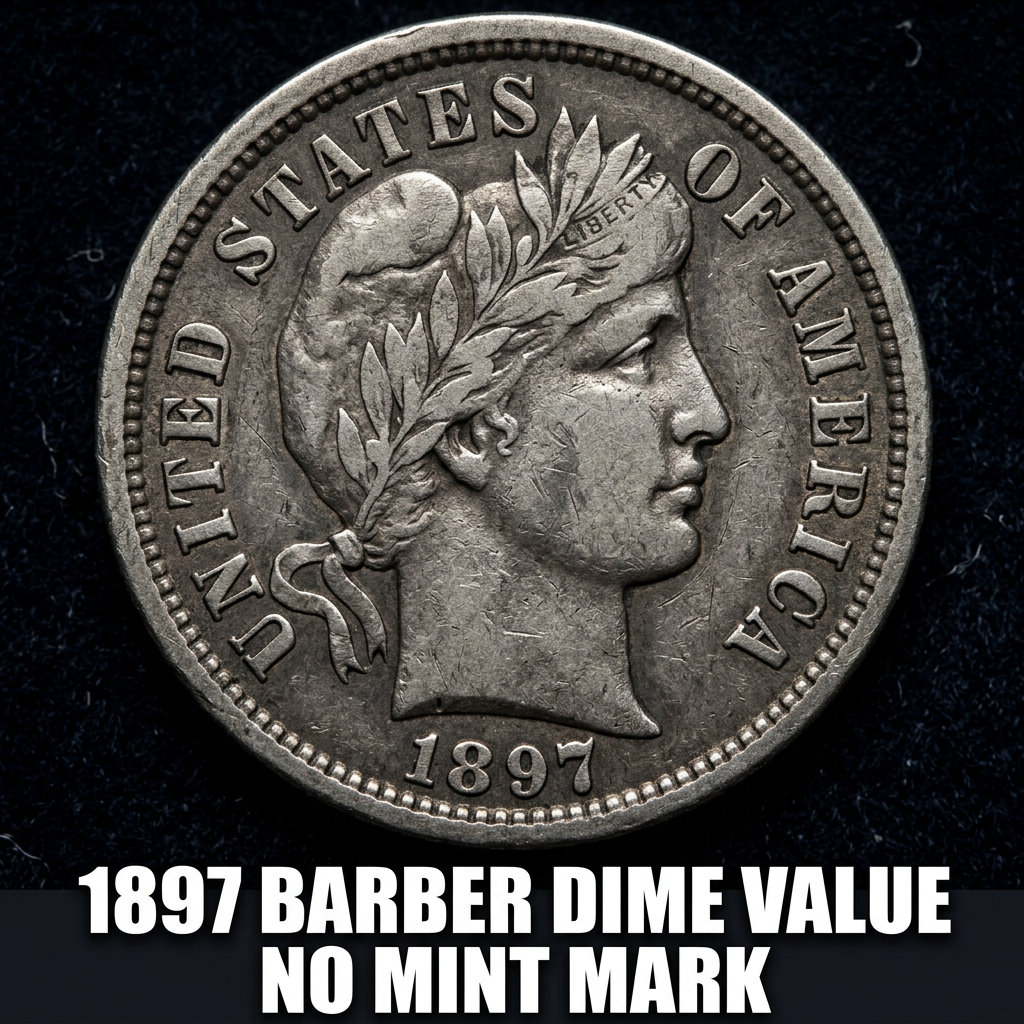
The 1897 Barber Dime with no mint mark is worth anywhere from $4 in heavily worn condition to well over $100 in uncirculated grades, with exceptional specimens fetching several hundred dollars at auction. If you just found one of these coins and you’re wondering whether it’s a keeper, the answer is almost certainly yes.
What Is the 1897 Barber Dime and Where Was It Made?
The 1897 Barber Dime with no mint mark was struck at the Philadelphia Mint, which was the main U.S. Mint facility at the time. The absence of a mint mark is actually the standard for Philadelphia-made coins of this era — it doesn’t mean anything is missing or that the coin is damaged. Charles E. Barber, the U.S. Mint’s Chief Engraver, designed this coin, and his distinctive portrait of Liberty wearing a laurel wreath on the obverse gives the series its name. On the reverse, you’ll find an eagle with a shield, arrows, and an olive branch — classic imagery that defined American coinage during the late 1800s and early 1900s.
The Philadelphia Mint produced 10,868,533 dimes in 1897, which is a decent mintage for the era. That means the 1897 no mint mark Barber Dime isn’t considered rare in circulated grades, but it’s not a coin you stumble across in pocket change either. If you’re just getting into coin collecting or you want to use the best coin identifier app to quickly identify what you’ve found, starting with a visual check of the date and condition is always a smart first move.
1897 Barber Dime No Mint Mark Value by Grade
Coin value is heavily tied to condition, and this is especially true for Barber Dimes. These coins circulated heavily, so most survivors show significant wear. Here’s a breakdown of approximate values based on grade:
| Grade | Description | Approximate Value |
|---|---|---|
| AG-3 (About Good) | Heavily worn, outline visible | $4 – $6 |
| G-4 (Good) | Date and letters clear | $7 – $10 |
| VG-8 (Very Good) | Some design detail remains | $12 – $18 |
| F-12 (Fine) | Moderate wear, major features sharp | $20 – $30 |
| VF-20 (Very Fine) | Light wear on high points | $35 – $55 |
| EF-40 (Extremely Fine) | Slight wear, all details sharp | $65 – $90 |
| MS-60 to MS-63 (Uncirculated) | No wear, may have bag marks | $120 – $225 |
| MS-65 and above (Gem) | Exceptional luster and strike | $400+ |
For a more detailed look at current market prices and auction results, check out this complete guide to 1897 Barber Dime values across all mint marks and grades to see how your coin compares.
How to Check the Condition of Your 1897 Barber Dime
The grade of your coin makes an enormous difference in value, so it’s worth taking a close look before you sell or trade it. The first thing collectors check on a Barber Dime is the hair detail above Liberty’s ear and the headband inscription that reads “LIBERTY.” On heavily worn coins, this lettering disappears almost entirely, which pushes the grade down to Good or About Good. If you can make out all seven letters of LIBERTY clearly, you’re likely looking at a Very Fine or better coin.
Use a 5x or 10x magnifier under good lighting to check for scratches, cleaning marks, or edge damage. Coins that have been cleaned with chemicals or abrasives lose significant collector value even if they look shiny. A natural gray or light tone is usually preferable to an unnaturally bright surface. CoinHix is a popular app among hobbyist collectors that can help you get a quick preliminary grade estimate just from a photo — a handy tool when you’re first assessing a find.
Silver Content and Melt Value of the 1897 Barber Dime
Even a heavily worn 1897 Barber Dime has inherent value because it’s made of 90% silver. Each coin contains approximately 0.07234 troy ounces of pure silver. With silver prices fluctuating around $28–$30 per troy ounce (as of recent market data), the melt value of any Barber Dime sits roughly in the $2.00 to $2.20 range. This means the coin’s numismatic (collector) value is always well above its raw silver content, even in the most worn condition.
This silver base also means the 1897 no mint mark Barber Dime is worth holding onto regardless of condition. Coin dealers and precious metal buyers will pay at least melt value, and often more, for these old silver dimes. It’s one reason the Barber series remains popular with everyday collectors who aren’t necessarily looking for expensive key dates — even common dates carry real, tangible worth.
Is the 1897 No Mint Mark Barber Dime Worth Selling or Keeping?
If your coin grades Fine or better, it’s absolutely worth getting a professional opinion before selling. Coin shows, local dealers, and online platforms like eBay all offer options for selling, but knowing your coin’s true grade first puts you in a much stronger position. If you want an easy starting point, CoinHix lets you scan coins with your smartphone and get an instant value estimate based on current market data — no coin expertise required.
For coins in lower grades (Good or below), you can still sell them as “junk silver” to dealers who buy by weight, or keep them as an affordable and historically meaningful piece of American history. Either way, a 1897 Barber Dime with no mint mark deserves a second look. These coins are over 125 years old, made of real silver, and carry the craftsmanship of a different era entirely. Whether you’re a seasoned numismatist or someone who just found an old coin in a drawer, CoinHix makes it easy to understand exactly what you have and what it’s worth today.
—
Frequently Asked Questions
Q: How much is a 1897 Barber Dime with no mint mark worth today?
A: The 1897 Barber Dime with no mint mark is worth between $4 and $10 in well-worn condition, $20 to $55 in Fine to Very Fine grades, and $120 or more in uncirculated condition. Gem examples grading MS-65 and above can sell for $400 or higher at major auctions.
Q: Does the lack of a mint mark mean my 1897 dime is rare or damaged?
A: No — the absence of a mint mark simply means your coin was made at the Philadelphia Mint, which was standard practice for U.S. coins of this period. Philadelphia-minted coins did not carry a mint mark, so a no mint mark 1897 Barber Dime is the most commonly found variety, not a rare error.
Q: Should I clean my 1897 Barber Dime before selling it?
A: Definitely not. Cleaning a coin — even gently with a cloth — can significantly reduce its collector value. Numismatists prefer original surfaces, even if they look dark or dull. A naturally toned coin in Fine condition will almost always sell for more than a cleaned coin of the same grade.