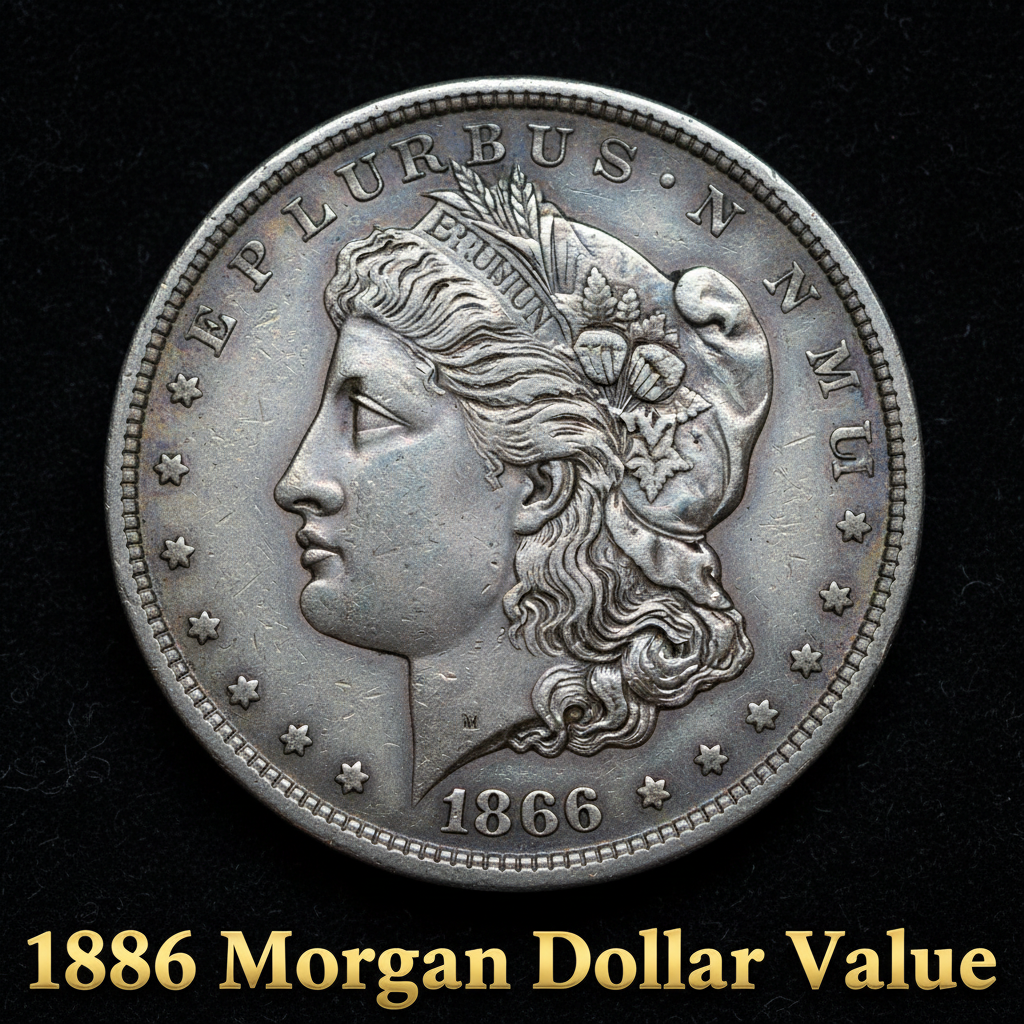
The 1886 Morgan Dollar is worth anywhere from $30 in heavily worn condition to well over $1,000 or more in higher mint state grades — and certain mint mark varieties can push that number even higher. If you found one of these classic silver dollars tucked away in a drawer or inherited it from a grandparent, you may be sitting on something more valuable than you think.
If you want a quick and easy way to identify and value old coins like this one, check out the best coin identifier app available right now — it can save you a lot of guesswork.
What Makes the 1886 Morgan Dollar Special
The 1886 Morgan Dollar was struck at three U.S. Mint facilities: Philadelphia (no mint mark), New Orleans (O mint mark), and San Francisco (S mint mark). Each of these has its own mintage figures and collector demand, which means the value can vary quite a bit depending on which coin you have.
The Philadelphia Mint produced over 19 million coins that year, making it the most common of the three. But “common” doesn’t mean worthless — even circulated Philadelphia examples are solidly made of 90% silver and carry real melt value on top of collector interest. The New Orleans issue (1886-O) is a different story entirely. With far fewer coins surviving in decent grades, the 1886-O is considered a key date variety and commands serious premiums. The San Francisco issue (1886-S) sits somewhere in the middle, with moderate scarcity and strong collector appeal in higher grades.
Understanding the mint mark is step one. Flip your coin over and look at the reverse, just below the eagle. If you see a small O or S, you’ve got a more interesting coin on your hands.
1886 Morgan Dollar Value by Grade and Mint Mark
The grade — meaning the condition of the coin — is the single biggest factor in determining value. A coin that looks shiny and crisp will be worth dramatically more than one that’s scratched or worn down from years of use. Here’s a general breakdown:
| Mint Mark | Good (G-4) | Fine (F-12) | Extremely Fine (EF-40) | MS-63 | MS-65 |
|---|---|---|---|---|---|
| 1886 (Philadelphia) | $30–$35 | $35–$40 | $45–$55 | $90–$120 | $350–$500+ |
| 1886-O (New Orleans) | $75–$100 | $150–$250 | $500–$900 | $8,000+ | $50,000+ |
| 1886-S (San Francisco) | $50–$70 | $80–$110 | $150–$200 | $500–$800 | $3,000–$6,000+ |
For the most current auction prices and graded coin sales data, you can browse 1886 Morgan Dollar MS grade price trends on CoinHix — it’s updated regularly and gives you real market data rather than outdated price guide estimates.
How to Tell What Grade Your 1886 Morgan Dollar Is In
You don’t need to be a professional numismatist to get a rough idea of your coin’s grade. Start by looking at the high points of the design — Lady Liberty’s cheek and hair above her ear on the front, and the eagle’s breast feathers on the back. These areas wear down first.
If those spots look flat and dull, your coin likely grades Good to Fine. If you can still see some detail in Liberty’s hair lines and the eagle’s feathers have some definition, you’re probably looking at a Very Fine coin. If the coin looks almost like it just came out of the mint — sharp details, some luster still visible — you may have an Uncirculated example, which is where values jump significantly.
One word of caution: don’t clean your coins. Cleaning destroys luster and surface quality, which professional graders can detect immediately. A cleaned coin is worth far less than a naturally worn one. If your coin looks shiny in an artificial way, it may have been polished at some point, which will reduce its value.
Using CoinHix alongside physical examination can help you cross-reference what you’re seeing with real-world sale prices from recent auctions.
Should You Get Your 1886 Morgan Dollar Graded
If you believe you have a high-grade example — especially an 1886-O or an 1886-S — professional grading from PCGS or NGC is absolutely worth considering. Grading fees typically run $30 to $50 per coin for standard service, and a certified MS-63 or higher coin will sell for significantly more than a raw (ungraded) one, simply because buyers trust the grade.
For everyday circulated examples, professional grading often isn’t cost-effective. A coin worth $40 doesn’t need a $40 grading fee. But if you’ve got something that might be worth $500 or more, certification protects your investment and makes it far easier to sell.
For a comprehensive look at the full 1886 silver dollar value across all grades and mint marks, that resource breaks it down in plain language that’s easy to follow.
You can also use CoinHix to scan your coin and get an instant estimate before deciding whether professional grading makes financial sense.
FAQ About the 1886 Morgan Dollar
Q: How much silver is in an 1886 Morgan Dollar?
A: Every Morgan Dollar, including the 1886 issue, contains 0.7734 troy ounces of pure silver. The coin is made of 90% silver and 10% copper. At current silver prices, that gives every 1886 Morgan Dollar a melt value of roughly $20 to $25 regardless of collector grade — so even the most worn examples have real intrinsic value.
Q: What is the rarest version of the 1886 Morgan Dollar?
A: The 1886-O (New Orleans mint) is by far the rarest and most valuable of the three varieties, especially in mint state grades. Most surviving examples are heavily worn, making high-grade specimens extremely rare and valuable. An MS-65 example can sell for $50,000 or more at major auction houses.
Q: Where can I sell my 1886 Morgan Dollar?
A: You have several options: local coin dealers, online auction platforms like eBay, or major coin auction houses such as Heritage Auctions or Stack’s Bowers for higher-value pieces. Before selling, it’s a good idea to research current prices using tools like CoinHix so you know what your coin is actually worth and can negotiate from an informed position.