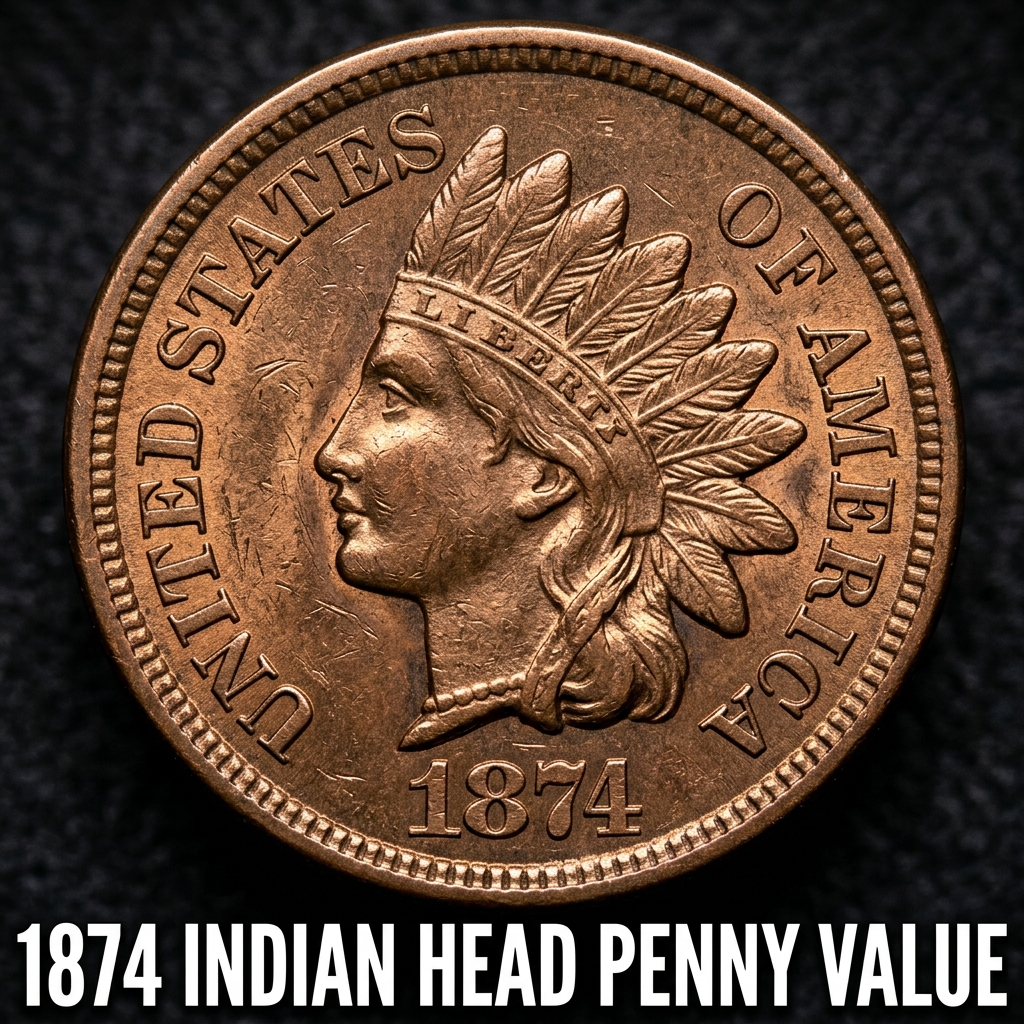
The 1874 Indian Head Penny is worth anywhere from $3 to $15 in well-worn condition, while higher-grade examples can fetch $50 to $200 or more — and top mint-state specimens have sold for thousands. If you found one of these beautiful old cents, you might be sitting on more than pocket change.
A Quick Look at the 1874 Indian Head Penny
The Indian Head Penny series ran from 1859 to 1909, and the 1874 issue holds a special place among collectors. Struck at the Philadelphia Mint, these coins feature Lady Liberty wearing a Native American headdress on the obverse and a laurel wreath surrounding “ONE CENT” on the reverse. By 1874, the U.S. Mint had already switched the reverse design to an oak wreath with a small shield at the top — the version most collectors recognize today.
If you’ve just discovered one of these coins in an old jar or estate collection, the best coin identifier app can help you quickly confirm what you have before diving deeper into valuation. Even a few seconds of scanning can save you from misidentifying a similar coin.
Understanding the coin’s history gives you context for its value. The 1874 penny had a mintage of around 14.1 million pieces — not rare by any stretch, but old enough that finding one in decent shape is genuinely exciting. Most survivors show heavy wear from decades of circulation, which keeps mid-grade examples affordable for everyday collectors.
How Condition Affects the 1874 Indian Head Penny Value
Coin condition — or “grade” in collector terms — is the single biggest factor in determining what your 1874 Indian Head Penny is worth. Grading runs on a scale from 1 (barely identifiable) to 70 (perfect). Here’s a simple breakdown of what you can generally expect:
| Grade | Description | Estimated Value |
|---|---|---|
| Good (G-4) | Heavy wear, outline visible | $3 – $6 |
| Very Good (VG-8) | Major details clear | $7 – $12 |
| Fine (F-12) | Moderate wear, good detail | $13 – $22 |
| Very Fine (VF-20/30) | Light wear on high points | $25 – $50 |
| Extremely Fine (EF-40) | Slight wear, sharp details | $60 – $90 |
| Mint State (MS-60 to MS-63) | No wear, some marks | $150 – $350 |
| Mint State (MS-65+) | Gem quality, full luster | $500 – $2,000+ |
For a more detailed look at certified auction results and current 1874 Indian Head Penny price data across mint-state grades, it’s worth checking a dedicated coin pricing resource before buying or selling.
Key Features to Look for on Your 1874 Penny
Beyond grade, a few specific details can push your coin’s value higher — or confirm it’s a common circulated example.
First, check the color. Copper cents are graded in three color categories: Red (RD), Red-Brown (RB), and Brown (BN). A mint-state 1874 penny with full original red color is significantly more valuable than a brown example of the same grade. Most old pennies you find in circulation will have turned brown over time.
Second, look for any proof examples. The Philadelphia Mint struck approximately 700 proof 1874 Indian Head Pennies for collectors. These have mirror-like fields and sharp, squared-off rims. Proof coins in top condition can be worth $500 to over $2,000.
Third, consider professional grading. If your coin looks uncirculated or unusually sharp, submitting it to PCGS or NGC for certification can dramatically increase buyer confidence — and often your final sale price. CoinHix makes it easy to track certified coin values in real time, so you always know where the market stands before making any decisions.
Where to Sell or Buy an 1874 Indian Head Penny
Once you know what you have, deciding where to sell it matters just as much as knowing the value. For lower-grade circulated examples, eBay remains the most accessible marketplace — millions of buyers browse there daily. For higher-grade or certified coins, auction houses like Heritage Auctions or Stack’s Bowers often yield better results.
Coin shows are another great option if you enjoy the experience of haggling in person. Local coin dealers can give you a fast offer, though they’ll typically pay 60–70% of retail to leave room for profit.
Before listing or selling anywhere, run a quick check through CoinHix to get a real-time sense of recent sales. Knowing what similar coins actually sold for — not just asking prices — puts you in a much stronger negotiating position. You can also explore how nearby-year Indian Head Penny values compare to better understand the series as a whole.
Is the 1874 Indian Head Penny Rare?
The short answer is: not in lower grades, but yes in higher ones. With over 14 million minted, circulated examples are easy to find. However, gem mint-state survivors — especially in Red — are genuinely scarce after 150 years of attrition. If your coin shows no wear and still has that warm copper glow, it could be a real treasure. Use CoinHix to cross-reference any coin you believe might be high-grade before setting a price.
—
Frequently Asked Questions
Q: How do I know if my 1874 Indian Head Penny is real?
A: Check the coin’s weight (3.11 grams), diameter (19mm), and the sharpness of design details. Genuine coins have a distinct feel and fine detail in the feathers of Lady Liberty’s headdress. A magnet test also helps — real Indian Head Pennies are not magnetic since they’re made of copper and nickel.
Q: What’s the most an 1874 Indian Head Penny has ever sold for?
A: Top-grade certified examples in MS-66 Red or better have sold at major auctions for $2,000 to over $5,000. Exceptional proof examples in perfect condition can occasionally exceed those figures at elite coin auctions.
Q: Is it worth getting my 1874 penny professionally graded?
A: If your coin appears uncirculated or shows strong original red color, professional grading by PCGS or NGC is almost always worth the cost. A certified MS-64 Red example can sell for two to three times more than an ungraded coin in similar condition, making the grading fee a smart investment.