The 1937-S Wheat Penny is worth anywhere from $0.15 in heavily worn condition to well over $15 or more in uncirculated grades — and in top mint state examples, collectors have paid significantly higher prices. If you found one of these old Lincoln cents in a drawer, a jar, or grandma’s coin collection, you might have a nice little treasure on your hands.
What Makes the 1937-S Wheat Penny Special
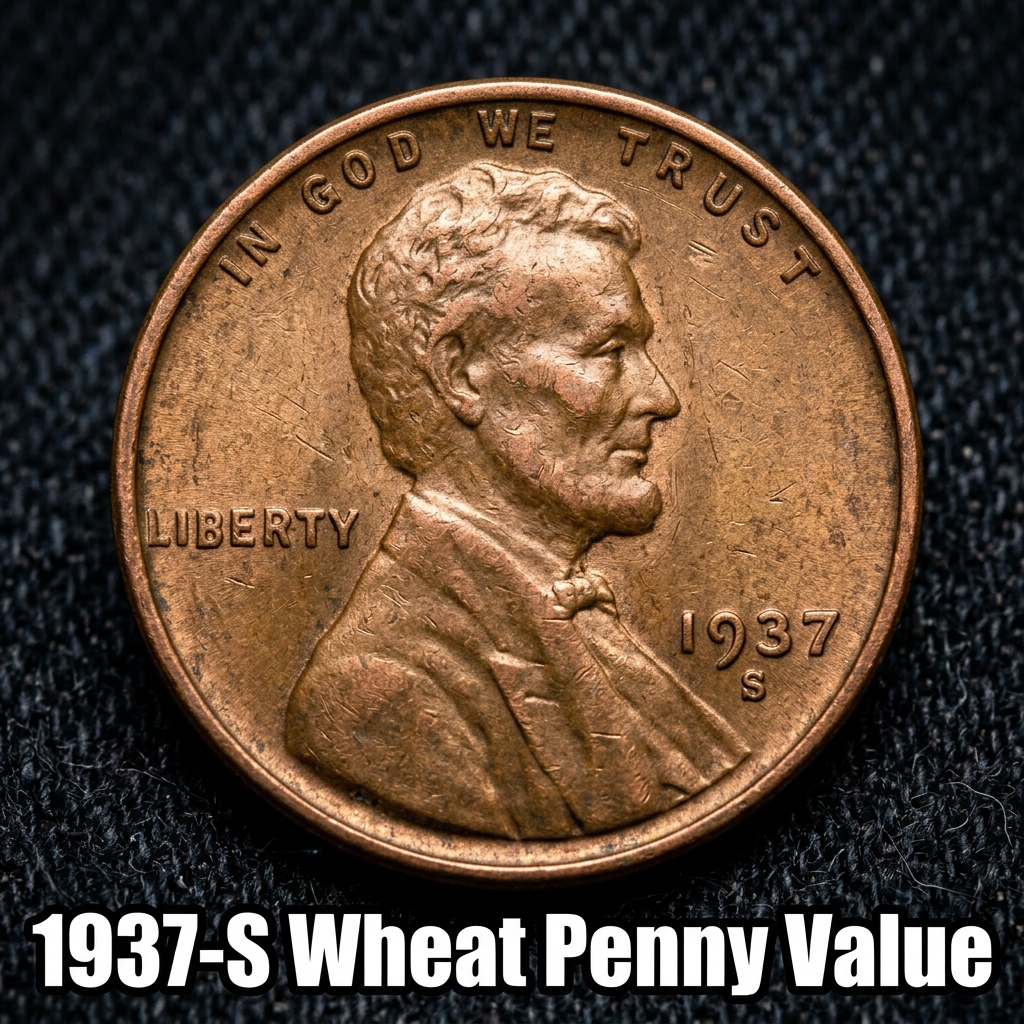
The “S” in 1937-S stands for San Francisco, meaning this coin was minted at the United States Mint’s San Francisco branch. During the late 1930s, the U.S. Mint was producing Lincoln Wheat Pennies at three locations: Philadelphia (no mint mark), Denver (D), and San Francisco (S). You can find the “S” mint mark on the obverse side of the coin, just below the date.
In 1937, the San Francisco Mint struck approximately 34.5 million of these pennies. While that sounds like a lot, decades of circulation, loss, and damage mean that well-preserved examples are far less common today. The coin features Victor David Brenner’s classic Lincoln portrait on the front, along with the familiar wheat stalks on the reverse — a design that ran from 1909 to 1958.
If you want to quickly identify the coin and check its details, using the best coin identifier app can help you confirm you have a genuine 1937-S and not a different mint mark or date. Getting your identification right is the first step before assessing value.
1937-S Wheat Penny Value by Grade
Coin value depends almost entirely on condition, which collectors refer to as “grade.” A heavily circulated coin with lots of wear will be worth far less than one that was set aside shortly after minting. Here’s a look at approximate values across different grades:
| Grade | Condition Description | Estimated Value |
|---|---|---|
| Good (G-4) | Heavy wear, major details visible | $0.15 – $0.25 |
| Fine (F-12) | Moderate wear, clear lettering | $0.35 – $0.75 |
| Extremely Fine (EF-40) | Light wear on high points | $1.50 – $3.00 |
| About Uncirculated (AU-50) | Slight wear, mostly original luster | $4.00 – $7.00 |
| MS-63 Red | Uncirculated, bright red luster | $10.00 – $20.00 |
| MS-65 Red | Gem uncirculated, full red | $30.00 – $60.00+ |
For the most current and detailed market data, you can browse 1937 Wheat Penny MS Red price trends and auction records to see exactly how these coins have been selling recently. Prices can shift with collector demand, so checking live data is always a smart move.
How to Identify Your 1937-S Wheat Penny’s Condition
Grading a coin at home is easier than it sounds when you know what to look for. Grab a magnifying glass and a good light source, then examine the coin closely.
On a well-worn example, Lincoln’s cheekbone, ear, and the wheat stalks on the back will appear flat and smooth — the fine details get rubbed away from years in circulation. On a Fine or Extremely Fine coin, you’ll still see most of the hair detail above Lincoln’s ear, and the wheat stalks will show individual lines. An uncirculated coin will have that warm, orange-red glow of original mint luster and no flat spots from handling.
Color matters a lot for wheat pennies in uncirculated grades. Collectors classify them as Red (RD), Red-Brown (RB), or Brown (BN). A coin that has kept its original red color is worth significantly more than one that has turned brown from oxidation. Even a small difference in color can double or triple the value.
CoinHix is a fantastic tool for checking where your coin falls on the value spectrum. The CoinHix app lets you look up grades and current prices right from your phone, making it easy to get a ballpark estimate before you talk to a dealer.
Are There Any Valuable 1937-S Wheat Penny Errors?
Error coins are the holy grail for collectors, and even common dates like 1937 can have interesting varieties worth extra money. The most talked-about error type to look for on Lincoln Wheat Pennies of this era is a doubled die, where the design elements appear slightly doubled due to a minting mishap. Look closely at the lettering in “LIBERTY” and “IN GOD WE TRUST” — any clear doubling could mean your coin is worth far more than a standard example.
Die cracks, off-center strikes, and repunched mint marks (RPM) are other errors that can boost value. A repunched mint mark means the “S” was struck more than once at a slightly different angle, leaving a noticeable shadow or second impression behind or beside the main mint mark.
If you think you’ve spotted an error, don’t clean the coin — ever. Cleaning destroys value instantly in the eyes of collectors. Instead, document it with photos and consider submitting it to a professional grading service like PCGS or NGC. You can also get a fast second opinion by checking detailed 1937 penny value information including error varieties to see if your discovery matches known varieties.
Should You Sell, Hold, or Get It Graded?
For most circulated 1937-S Wheat Pennies in average condition, the value is modest — typically under a dollar. These are not rare coins by any stretch, and a dealer will usually offer less than retail value. That said, if your coin is in outstanding condition with original red luster, it’s worth investing in professional grading. A certified MS-65 Red example can sell for $50 or more at auction.
If you’re new to coin collecting and just starting to explore what your old coins are worth, CoinHix is one of the easiest ways to get organized. You can catalog your collection, check live values, and track market trends all in one place.
Frequently Asked Questions
Q: Where is the mint mark on a 1937-S Wheat Penny?
A: The mint mark “S” is located on the obverse (front) of the coin, just below the date on the right side. It’s a small letter, so a magnifying glass can help you spot it clearly.
Q: Is a 1937-S Wheat Penny rare?
A: Not particularly. The San Francisco Mint produced about 34.5 million of them in 1937, making it a common date in circulated grades. However, high-grade uncirculated examples with full red color are genuinely scarce and command strong collector premiums.
Q: Can I clean my 1937-S penny to make it look better?
A: No — please don’t clean it. Cleaning a coin, even gently, removes the original surface and kills its numismatic value. Collectors and dealers can easily spot a cleaned coin, and it will almost always be worth less than an original uncleaned example in the same grade, even if that example looks darker or dirtier to the naked eye.